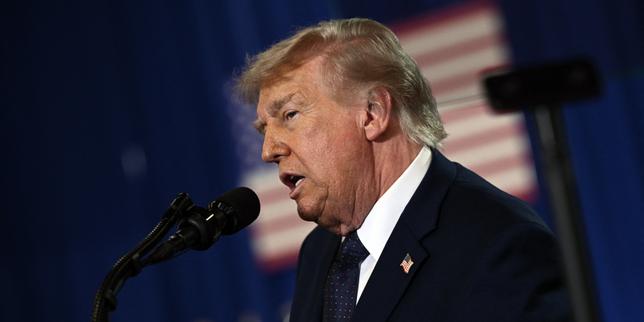
Mainstream foreign policy pundits are suffering from a severe case of historical amnesia. The collective media apparatus has latched onto a lazy, binary narrative: either the Joint Comprehensive Plan of Action (JCPOA) negotiated by Barack Obama in 2015 was a diplomatic masterpiece, or the hypothetically "excellent and significant" deal promised by Donald Trump will completely reset Middle Eastern geopolitics.
Both sides are fundamentally wrong. They are playing a theatrical game of political branding while ignoring the brutal, unyielding mechanics of statecraft, economics, and regional power dynamics.
The consensus insists that international relations operate like a real estate transaction. Fix the terms, sign the contract, and the problem is solved. This worldview is a dangerous delusion. The obsession with a "perfect deal" obscures a harsher reality: Iran’s geopolitical strategy is entirely disconnected from Western legalism, and no piece of paper signed in Geneva or Washington will alter Tehran's core security architecture.
The Myth of the Structural Flaw
Mainstream critics of the 2015 JCPOA focus almost exclusively on its "sunset clauses"—the provisions that allowed certain restrictions on Iran’s nuclear program to expire over time. The counter-argument from the opposing political camp is that maximum economic pressure can force an absolute, permanent capitulation.
I have spent years analyzing the economic trade flows and sanction compliance data in the Middle East. If you believe a nation-state will trade its core deterrent capability for access to the SWIFT banking network, you do not understand how sovereign survival works.
The flawed premise of both the Obama-era diplomacy and the Trump-era posturing is the belief that Iran treats its nuclear program as a bargaining chip. It does not. Tehran views its nuclear infrastructure—and its network of regional proxies—as an existential insurance policy.
http://googleusercontent.com/image_content/198
When the United States exited the JCPOA in 2018 and instituted the "Maximum Pressure" campaign, the stated goal was to force Iran back to the table to negotiate a comprehensive treaty covering ballistic missiles and regional intervention. The actual result? Iran accelerated its uranium enrichment to 60% purity, moving closer to weapons-grade capability than ever before, while simultaneously deepening its economic and military ties with Beijing and Moscow.
The data proves that economic isolation has diminishing returns. Sanctions are a static tool used against a dynamic opponent. Over time, targeted regimes build sophisticated illicit supply chains, exploit grey markets, and shift their trade dependencies toward adversarial superpowers. By the time Washington realizes the "pressure" isn't yielding a diplomatic surrender, the target country has already adapted its economy to survive the baseline pain indefinitely.
The Proxy Reality Check
Let's dismantle the People Also Ask consensus: Can a stronger nuclear deal stop Iran from funding regional proxies?
The short answer is no. The long answer requires looking at the actual balance sheets of asymmetric warfare.
Western analysts consistently overestimate the cost of regional destabilization. They assume that if you freeze Iran’s central bank assets, the funding for groups like Hezbollah, the Houthis, and various Iraqi militias will dry up. This calculation completely misses the asymmetry of modern gray-zone conflict.
Operating a fleet of F-35 fighter jets, maintaining carrier strike groups, and deploying missile defense systems costs billions of dollars a week. Conversely, assembling a fleet of low-cost, GPS-guided attack drones or smuggling thousands of unguided rockets into a conflict zone costs a fraction of that.
- US/Allied Defense Expenditures: High-cost, high-tech, low-attrition tolerance.
- Asymmetric Proxy Expenditures: Low-cost, commercially available tech, high-attrition tolerance.
Iran does not need an booming economy to maintain its regional footprint. It only needs a fraction of its oil revenue—often laundered through ghost fleets and small, un-sanctioned financial institutions in East Asia—to sustain its asymmetric leverage. A "better deal" that promises economic normalization in exchange for Iran abandoning its proxies is dead on arrival because it asks Tehran to trade a highly effective, low-cost defense strategy for the vague promise of Western financial goodwill.
The Illusion of Leverage
Every administration enters office believing it possesses the ultimate leverage. One side believes its leverage is the willingness to lift multilateral sanctions; the other believes its leverage is the threat of unilateral kinetic action and total economic strangulation.
This is a profound misunderstanding of how the target perceives risk. For the Iranian leadership, the primary threat is not economic underperformance or international isolation. The primary threat is regime change, whether engineered from abroad or sparked by domestic instability.
When Washington demands a treaty that permanently eliminates enrichment capabilities and dismantles regional deterrence networks, it is asking the regime to accept what it perceives as strategic vulnerability. In the minds of Tehran's decision-makers, a state that surrenders its deterrent capacity meets the fate of Muammar Gaddafi's Libya. No amount of foreign investment or sanctions relief can outweigh that perceived existential threat.
Therefore, the theater of demanding an "excellent and significant" deal is nothing more than domestic political posturing. It creates an unachievable benchmark, ensuring that negotiations remain perpetually stalled while the underlying crisis escalates on the ground.
The Cost of the Contrarian Truth
Accepting this reality requires a grim, unvarnished look at foreign policy options. If diplomacy cannot yield a permanent, total solution, and sanctions have reached their point of diminishing returns, the remaining choices are deeply unpalatable to the Washington establishment.
The alternative to the "perfect deal" illusion is a policy of active, permanent containment. This means accepting that Iran will remain a threshold nuclear state. It means managing a perpetual gray-zone conflict through intelligence operations, cyber warfare, and targeted interdictions, rather than pretending a grand diplomatic breakthrough is just around the corner.
This approach has significant downsides. It is expensive, it offers no clean political victories for cable news soundbites, and it requires a long-term strategic patience that the American two-year election cycle is ill-equipped to sustain. It means abandoning the comforting lie that a master negotiator can sit across a table and solve a decades-old geopolitical rivalry with a single stroke of a pen.
The media will continue to cover every statement about "new deals" and "better terms" as if they are meaningful developments. They are not. They are the rhetorical exhaust of a policy establishment that refuses to admit its fundamental assumptions about power, leverage, and deterrence are obsolete. Stop waiting for a diplomatic masterpiece. The deal you are being promised is a ghost.


:max_bytes(150000):strip_icc()/line-app-logo-ccdacd0f7c344b3d9d4847edcb90733d.jpg)