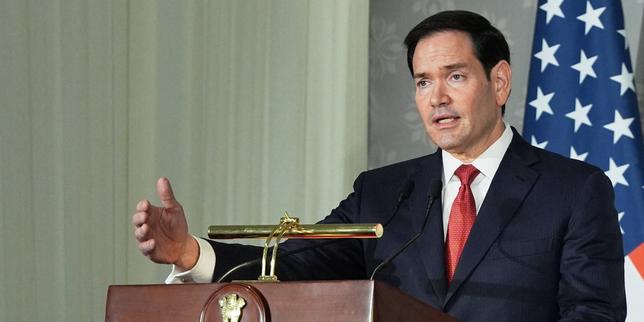
The diplomatic machinery in Washington, London, and Brussels is spinning at high speed, attempting to frame a pending 60-day ceasefire extension between the United States and Iran as a historic breakthrough. On Sunday, U.S. Secretary of State Marco Rubio teased a potential announcement from New Delhi, suggesting the world could receive "good news" regarding a Memorandum of Understanding to halt the direct military conflict that has destabilized global markets. UK Prime Minister Keir Starmer and European Commission President Ursula von der Leyen quickly issued statements praising the "progress toward an agreement."
Yet beneath the optimistic rhetoric lies a highly unstable reality. The proposed "Islamabad Declaration" does not resolve the core geopolitical crisis; it merely delays a catastrophic resumption of hostilities while leaving the primary trigger for war entirely intact.
While Western leaders celebrate a temporary halt to the violence, senior Iranian officials have already begun to puncture the narrative of a comprehensive settlement. Within hours of Rubio’s statements, the Iranian Embassy in India and senior sources in Tehran explicitly rejected the notion that the country had agreed to give up its highly enriched uranium stockpile or allow its nuclear program to be dismantled. The emerging framework is not a permanent peace treaty, but a highly transactional, 60-day pause designed to avert an immediate escalation that both sides are unready to sustain.
The Transactional Anatomy of the Islamabad Declaration
The actual mechanics of the draft memorandum reveal how limited this diplomatic breakthrough truly is. Driven by the critical need to stabilize global energy markets, negotiators have focused heavily on commercial maritime access rather than long-term disarmament.
What the United States and Iran Are Preparing to Sign
- A 60-Day Extension of the Ceasefire: Both nations will agree to prolong the initial truce established on April 8, pausing direct military engagements and regional proxy strikes.
- The Reopening of the Strait of Hormuz: Iran has tentatively agreed to clear the naval mines it deployed in the crucial choke-point and waive any maritime transit tolls.
- The Lifting of the Port Blockade: In exchange for free navigation, the United States will suspend its April 13 blockade of Iranian ports, allowing Tehran to resume international oil sales.
- Phased Sanctions Relief: Washington will temporarily unfreeze a portion of Iranian assets held in overseas banks to incentivize compliance during the two-month window.
This arrangement treats the symptoms of the recent maritime conflict rather than the underlying disease. The United States is utilizing its economic leverage and the threat of devastating military strikes to secure the flow of oil, while Iran is leveraging its ability to disrupt global trade to achieve vital economic relief.
The Dangerous Fiction of Nuclear Disarmament
The fundamental flaw in the Western optimism displayed by Starmer and von der Leyen is the false assumption that Iran is on the verge of surrendering its nuclear ambitions. Reports initially suggested that Tehran had expressed a willingness to hand over its 440-kilogram stockpile of highly enriched uranium.
That narrative collapsed almost immediately. A senior Iranian source confirmed that the nuclear issue is completely excluded from the preliminary agreement. Tehran views its remaining enriched material—much of it buried deep beneath the rubble of the Natanz, Fordow, and Isfahan sites targeted by U.S. and Israeli airstrikes—as its ultimate geopolitical insurance policy.
The political reality inside Iran makes a total nuclear surrender impossible. Parliament Speaker Mohammad Bagher Ghalibaf made it clear to international mediators that Iran will not step back from its sovereign "rights" when dealing with a Washington administration it deems fundamentally insincere. For the Islamic Revolutionary Guard Corps and the clerical leadership, giving up the nuclear program under the duress of a U.S. port blockade would look too much like total capitulation.
Washington officials acknowledge this structural weakness in the deal. The entire 60-day framework is conditional on ongoing nuclear negotiations. If the United States concludes that Tehran is simply using the pause to stall for time while fortifying its subterranean facilities, the agreement allows Washington to walk away well before the 60 days expire.
Domestic Pressures and the 50-50 Bet
The driving force behind this sudden diplomatic push is not sudden goodwill, but intense domestic and regional pressure weighing on both capitals.
President Donald Trump recently described the deal as "largely negotiated," yet candidly assigned it a "solid 50/50" chance of survival, warning that the alternative was to resume a campaign that would bomb the Iranian regime "to kingdom come." The reality is that Washington is facing significant pressure from key regional allies. Saudi Arabia, Qatar, and the United Arab Emirates actively lobbied the White House to suspend a massive follow-up air assault that was scheduled to launch in mid-May. These Gulf states understand that a total collapse of the Iranian state or a desperate retaliatory strike on regional infrastructure would devastate their own economies.
Simultaneously, domestic economic realities are weighing heavily on the White House. The port blockade and the mining of the Strait of Hormuz pushed oil markets into a dangerous volatility zone. For an administration focused on domestic economic growth, an extended energy crisis triggered by a prolonged war in West Asia is a major political liability.
Iran is operating under even harsher constraints. The April blockade crippled its already fragile economy, causing a severe shortage of hard currency and essential imports. The regime needs this 60-day window to generate oil revenue, restock its depleted domestic supplies, and assess the severe structural damage inflicted on its military infrastructure during the previous months of conflict.
Why the Truce is Inherently Unstable
The Islamabad Declaration is a fragile diplomatic construct built on a foundation of mutual distrust. It lacks any credible enforcement mechanisms for the complex regional dynamics that triggered the war in the first place.
The draft agreement explicitly notes that this is not a one-sided ceasefire. A U.S. official summarized the regional balancing act bluntly, stating that "if Hezbollah behaves, Israel will behave." This statement highlights the exact vulnerability of the current arrangement. The text of the memorandum contains no formal provisions to curb Iran’s ballistic missile production or its financial and material support for its regional allies in Lebanon, Yemen, and Iraq.
Even if Tehran strictly observes the terms of the ceasefire along its own borders, a single unauthorized rocket attack by an allied regional group could instantly shatter the agreement. Israeli Prime Minister Benjamin Netanyahu remains focused on his own domestic survival and long-term security goals, which do not necessarily align with Washington's desire for an immediate diplomatic pause. If regional proxy forces resume low-level attrition warfare, Israel will retaliate, inevitably drawing the United States back into direct confrontation with Tehran.
The temporary reopening of the Strait of Hormuz will likely provide short-term relief to global shipping companies and lower energy prices for Western consumers over the next few weeks. However, international analysts and corporate risk assessment firms should not mistake this commercial pause for a genuine resolution to the conflict. Iran has explicitly stated that any permanent changes to maritime navigation through the strait remain strictly conditional on the full, permanent removal of U.S. secondary sanctions—a concession that Washington is entirely unprepared to make without total nuclear capitulation.
The world may well see a formal signing ceremony on Sunday, accompanied by self-congratulatory press releases from Western capitals. Do not be deceived by the diplomatic theater. The United States and Iran are not building a path to a lasting peace; they are simply resetting the timer on an explosive conflict that remains entirely unresolved.


