The Pentagon's declaration that US airstrikes have successfully reduced Iran's capacity to attack commercial shipping in the Strait of Hormuz misses the operational reality of asymmetric warfare. While precision strikes undoubtedly destroy physical hardware like radar sites, drone launchpads, and missile depots, they do not permanently alter the strategic calculus of a nation that has spent forty years mastering low-cost, high-disruption maritime tactics. The threat to global shipping remains fundamentally unchanged because Iran's naval strategy is built on redundancy, deniability, and highly mobile assets that are easily replaced.
To understand why localized military interventions yield only temporary pauses rather than permanent security, one must look past the immediate damage assessments issued in Washington briefings.
The Flawed Logic of Kinetic Deterrence
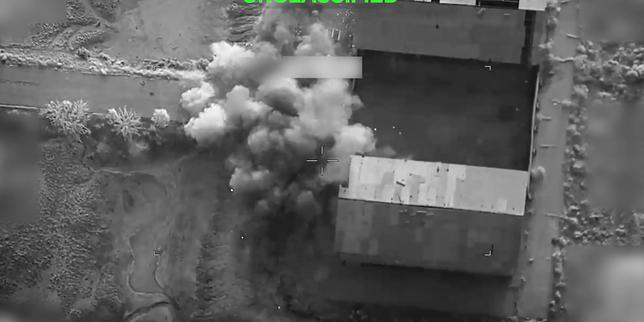
Military planners love bomb damage assessment photos. They show charred remains of launch vehicles and collapsed bunkers, offering neat, quantifiable proof of mission success. Yet, treating these tactical victories as strategic triumphs is a recurring mistake in Western foreign policy.
Iran does not rely on massive, easily targetable naval destroyers to project power. Instead, its doctrine centers on swarm tactics utilizing hundreds of fast-attack craft, sea mines, and mobile anti-ship cruise missiles hidden along a highly rugged, mountainous coastline. When US forces strike a known missile battery, they are playing a costly game of Whack-A-Mole.
+-------------------------------------------------------------------------+
|                  THE ASYMMETRIC COST ASYMMETRY                          |
+------------------------------------+------------------------------------+
|  US / Coalition Capabilities       |  Iranian Countermeasures           |
+------------------------------------+------------------------------------+
|  $2M+ Patriot/SM-2 interceptors    |  $20,000 Shahed-style attack drones|
|  Multi-billion dollar destroyers   |  $50,000 Fast-attack speedboats    |
|  Static carrier strike groups      |  Mobile, truck-mounted launchers   |
+------------------------------------+------------------------------------+
A cruise missile launcher mounted on the back of a standard commercial flatbed truck can be driven into a cave minutes after firing. No amount of preemptive bombing can eliminate these highly mobile platforms without a sustained, round-the-clock aerial presence that the US is currently unable or unwilling to commit to the region indefinitely.
Furthermore, the financial calculus is heavily weighted against Western navies. Firing a two-million-dollar air defense missile to intercept a twenty-thousand-dollar drone is a losing proposition over a long campaign. Iran knows this. The goal of their campaign is not to win a conventional naval battle, but to make the cost of securing the waterway unsustainably high for international partners.
Why the Strait of Hormuz Remains Globally Vulnerable
The geography of the Strait of Hormuz is an asymmetric strategist's dream. At its narrowest point, the shipping lanes are only two miles wide in either direction, separated by a two-mile buffer zone. This leaves massive, slow-moving commercial tankers incredibly vulnerable to simple, low-tech interdiction.
The Low-Tech Arsenal
It does not take sophisticated military hardware to disrupt global trade. Iran's Revolutionary Guard Corps Navy (IRGCN) has mastered several low-cost methods that bypass advanced Western missile defense systems entirely.
- Commercial Vessel Seizures: Using helicopters to drop commandos onto the decks of tankers, under the guise of "regulatory disputes" or maritime law enforcement.
- Uncrewed Explosive Boats: Remote-controlled boats packed with explosives, guided toward civilian hulls to cause localized, deniability-friendly damage.
- Limpet Mines: Hand-placed magnetic explosives attached to the hulls of anchored tankers by divers operating from unassuming wooden fishing dhows.
These methods do not require sophisticated radar installations or deep-water ports, both of which are easily targeted by US intelligence. By focusing public announcements on "reduced capacity," Western officials obscure the fact that Iran’s most disruptive capabilities require almost no heavy infrastructure to deploy.
The Intelligence Blindspot and the Proximate Threat
There is a deeper, more unsettling reality behind the reassurances coming from military briefings. US intelligence agencies have historically struggled to map the highly decentralized, covert supply chains that feed Iran's regional proxies.
While the US can track shipments of heavy machinery, the components that make up modern attack drones and precision-guided munitions are dual-use and incredibly small. Fiber-optic gyroscopes, commercial GPS receivers, and miniature engines are smuggled through a vast web of shell companies spanning East Asia and Europe.
"You cannot bomb an supply chain that exists primarily on paper and in the cargo holds of civilian dhows."
As long as these supply networks remain active, any physical destruction of launchers or stockpiles along the Persian Gulf is merely a temporary setback. Within weeks, smuggled parts are reassembled in makeshift workshops, and the threat level resets to its baseline.
The Strategic Failure of "Degrade and Deter"
The stated goal of the recent strikes was to "deter" future attacks. Historically, however, kinetic strikes without a corresponding diplomatic or economic endgame do not deter; they merely shift the adversary’s tactics.
If Iran feels too much pressure in the Strait of Hormuz, it possesses the capability to escalate horizontally. This could mean instigating proxy attacks in the Red Sea, targeting dry-dock facilities in the Gulf of Oman, or utilizing cyber operations against maritime logistics networks.
                 [ US KINETIC STRIKES ]
                           │
                           ▼
             [ Temporary Tactical Pause ]
                           │
             ┌─────────────┴─────────────┐
             ▼                           ▼
     [ Tactical Shift ]         [ Horizontal Escalation ]
     - More stealthy ops        - Red Sea proxy attacks
     - Limpet mine usage        - Cyber ops on logistics
     - Commercial seizures      - GPS jamming campaigns
By claiming that capacity has been reduced, Western leadership risks creating a false sense of security for commercial shipping companies. Insurance underwriters are not fooled by these pronouncements. Premiums for transiting the region remain near record highs, reflecting the private sector's understanding that the fundamental risk factors have not changed.
The shipping industry operates on thin margins and high predictability. Even the perception of threat is enough to force rerouting around the Cape of Good Hope, adding thousands of miles, weeks of travel time, and millions of dollars in fuel costs to global supply chains. A temporary lull in attacks, bought at the cost of expensive munitions, is not a victory when the underlying instability remains untouched.
Until Western strategy shifts from reactive tactical strikes to a comprehensive containment of the smuggling networks and financial systems that sustain these operations, the Strait of Hormuz will remain a choke point held hostage by asymmetric design. The physical hardware may be temporarily damaged, but the strategic intent, and the capability to execute it, remains entirely intact.