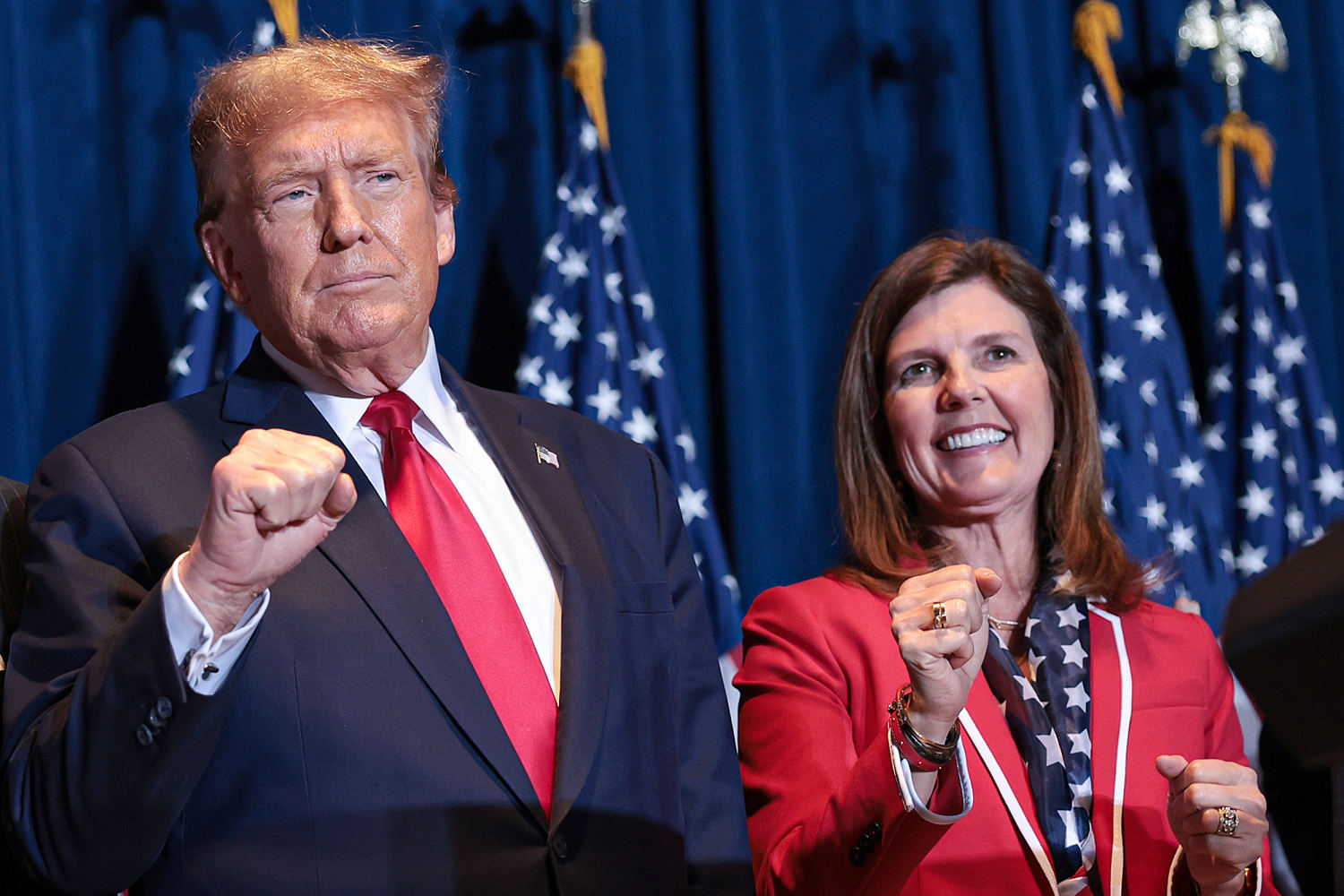
Lt. Gov. Pamela Evette and Attorney General Alan Wilson have advanced to a June 23 runoff in the South Carolina Republican gubernatorial primary, proving that even a late-stage endorsement from Donald Trump cannot completely override institutional longevity and deep-rooted local political machines. Evette finished first with 29.1% of the vote, while Wilson secured second place with 26.5% in a crowded five-way race to succeed the term-limited Governor Henry McMaster. Because no candidate crossed the 50% threshold, the two statewide officials will now go head-to-head.
The primary results expose a shifting reality in Republican internal dynamics. For years, conventional wisdom dictated that a direct endorsement from Trump was a golden ticket capable of delivering outright majorities in deep-red states. Yet, Evette’s inability to clear the field despite the presidential backing reveals the limits of national endorsements when facing an opponent entrenched in the state's traditional political architecture.
The Machine Versus the Endorsement
Wilson represents the old guard of South Carolina Republicanism. The son of long-serving U.S. Representative Joe Wilson, he has held the office of Attorney General since 2011, building a robust network of donors, law enforcement connections, and local officials over fifteen years. While Evette leaned heavily on her alignment with the national populist movement and her business background as the founder of a billion-dollar human resources firm, Wilson relied on the steady, quiet leverage of a decades-old family brand.
Evette received Trump's official endorsement just two weeks before the primary. It provided an immediate bump in polling and secured her top placement on Tuesday night, but it failed to trigger a landslide. In a state that backed Trump by nearly 18 percentage points in 2024, more than 70% of Republican primary voters chose someone other than his designated candidate.
The policy differences between Evette and Wilson are virtually nonexistent. Both support phasing out the state’s remaining 5.21% personal income tax, both defend the current six-week abortion restrictions, and both frequently pledge allegiance to national conservative priorities. The race is entirely a battle of branding and institutional power.
The Carnage of the MAGA Fractures
The crowded field also brought down heavyweights who attempted to out-populist the frontrunners. U.S. Representatives Ralph Norman and Nancy Mace finished third and fifth, respectively, demonstrating how quickly national media prominence can dissolve in a localized statewide race.
Norman, a wealthy real estate developer and Freedom Caucus member, suffered from his previous alignment with former Governor Nikki Haley during her 2024 presidential bid. Though he returned to the Trump fold, the delay appeared to damage his standing among hardline primary voters, leaving him at 16.5%.
Mace’s fifth-place finish at 11.4% was the night’s most dramatic collapse. After conceding, Mace immediately endorsed Wilson, burying a long-running public feud with the Attorney General. She blamed her loss on a backlash regarding her high-profile congressional push to release the late Jeffrey Epstein’s flight logs and files.
"As a survivor, I chose to stand on principle and stand against the Epstein cover-up," Mace stated publicly. "And apparently, I chose wrong if the goal was winning an election."
While Mace framed her defeat around structural retribution for her anti-establishment stances, local analysts point to a simpler reality. Her frequent pivots between criticizing and praising national party leadership alienated institutional donors without fully securing the trust of the grassroots base.
Money and the Overturned Verdict
The financial landscape of the race shows a sharp division in how political influence is bought and sustained in the state.
- Pamela Evette: Raised $3.5 million, injecting $1 million of her own personal fortune.
- Rom Reddy: A political outsider and former ExxonMobil executive who finished fourth after self-funding his campaign with $5 million.
- Alan Wilson: Utilized an established, recurring donor network built over three previous successful statewide reelections.
Wilson’s campaign carried a major vulnerability into the primary cycle. As Attorney General, his office was deeply intertwined with the high-profile double-murder conviction of Alex Murdaugh in 2023. In May, the South Carolina Supreme Court overturned that conviction due to jury tampering by a county clerk of court, forcing a retrial. Evette’s campaign attempted to use the legal setback to question Wilson's administrative competence, but the issue failed to alienate Wilson's core base of law enforcement and judicial supporters.
The Path to November
The winner of the June 23 runoff will face Democratic nominee Jermaine Johnson in November. Johnson, a state representative and former professional basketball player, won his primary convincingly with 58.4% of the vote. However, the structural reality of South Carolina politics means the Democratic nominee faces an uphill battle. The state has not elected a Democratic governor since 1998.
Over the next two weeks, the race will shrink to a pure test of voter turnout. Evette will attempt to consolidate national populist voters by framing Wilson as a career politician. Wilson will attempt to absorb the voters who backed Norman, Mace, and Reddy by emphasizing his deep legal roots and military background as a National Guard colonel.
The upcoming runoff is no longer just a contest for the governor's mansion. It has transformed into a critical test case for whether a national endorsement can overcome an established local dynasty in the modern American South.