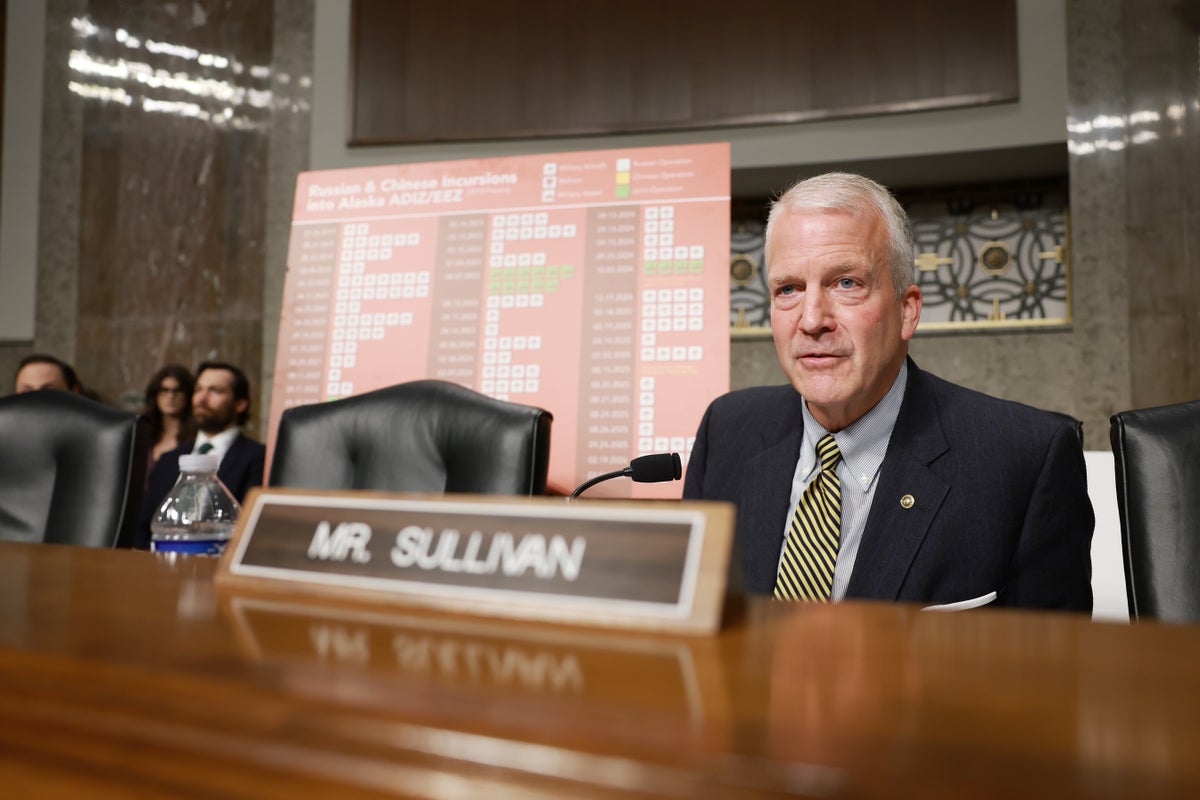
The internet loves a cheap irony loop. A conservative politician supports hardline foreign policy in the Middle East, global energy markets react exactly how they always do, domestic pump prices spike, and the politician sends out a fundraising email complaining about the cost of filling up their truck. The left-leaning media ecosystem drops a predictable, self-righteous headline mocking the absolute lack of self-awareness.
It is easy clicks. It is also lazy, economically illiterate theater. If you liked this post, you should read: this related article.
When critics mock an Alaskan senator for lamenting high gas prices after backing aggressive foreign policy, they are exposing a profound misunderstanding of how global energy supply chains work. They think they are scoring a point on hypocrisy. In reality, they are just proving that they don't understand the brutal mechanics of the oil market.
I have spent years analyzing energy policy, infrastructure investments, and commodity trading desks. I have watched boards dump tens of millions of dollars into projects based on the flawed assumption that localized production insulates a region from global shocks. It never does. The assumption that an oil-producing state should somehow enjoy cheap gasoline is a fairytale. For another angle on this event, see the latest update from Associated Press.
Let us dismantle the comfortable consensus and look at the math behind the madness.
The Myth of the Isolated Energy Well
The core of the media's mockery relies on a flawed premise: If you live in Alaska, and Alaska produces oil, your gas should be cheap, and if it isn't, it's your own fault.
This is not how the energy grid operates. Alaska is an resource-export powerhouse, but it is an infrastructure desert when it comes to refining. The state produces massive amounts of Alaska North Slope (ANS) crude. But you cannot pour raw crude into the tank of a Ford F-150.
To turn that crude into gasoline, it has to be refined. Alaska has remarkably limited refining capacity. The refineries it does have are largely configured to produce jet fuel and heating oil—the lifeblood of a state reliant on air transport and surviving brutal winters. A massive portion of Alaskan crude travels via tanker down to the West Coast of the United States to be processed in California or Washington refineries.
Once it is refined into gasoline, a significant amount of it has to be shipped back to Alaska.
Every single barrel of that fuel is subject to the Jones Act, a 1920 maritime law requiring goods shipped between U.S. ports to be transported on ships that are built, owned, and operated by United States citizens. This adds a staggering premium to logistics. Alaska does not operate on a local supply loop; it operates on a highly complex, thousands-of-miles-long logistical chain that is deeply vulnerable to global price fluctuations.
Why Foreign Policy Shocks Always Beat Local Production
The second layer of the lazy consensus is the idea that backing aggressive foreign policy against a major oil producer like Iran means a politician has "earned" high gas prices.
Let's look at the mechanics of global pricing. Oil is a fungible global commodity. It does not matter if a state produces two million barrels a day or zero. The price of a barrel of oil is determined on global exchanges like ICE and NYMEX, driven by global supply and demand metrics, geopolitical risk premiums, and currency fluctuations.
When tensions flare in the Strait of Hormuz—through which roughly a fifth of the world's petroleum passes—the risk premium spikes instantly.
[Geopolitical Tension in Middle East]
       │
       ▼
[Global Risk Premium Rises]
       │
       ▼
[Brent / WTI Crude Prices Spike]
       │
       ▼
[West Coast Refinery Input Costs Increase]
       │
       ▼
[Alaskan Retail Gasoline Prices Climb]
Even if Alaska doubled its domestic drilling overnight, it would not decouple itself from the Brent or WTI benchmarks. The domestic price at the pump in Anchorage is tethered to global realities. To believe that a politician can advocate for a specific geopolitical stance and expect their home state's retail fuel prices to remain static is foolish. But to believe that the resulting price hike is a sign of personal failure rather than systemic market design is equally naive.
The Brutal Truth About Energy Independence
Politicians on both sides of the aisle throw around the phrase "energy independence" like a magic shield. It is a marketing slogan, not an economic reality.
True independence would require a command-and-control economy where a nation bans all energy exports, nationalizes refineries, and sets fixed domestic prices. No serious economist advocates for this, because the downsides are catastrophic.
Consider the drawbacks of a truly decoupled, closed-loop system:
- Capital starvation: Without global markets to sell into at peak prices, domestic producers cannot attract the investment capital needed to maintain infrastructure.
- Supply rigidity: If domestic production drops due to a natural disaster or technical failure, a closed system cannot quickly import supply to stabilize the market.
- Inefficient refining: Forcing domestic refineries to process only local crude types, regardless of whether their facility architecture is optimized for it, drives up operational costs.
We live in a integrated system. When global supply tightens, the value of oil goes up everywhere. If an Alaskan producer can sell a barrel of crude to an Asian market for a premium, they will. They are not going to discount it for local consumers out of state pride.
Dismantling the Public's Flawed Questions
If you look at public forums or search trends surrounding energy politics, the questions asked are fundamentally broken.
"Why do oil-rich states have high gas taxes and prices?"
The premise assumes proximity to extraction equals cheap distribution. It ignores geography. Alaska is massive, sparsely populated, and isolated. The cost of trucking fuel over frozen passes to remote stations involves immense overhead. High prices are a reflection of logistics, not a lack of resources.
"Can't a senator change local fuel costs?"
No. A senator regulates, legislates, and grandstands. They do not set the daily rack price of fuel at the terminal. Believing a politician can tweak a knob in Washington to lower the price at a specific pump in Fairbanks is a fundamental misunderstanding of free-market capitalism.
Stop Laughing at the Irony and Look at the Risk
The media wants you to laugh at the spectacle of a politician begging for campaign donations to cover a fuel bill. They want you to think the story ends at political hypocrisy.
The real story is that our entire economic infrastructure is built on a volatile foundation that treats localized abundance as irrelevant. If a region that sits on top of billions of barrels of oil cannot escape the crushing weight of global market shocks, then no one can.
Instead of treating this as a partisan gotcha moment, recognize it for what it truly is: a stark reminder that in the global energy game, geography provides no immunity, policy has immediate financial consequences, and the global market always wins.
Stop looking for hypocrisy where there is only gravity.


