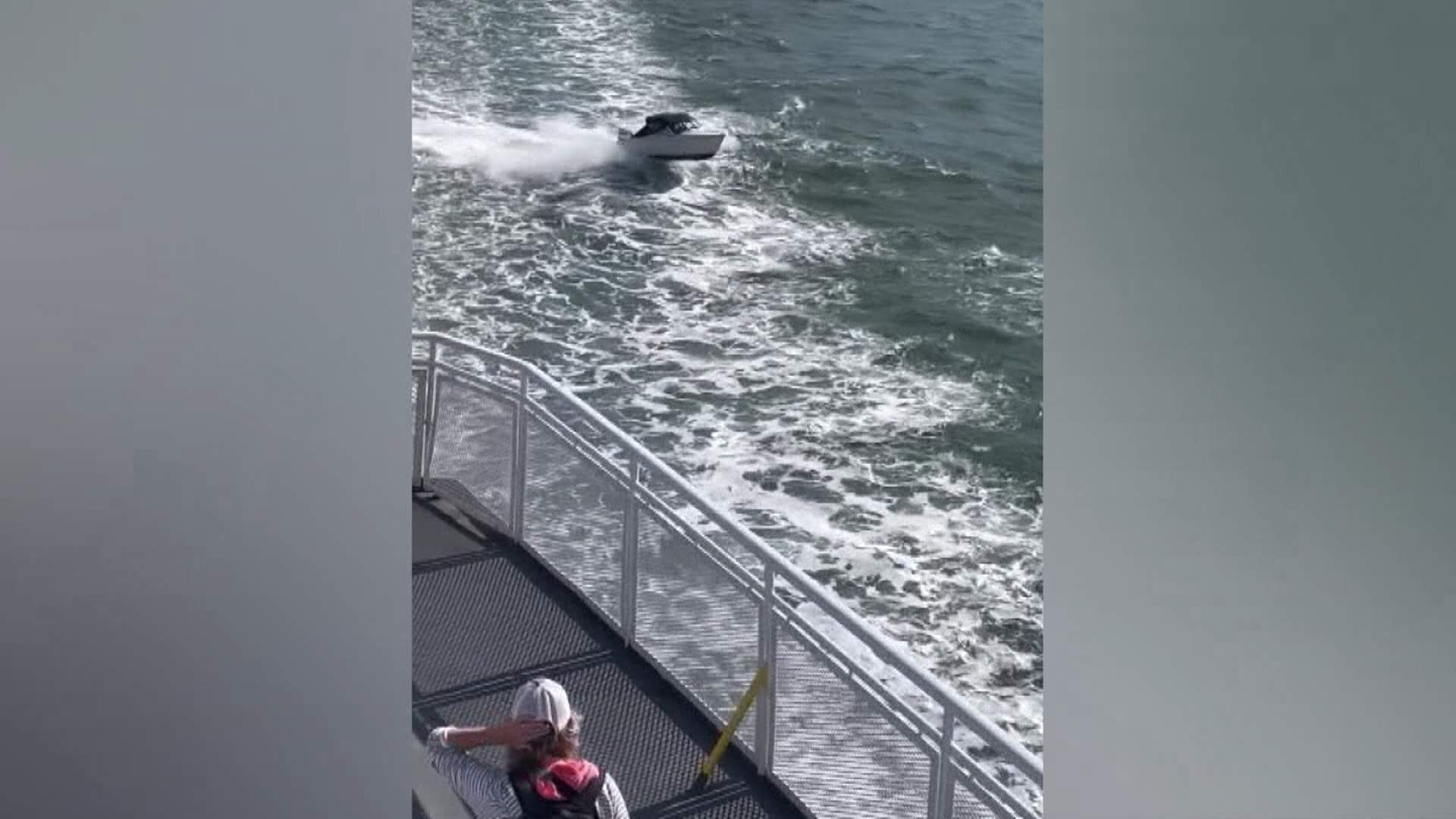
The physical interaction between a small recreational watercraft and the wake field of a large displacement hull represents an asymmetric risk profile that is poorly understood by amateur operators. When a motorboat or personal watercraft deliberate navigates into the immediate wake of a commercial vessel, such as a BC Ferries passenger ship, the operator is not merely interacting with surface waves. They are injecting a low-mass, low-inertia system into a highly complex, turbulent zone characterized by localized velocity differentials, pressure gradients, and massive kinetic energy distributions.
Analyzing the mechanics of these encounters reveals a critical disconnect between perceived recreational thrill and the mathematical realities of fluid dynamics, operational disruption, and maritime liability.
The Triad of Hydrodynamic Hazards in Displacement Wakes
To understand why trailing a large commercial vessel closely is hazardous, the wake must be broken down into its three primary fluid mechanics components. Each component alters the water column in a way that compromises the stability and steering control of smaller craft.
Propeller Wash and Velocity Differentials
The propulsion system of a large ferry accelerates thousands of gallons of water per second rearward. This creates a high-velocity stream known as the propeller wash or slipstream. When a smaller boat transitions from calm water into this slipstream, it encounters a sudden velocity gradient. Because the water inside the slipstream is moving away from the ferry at high speed, the small craft experiences an instantaneous drop in effective forward thrust and steering authority. If the hull crosses this boundary at an angle, the bow and stern experience vastly different water velocities simultaneously, inducing an uncommanded yaw moment that can flip or spin the vessel.
Boundary Layer Suction and Pressure Drops
As a massive hull displaces water, fluid must flow around the structure and close in behind it. This creates a localized low-pressure zone immediately aft of the stern. In fluid dynamics, this behavior is governed by the Bernoulli principle, where increased fluid velocity results in a simultaneous drop in pressure. A small craft operating in close proximity to the stern can be drawn toward the hull by this pressure differential. This effect is compounded by the boundary layer, a zone of water dragged along by the friction of the ship's hull, which creates chaotic, unpredictable cross-currents.
The Kelvin Wake Pattern and Wave Asymmetry
The visible wake stretching behind a ship is a Kelvin wake pattern, consisting of two main wave types:
- Divergent waves: Deep waves that propagate outward at an angle from the bow and stern.
- Transverse waves: Waves that follow behind the vessel, propagating in the same direction as the ship's travel.
For a recreational boat "jumping" these waves, the risk lies in their steepness and frequency. Unlike open-ocean swells, ship-generated transverse waves have a very short wavelength and high steepness ratio. When a small hull launches off a steep crest, it loses contact with the water, eliminating all steering and braking capacity. Upon re-entry, the hull often slams into the trough of the subsequent wave rather than a flat surface. This sequence routinely triggers structural hull failure, severe occupant deceleration injuries, or immediate capsizing.
Operational Friction and the Rescue Cost Function
When an amateur watercraft operator executes high-risk maneuvers behind a commercial transport vessel, the consequences extend far beyond personal safety. It forces an immediate shift in the ferry’s operational status, introducing significant logistical friction and financial liabilities.
[Wake Violation Detected]
       │
       ▼
[Mandatory Speed Reduction] ──► [Schedule Cascade Failure]
       │
       ▼
[Rescue Boat Deployment] ──► [Crew Safety Exposure]
Bridge officers monitoring radar and visual fields are legally and operationally obligated to treat a trailing craft's mishap as an active maritime emergency. Under international and federal marine regulations, if a trailing watercraft capsizes or collides with the stern, the commercial vessel must execute an emergency response.
This creates a cascade of operational costs and bottlenecks:
- Velocity Degradation: The ferry must immediately reduce speed or reverse propulsion to avoid further impacting victims with propeller wash. Decelerating a vessel weighing thousands of gross tons requires massive energy expenditure and disrupts regional marine traffic lanes.
- Rescue Vessel Activation: Deploying a fast rescue craft from a ferry is an inherently dangerous operation for the crew. Launching a small boat from a high deck into turbulent seas exposes marine workers to mechanical failures, lifting line snaps, and personal injury, all to mitigate a crisis created by voluntary recklessness.
- Schedule Failure: A single emergency stop disrupts the tightly optimized transit loops of regional ferry networks. Delayed sailings lead to missed connections, stranded supply chains, terminal congestion, and compounding overtime expenses for shoreside and shipboard staff.
Jurisdictional Enforcement and Regulatory Penalties
The misconception that open water equals unregulated space is disproven by federal marine transport laws. In Canadian waters, the Small Vessel Regulations and the Canada Shipping Act, 2001, outline clear legal boundaries regarding unsafe vessel operation.
The core legal standard relies on the concept of safe distance and prudent seamanship. Operating a recreational vessel within the wake zone of a restricted-maneuverability commercial vessel violates basic navigation rules (ColRegs). Specifically, Rule 5 (Look-out) and Rule 6 (Safe Speed) require operators to maintain complete situational awareness and control at all times.
Because modern commercial vessels and surrounding passengers carry high-definition recording equipment, identification of reckless operators has migrated from manual patrol sightings to digital forensics. Law enforcement agencies, including the Royal Canadian Mounted Police (RCMP), routinely use crowdsourced video metadata, terminal surveillance footage, and hull registration databases to track non-compliant boaters post-incident.
Penalties for these maneuvers are severe. Convictions under federal marine safety legislation can result in substantial monetary fines, the permanent revocation of the Pleasure Craft Operator Card (PCOC), and criminal charges for dangerous operation of a vessel under the Criminal Code. Furthermore, marine insurance policies typically contain clauses excluding coverage for damages incurred during illegal acts or intentional, extreme-risk maneuvers, leaving the owner fully liable for any asset destruction.
Systemic Prevention Strategies for Maritime Corridors
Mitigating the risks of wake interactions requires a structural approach combining infrastructure, education, and strict enforcement rather than relying on voluntary compliance.
Spatial Segregation in High-Traffic Channels
The most effective way to eliminate wake-jumping incidents is to enforce physical separation between commercial shipping lanes and recreational boating zones, particularly near choke points like ferry terminals and narrow passes. Implementing geofenced alert zones via Automatic Identification Systems (AIS) can warn recreational boaters via their onboard navigation displays when they enter a commercial transit path.
Reforming Operator Licensing Standards
The current testing framework for acquiring a basic boating license frequently glosses over the specific hydrodynamics of large displacement hulls. Standardizing curriculum updates to include mandatory modules on the physics of ship wakes, suction hazards, and the legal consequences of non-compliance would close the competency gap for entry-level boaters.
Automated Optical and Radar Enforcement
To scale enforcement without requiring an unfeasible number of physical patrol boats, high-traffic marine corridors can be equipped with shore-based, automated tracking systems. By pairing marine radar with high-magnification optical sensors near terminal approaches, maritime authorities can automatically log the registration numbers of any vessel breaching a pre-defined safety perimeter around commercial ships, enabling automated citation issuance.
.jpg)