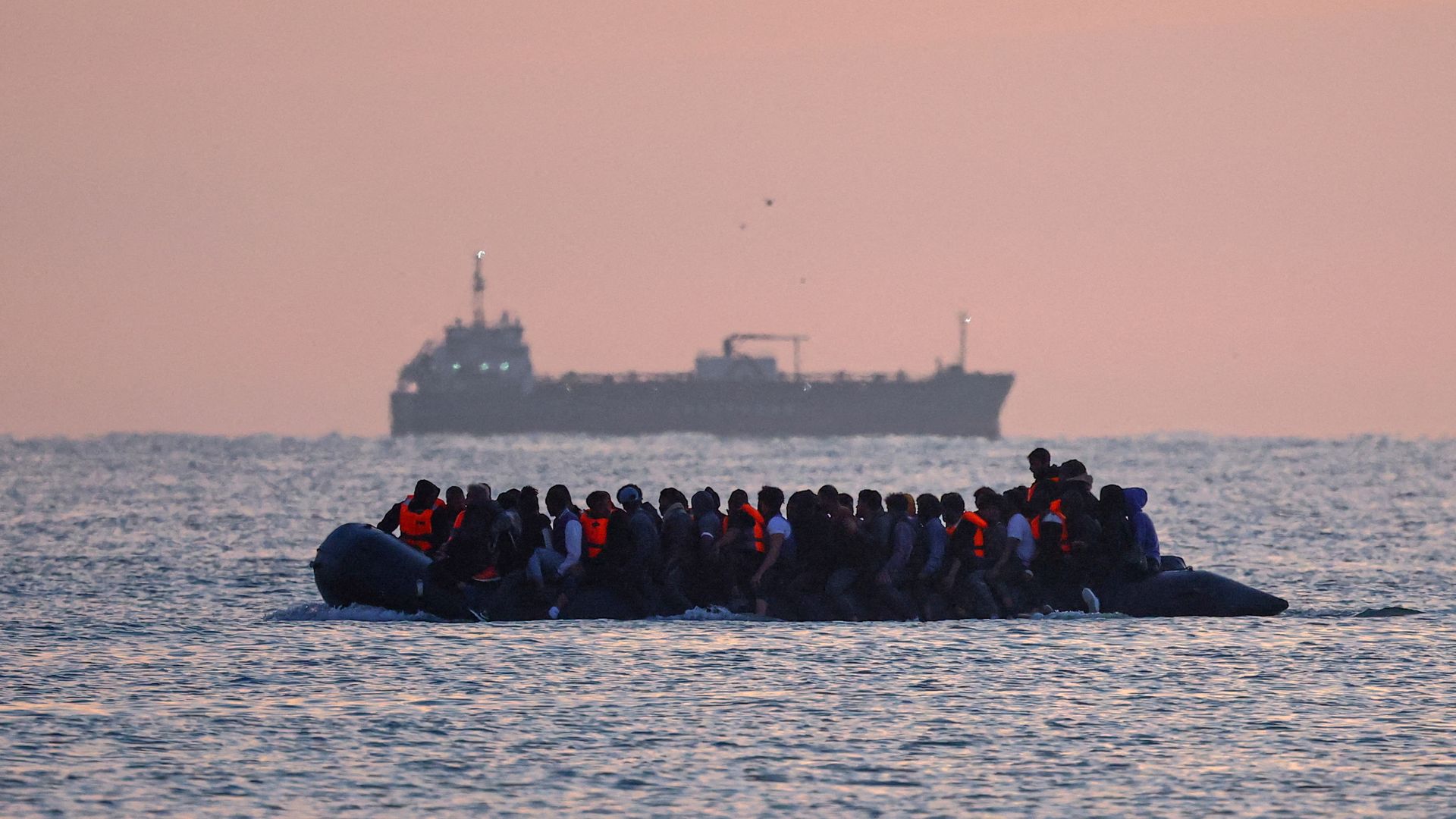
Every time headlines flash with news of another migrant boat breaking apart in the cold waters between France and the United Kingdom, the immediate reaction is often numb exhaustion. Numbers roll across screens. Two women and a child die attempting to cross the English Channel. Another vessel in distress. Another rescue operation called off. Behind these bleak updates lies a grinding machinery of desperation, criminal exploitation, and political failure that spans continents.
You cannot understand these tragedies by looking at them as isolated maritime accidents. They are the predictable outcome of a broken global refugee framework meeting ruthless smuggling networks. When safe legal pathways vanish, dangerous ones become the only option left. Let's look at what is actually driving families onto unseaworthy rubber dinghies in the dead of night, why current deterrence strategies keep failing, and what the real human cost looks like on the ground.
The Anatomy of a Channel Crossing Attempt
The English Channel is one of the busiest shipping lanes in the entire world. More than five hundred commercial vessels pass through these waters every single day. Mixing massive container ships with overloaded, fragile inflatable boats is a recipe for disaster. Yet thousands of people take that gamble every year.
Organized crime syndicates control the departure points along the northern French coastline around Calais and Dunkirk. These groups operate with military precision and absolute indifference to human life. They pack up to sixty or seventy people into boats meant for less than half that number. They hand over cheap plastic paddles, skip the life jackets to save space, and force passengers into the water at gunpoint if anyone hesitates.
When you hear about a boat deflating or capsizing in freezing waters, it is rarely due to bad luck alone. The equipment is junk. The engines are underpowered and prone to failure. Smugglers know the dinghies won't hold up, but they treat human cargo as disposable. Pay beforehand, or don't get on the boat at all. Once the vessel clears the surf, the organizers are already counting their cash and moving on to the next batch of victims.
Why Safe Routes Remain Out of Reach
Governments love to talk about smashing the gangs and stopping the boats at the source. But politicians rarely talk honestly about why people bypass traditional asylum systems in the first place.
If you are fleeing war, persecution, or systemic collapse in places like Afghanistan, Sudan, Eritrea, or Syria, getting a standard visa to enter Europe legally is practically impossible. Embassies require documentation you might have had to flee without. They demand financial guarantees you cannot meet. The legal application process takes years, assuming you even have access to a processing center.
When your life is in immediate danger, waiting years for paperwork isn't a viable strategy. You pack what you can carry and head north.
Governments across Europe have poured billions into border security, fences, thermal cameras, and police patrols. They have tried paying transit countries to keep people away. None of it stops the flow. It simply drives desperate people into the hands of more dangerous traffickers who charge higher prices for riskier routes. Supply and demand dictate the market. As long as the desire to reach safety remains high, smugglers will find creative ways to beat the hardware.
The Political Finger Pointing Game
Every time lives are lost in the Channel, a predictable script plays out in political capitals. Leaders express deep sorrow. They tweet about evil smuggling gangs. Then they blame each other.
London points the finger at Paris for not patrolling French beaches aggressively enough. Paris points the finger at London for maintaining an informal labor market that makes undocumented migration attractive in the first place. Meanwhile, rescue agencies and local volunteers on both sides of the water pick up the pieces.
This blame game is a distraction. It avoids confronting the fundamental flaw in modern border management. Treating migration strictly as a law enforcement problem guarantees failure. You cannot police your way out of a humanitarian crisis. When desperate human beings face certain violence or poverty at home, a wall or a patrol boat looks like a hurdle, not a stop sign.
What Real Solutions Look Like
If we genuinely want to stop women and children from drowning in the Channel, the approach has to change fundamentally. It is not about building higher fences or passing harsher deterrence laws. Those measures have been tested for decades and they simply do not work.
First, processing centers need to be established outside destination countries, allowing people to apply for asylum safely before they ever step foot on a flimsy boat. If individuals know they have a fair, transparent, and reasonably fast way to have their claims evaluated, the business model of the smuggling cartels collapses overnight. Why pay thousands of euros to cross a freezing ocean if you can board a plane legally?
Second, international cooperation must shift from stopping boats at sea to dismantling the financial networks of traffickers. Smugglers use international banking systems, cryptocurrency, and underground hawala networks to move their ill-gotten gains. Freeze their money, and their operations grind to a halt.
Finally, we have to stop treating migration as an existential threat and start treating it as a shared global reality. Climate change, regional conflicts, and economic inequality will continue driving human movement for generations. Ignoring the root causes while militarizing borders only ensures that more tragedies will play out in the dark waters off the European coast.
Stop looking away when the news cycle moves on. The families who step onto those boats are betting everything they have on a slim chance at a future. Until governments offer a better bet, the boats will keep launching, and the sea will keep taking its toll.


