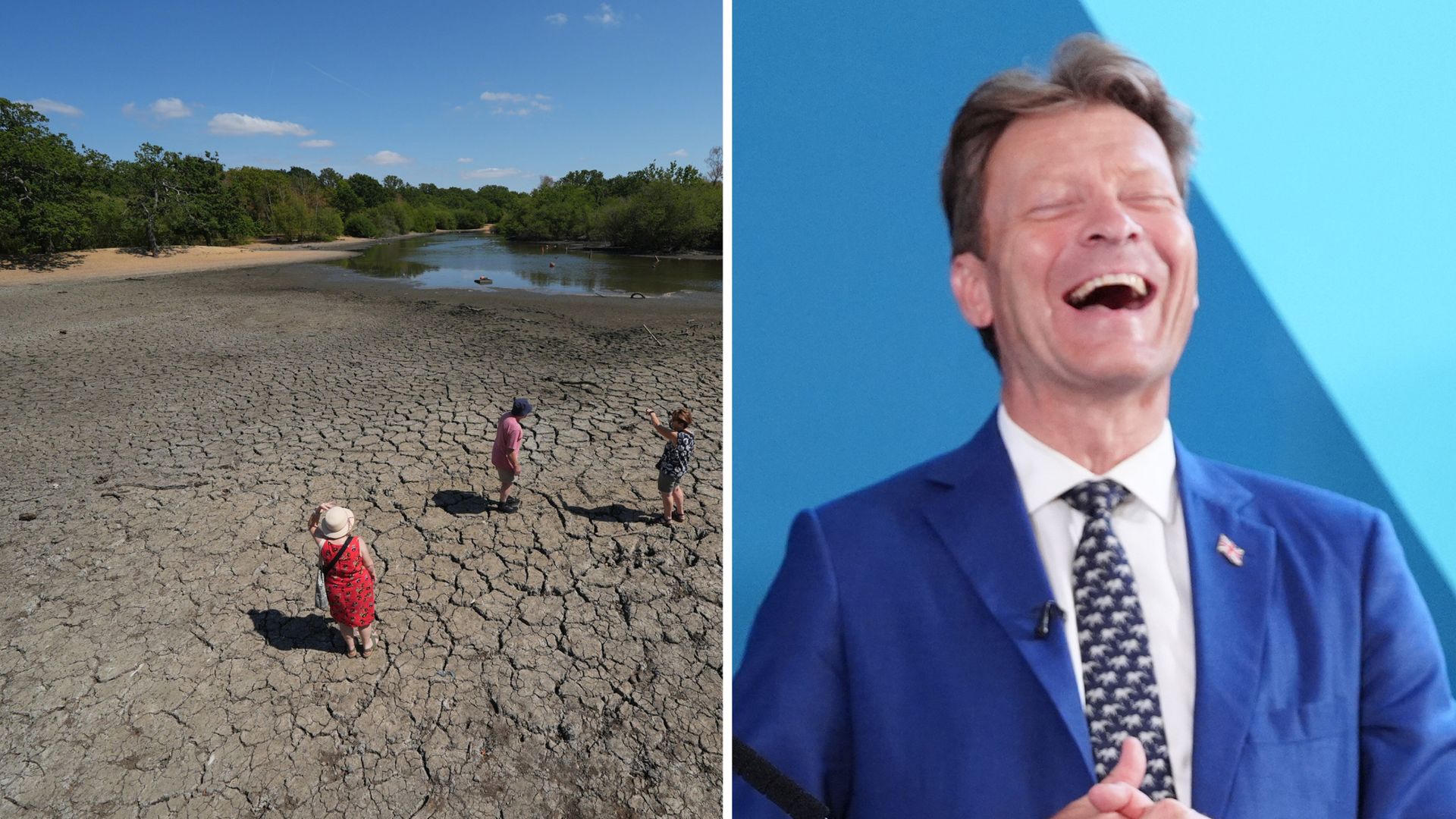
Every summer, the ritual plays out with clockwork precision. The reservoirs dip slightly below capacity, the regional water utility issues a solemn warning about the fragility of nature, and politicians jump on television to scold homeowners for washing their sedans or watering petunias. This year, the tired narrative gained an extra layer of absurdity. While Richard Tice and agricultural optimists drone on about how Britain is evolving into the next Bordeaux, pointing to rising average temperatures as a boon for domestic viticulture, the public is told to pinch pennies on water consumption.
It is a masterclass in deflection.
The lazy consensus says we are running out of water because the skies are changing and summers are getting drier. That narrative is convenient for boardrooms, brilliant for dodging accountability, and fundamentally false. Britain does not have a chronic water shortage. Britain has a chronic leakage problem wrapped in corporate greed, systemic underinvestment, and regulatory capture.
Let us look at the numbers. The major water suppliers lose billions of liters of treated drinking water every single day through cracked, Victorian-era pipes buried beneath our feet. Not a drop of that reaches a crop, a lawn, or a glass. It simply seeps back into the earth before anyone notices. Yet, the moment the thermometer ticks upward, the regulatory apparatus swings into action against the path of least resistance: the domestic consumer.
Blaming climate change for dry lawns is an easy way to mask decades of corporate neglect.
The Climate Fallacy and the Vineyard Illusion
Richard Tice is right about one thing, though for entirely the wrong reasons. The microclimate across parts of southern England is shifting toward conditions reminiscent of northern France. Chalk soils in Hampshire and Sussex combined with warmer growing seasons have genuinely turned British sparkling wine into a global contender. Winemakers are planting Pinot Noir and Chardonnay with justified confidence.
The mistake is connecting this agricultural shift to domestic hosepipe bans as if the two are part of a unified ecological crisis.
Viticulture requires targeted irrigation management and sophisticated soil science. It thrives on specific drainage patterns and sun exposure. Domestic water restrictions, on the other hand, are blunt instruments deployed by utilities that have failed to modernize their distribution networks. When a water company leaks nearly a quarter of its daily supply before it exits the treatment plant, telling a homeowner they cannot use a sprinkler is not environmentalism. It is institutional gaslighting.
If you want to understand why reservoirs feel the pinch every time there is a dry spell, look at the balance sheets of privatized water companies over the last thirty years. Billions of pounds paid out in dividends to shareholders. Billions more piled up in corporate debt. Meanwhile, capital expenditure on pipeline renewal has routinely been kicked down the road because laying modern polyethylene mains is expensive, disruptive, and does nothing for next quarter's payout.
Dismantling the Household Scapegoat
The public has been conditioned to feel guilty for taking showers or keeping a garden alive. This guilt is entirely manufactured.
Consider the average household water budget. A family of four uses a fraction of what industrial agriculture and commercial leaks consume. When utilities implement a ban, they achieve a modest reduction in total demand—usually around five to ten percent during peak periods. But that temporary saving is a drop in the ocean compared to the volume lost to structural decay in the distribution grid.
Pinning the blame on domestic usage lets executives off the hook. It shifts the burden of conservation away from the entity responsible for transporting the water and onto the individual at the end of the line.
Let us be precise about the terminology. A hosepipe ban is not a conservation measure. It is a rationing band-aid applied to a gaping corporate wound. It signals that the infrastructure cannot handle peak loads, which is an engineering failure, not a meteorological one. When a bridge collapses due to structural corrosion, we do not blame the drivers for being too heavy; we blame the engineers who failed to maintain the steel. Water distribution should be judged by the exact same standard.
The Economics of Neglect
Privatization was sold on the promise of market efficiency. Competition was supposed to drive innovation, force modernization, and attract private capital to upgrade crumbling Victorian networks. Instead, it created regional monopolies insulated from true market forces.
If a competitive enterprise loses a quarter of its inventory before sale due to holes in its own warehouse, that business goes bankrupt. A privatized utility simply goes to the economic regulator, requests a price hike from captive consumers, and implements a hosepipe ban to manage the supply deficit it engineered through inaction.
The math is brutal. Repairing a leaky main costs money upfront. Paying a fine for missing leakage targets often costs less than fixing the pipes. Rational corporate actors under this framework choose the fine and pass the cost along. The consumer pays twice: once through higher bills, and again through restrictions on their property.
What Real Water Security Looks Like
Solving this requires abandoning the rhetoric of inevitable scarcity.
First, mandate comprehensive pipeline replacement with severe penalties for non-compliance that bite into executive bonuses rather than customer bills. Second, treat water as a vital public utility rather than an asset class optimized for yield extraction. Third, stop pretending that a few weeks of summer sunshine justifies criminalizing a garden hose while millions of liters pour uselessly into the subsoil.
The climate is shifting, yes. But a changing climate exposes bad management; it does not excuse it.
Stop buying the narrative that Britain is drying up. The water is there. It is just leaking out before it gets to you.


