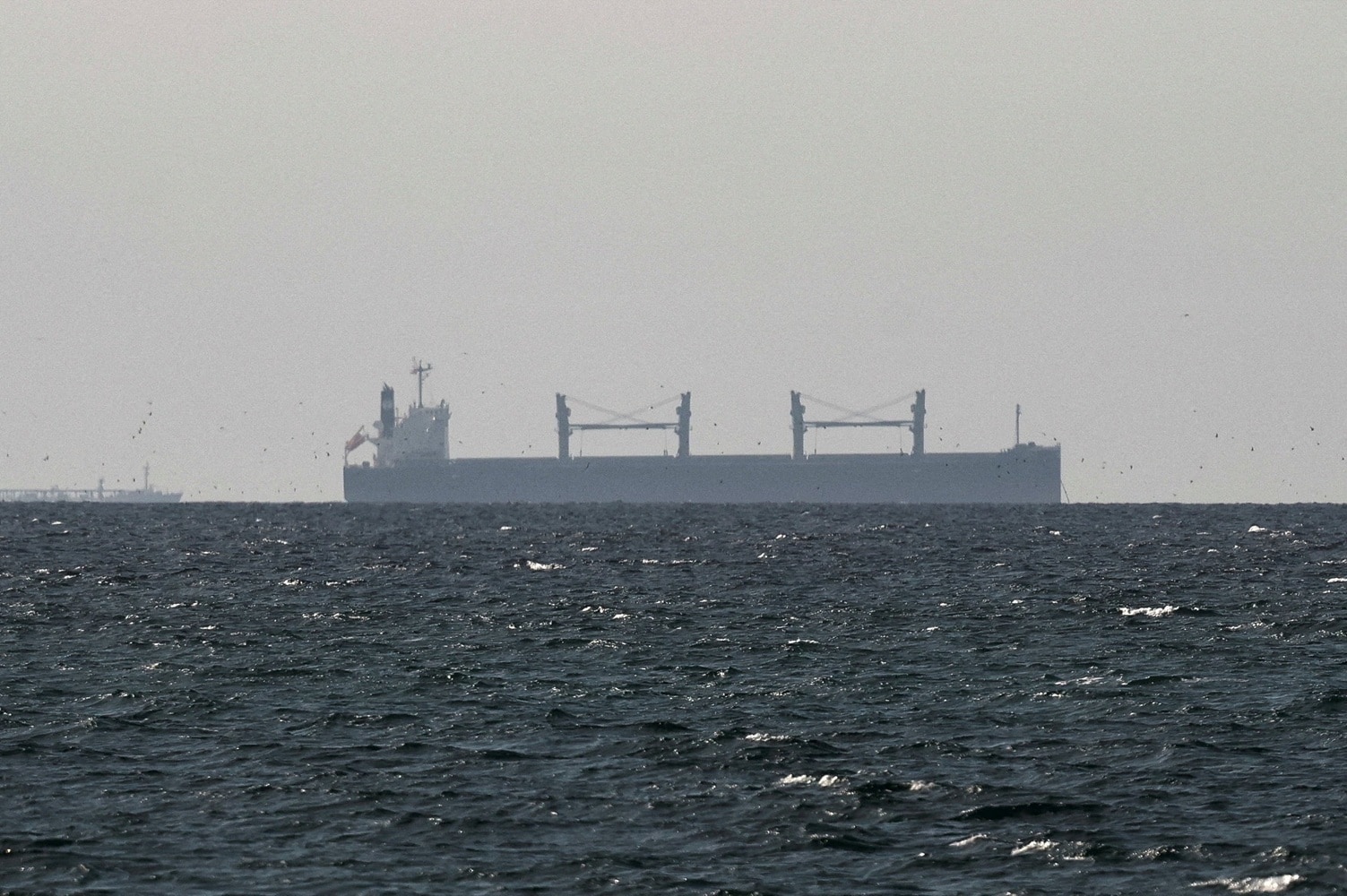
The headlines are screaming about a "fragile ceasefire" and tankers fleeing the Strait of Hormuz. They want you to believe the risk is localized to a 21-mile-wide stretch of water. They want you to think a few nervous Greek shipowners pulling their VLCCs (Very Large Crude Carriers) out of the Persian Gulf is a signal of impending doom or a cooling of tensions.
They are wrong.
The mainstream financial press is obsessed with the tactical movement of hulls. They miss the structural decay of the energy security architecture. If you are watching the AIS (Automatic Identification System) tracking data to gauge the "safety" of the Middle East, you are looking at a thermometer while the house is being demolished. The real story isn't that ships are leaving; it’s that the very concept of "maritime security" in the 21st century has become an expensive, outdated myth.
The Myth of the Strategic Exit
The "lazy consensus" suggests that a mass exit of tankers signifies a rational response to a breakdown in diplomacy. It’s framed as a temporary retreat. The implication is that once the "fragile ceasefire" solidifies, the status quo returns.
That’s a fantasy.
Shipping companies aren’t exiting because of a ceasefire; they are exiting because the insurance math has fundamentally broken. When the Joint War Committee (JWC) updates its Listed Areas, the "war risk" premiums don't just tick up—they explode. We aren't talking about a 5% increase in operational costs. We are talking about premiums that can occasionally eclipse the daily charter rate of the vessel itself.
I have watched traders scramble to cover cargoes where the insurance "bump" wiped out the entire margin of the trade in four hours. When a tanker leaves Hormuz today, it isn't a geopolitical "vote of no confidence." It is a cold, hard liquidity flight. The shipowners are fleeing the balance sheet risk, not the missiles.
Why the Ceasefire is Irrelevant
The media loves the word "fragile." It provides an easy out when things inevitably go sideways. But focusing on the diplomatic "he-said, she-said" between Washington and Tehran is a distraction.
The Strait of Hormuz handles roughly 20% of the world's liquid petroleum. You cannot "exit" that reality. You can only delay the inevitable. The tankers leaving now are simply creating a supply vacuum that will be filled by "dark fleet" operators—vessels with opaque ownership, questionable maintenance, and non-Western insurance.
By cheering the "exit" of reputable shipping lines, the West is effectively handing the keys to the world’s most vital chokepoint to shadow players who don't care about environmental standards or international maritime law. We are traded "safety" for a total loss of visibility.
The Logistics of a Failed Premise
People also ask: "Will oil hit $150 if the Strait closes?"
This is the wrong question. The question is: "Can the global economy survive $90 oil in a world where the physical delivery mechanism is broken?"
The math of the Strait is unforgiving.
$$Q = V \times C$$
Where $Q$ is the total flow, $V$ is the velocity of the tankers, and $C$ is the average capacity.
The mainstream ignores $V$. When tankers "exit" or take the long way around the Cape of Good Hope, the velocity of the global energy supply chain drops. You don't need a total blockage to trigger a global recession. You just need a 15% reduction in velocity. The "exit" the media is reporting on is that reduction in velocity happening in real-time. It’s a slow-motion heart attack, not a clean break.
The Death of the Blue-Water Guarantee
For decades, the market operated under the "Blue-Water Guarantee"—the assumption that the U.S. Navy would ensure the free flow of commerce. That era is over. Not because of a lack of will, but because of a shift in the cost of denial.
Imagine a scenario where a $50,000 loitering munition (a "suicide drone") can disable a $150 million tanker. The U.S. Navy can intercept 99% of threats, but in the shipping world, a 1% failure rate is a 100% loss of insurability.
I've sat in rooms with commodity hedgers who are realizing that the "safety" provided by a carrier strike group is psychological, not financial. A destroyer can't stop a spike in P&I (Protection and Indemnity) insurance. The tankers exiting Hormuz are the first clear admission that the world's most powerful military can no longer guarantee the affordability of trade, even if it can technically guarantee the possibility of it.
Stop Watching the Tankers, Watch the Land
The real disruption isn't at sea. While you're distracted by satellite imagery of the Strait, look at the pipeline infrastructure in Saudi Arabia and the UAE.
The "East-West Pipeline" (Abqaiq-Yanbu) and the ADCOP line in Abu Dhabi are the real barometers. The "insider" truth is that these lines cannot handle the full volume of a Hormuz closure. They are a band-aid on a gunshot wound. If the "exit" from the Strait were real and sustainable, we would see a massive, permanent shift in land-based infrastructure investment. We aren't. We are seeing a desperate, short-term scramble.
The Actionable Truth
If you are an investor or a policy wonk, stop reading the "tension" reports. They are lagging indicators.
- Discount the Ceasefire: In a multipolar world, non-state actors don't care about the signatures of diplomats. The risk is decentralized. A ceasefire between two nations doesn't stop a drone from a third-party militia.
- Monitor the Shadow Fleet: The exit of "clean" tankers is a bullish signal for oil prices in the long term because it increases the "risk premium" on every barrel. Total transparency is being replaced by total opacity.
- Realize the Chokepoint is Permanent: There is no "solving" Hormuz. There is only surviving it. The tankers aren't leaving forever; they are waiting for the price of risk to be socialized, likely through government-backed insurance schemes that will eventually hit the taxpayer.
The "fragile ceasefire" is a narrative tool used to keep markets from panicking. But the tankers moving out? That's the sound of the smart money admitting that the old rules of the sea are dead.
Stop waiting for a return to "normal." The exit isn't a temporary move; it’s a permanent reassessment of what it costs to keep the lights on in a world where a 21-mile gap can hold the global economy hostage.
The Strait isn't closing. The business model of the West is.