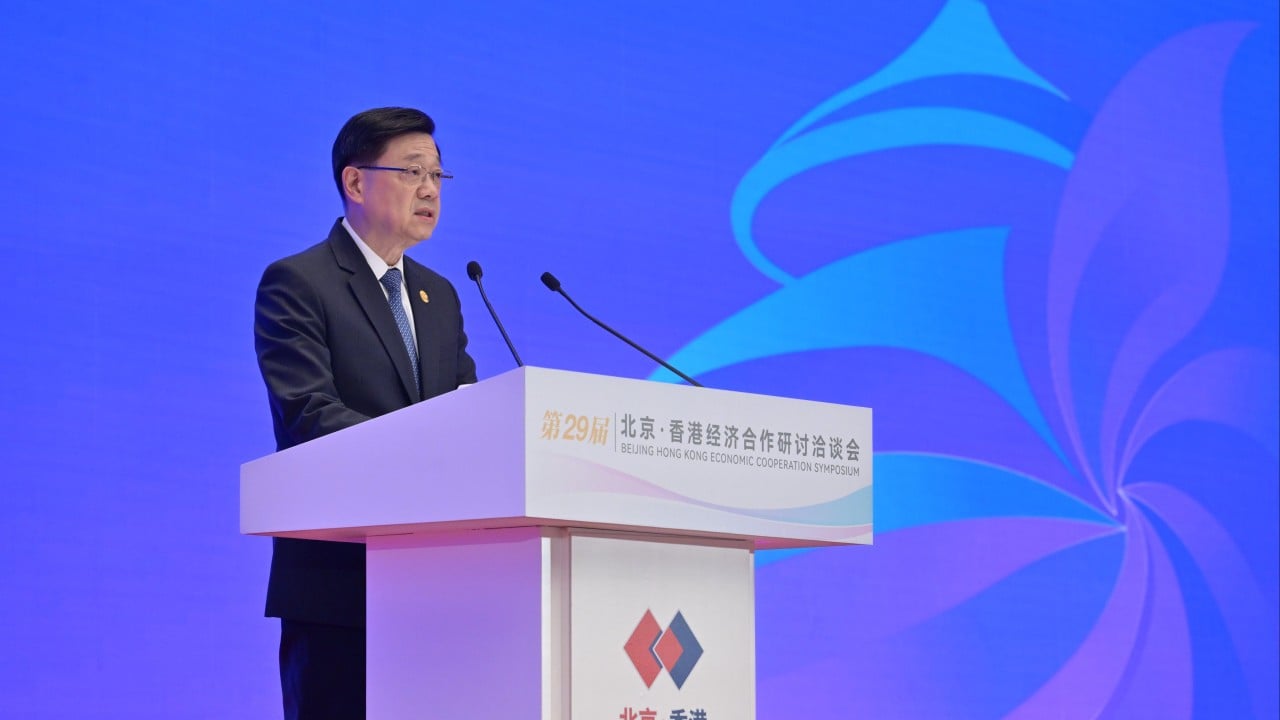
Conventional business media coverage treats every official trip by Hong Kong Chief Executive John Lee to Beijing and Shanghai as a straightforward push to "deepen mainland economic ties." That framing is lazy. It relies on an outdated binary that views Hong Kong either as a traditional Western financial outpost or as an undifferentiated municipality absorbed into the mainland economy.
According to official statements from the Hong Kong Special Administrative Region (HKSAR) government and economic policy analysts at institutions like the Hong Kong Trade Development Council (HKTDC), these high-level visits are driven by structural economic necessity rather than mere diplomatic ceremony. If you are a corporate strategist, investor, or supply chain operator reading those standard press releases at face value, you are missing the actual mechanics of how capital, talent, and trade are being rerouted across Asia.
The Myth of "Deepening Ties"
The phrase "deepening economic ties" suggests a one-way street where Hong Kong simply asks Beijing and Shanghai for market access. That narrative ignores four decades of integration that already happened. Mainland enterprises already account for roughly half of the listings and nearly 80 percent of the market capitalization on the Hong Kong Stock Exchange (HKEX). Trade integration is not a future goal. It is an existing baseline.
What is actually occurring during these summits in Beijing and Shanghai is a structural realignment of Hong Kong's role as an intermediary. In the 1990s and 2000s, Hong Kong functioned primarily as an inbound gateway—channeling Western institutional capital into mainland factories and real estate. Today, according to data from China's Ministry of Commerce and analysis from global consultancies, the flow has inverted. Mainland firms are aggressively expanding outward into Southeast Asia, the Middle East, and Latin America, and they need an offshore platform to manage currency risk, international legal arbitration, and cross-border financing.
Why Shanghai Is Not Hong Kong's Replacement
A recurring talking point among Western commentators is that Shanghai's rise as a financial center inevitably renders Hong Kong obsolete. This argument misunderstands how China's dual-currency architecture operates.
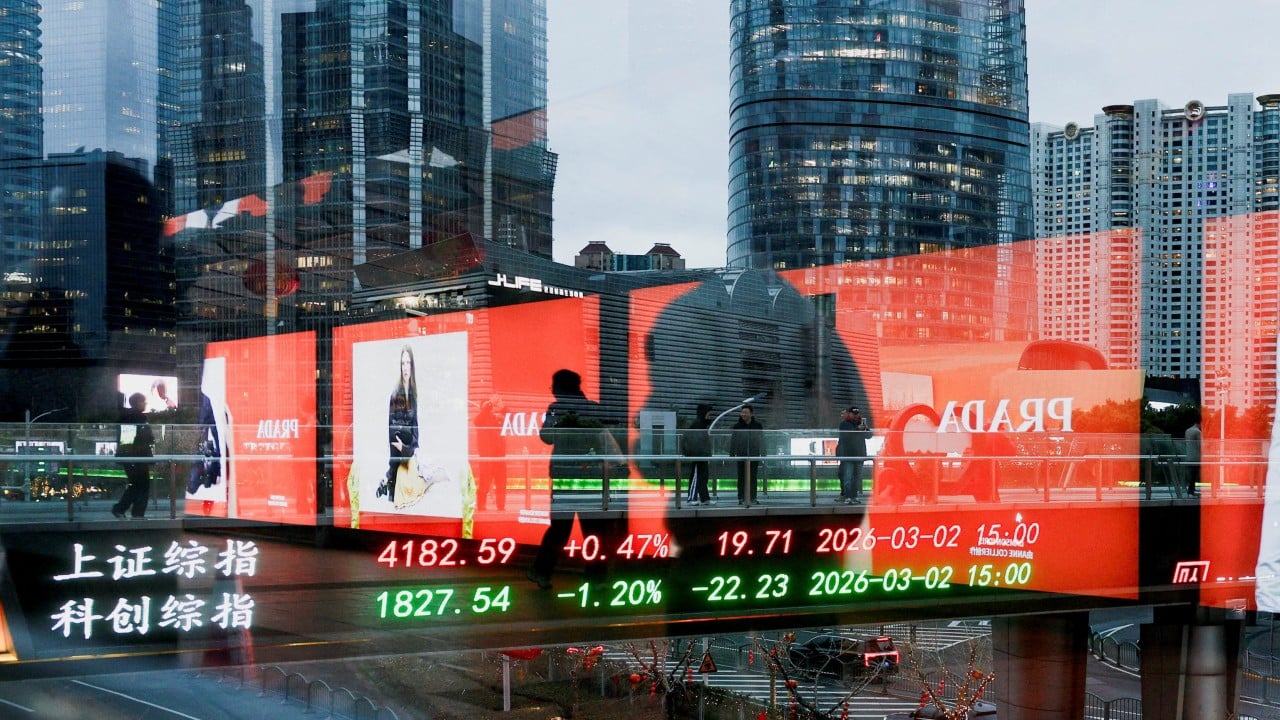
Shanghai operates primarily within the onshore Renminbi (CNY) system, governed by mainland capital controls and domestic regulatory frameworks. Hong Kong operates under the "One Country, Two Systems" framework, featuring a freely convertible currency pegged to the US dollar, a common law legal system, and an open capital account. When John Lee meets with municipal leaders in Shanghai, the objective is not to merge the two markets into a single homogenous entity. The objective is arbitrage and complementarity.
- Capital Controls vs. Open Liquidity: Mainland institutions use Shanghai for domestic scale and liquidity, while relying on Hong Kong's offshore Renminbi (CNH) market—the largest in the world—to settle international trade and issue offshore bonds.
- Legal Jurisdiction: International counterparties frequently insist on English or Hong Kong common law for cross-border joint ventures. Shanghai courts do not offer common law adjudication.
- Regulatory Sandboxes: Initiatives like Bond Connect, Wealth Management Connect, and Swap Connect exist specifically because the two systems remain distinct. Without the regulatory border between Hong Kong and Shanghai, those financial channels would not need to exist.
The Real Agenda in Beijing and Shanghai
When examining the actual policy deliverables emerging from Hong Kong leadership visits to the mainland's political and commercial capitals, three concrete priorities consistently surface. None of them resemble the generic "goodwill tour" portrayed in surface-level news briefs.
1. Supply Chain Re-Engineering ("China Plus One" Management)
Geopolitical friction and tariff regimes have forced mainland manufacturers to relocate assembly and final production to Vietnam, Malaysia, Indonesia, and Mexico. However, moving a factory floor does not mean moving corporate headquarters, treasury operations, or intellectual property management.
Hong Kong is positioning itself as the offshore control tower for these multinational mainland supply chains. By coordinating with ministries in Beijing and commercial conglomerates in Shanghai, the HKSAR government is pitching Hong Kong's tax regime, trade credit insurance, and maritime arbitration services to mainland companies setting up regional headquarters outside China.
2. The Battle for High-End Talent and R&D
Beijing holds the concentration of state-backed research institutions, national laboratories, and regulatory ministries. Shanghai holds the concentration of multinational regional headquarters, semiconductor design firms, and biomedical clusters. Hong Kong holds five universities ranked in the global top 100 alongside international patent protections.
The friction point has always been commercialization. Hong Kong historically excelled at basic academic research while struggling to scale manufacturing, whereas the Yangtze River Delta (anchored by Shanghai) and the Greater Bay Area excelled at industrial scaling. Discussions between Hong Kong officials and mainland technology ministries focus heavily on cross-border data flows, mutual recognition of clinical trial data, and talent visas—specifically mechanisms like the Top Talent Pass Scheme—to bridge academic research with mainland industrial capacity.
3. Sovereign and Institutional Capital Allocation
As traditional Western pension funds and endowments reduce their direct exposure to Chinese equities due to domestic political pressures, Hong Kong's capital markets have faced liquidity headwinds. Initial public offering (IPO) volumes in Hong Kong dropped significantly from their 2020 peaks before showing selective signs of stabilization.
Meetings with financial regulators in Beijing—including the China Securities Regulatory Commission (CSRC) and the People's Bank of China (PBOC)—center on unlocking domestic mainland liquidity to offset Western outflows. Expanding the Stock Connect eligible securities list, facilitating Renminbi-denominated stock trading counters in Hong Kong, and encouraging mainland industry leaders to list in Hong Kong rather than New York are defensive and offensive moves designed to keep Hong Kong's equity market liquid.
Dismantling the Common Misconceptions
To understand the commercial reality of Hong Kong's mainland strategy, it helps to examine the flawed assumptions that frequently drive business commentary.
| Common Assumption | Structural Reality |
|---|---|
| Hong Kong is losing its autonomy because officials visit Beijing frequently. | Under the Basic Law, Hong Kong's economic survival has always depended on coordinated policy alignment with central ministries regarding cross-border quotas, tax treaties, and financial connects. |
| Mainland companies only list in Hong Kong because they cannot list in the US. | While US regulatory scrutiny (such as the Holding Foreign Companies Accountable Act) pushed many firms toward Hong Kong, proximity to the mainland investor base via Stock Connect provides valuation support that US markets often lack for Chinese consumer and industrial brands. |
| Closer ties with Shanghai hurt Hong Kong's financial sector. | Coordinated financial infrastructure (such as the Shanghai-Hong Kong Stock Connect) increases total cross-border turnover, benefiting brokers, custodians, and clearing houses in both cities. |
| Western multinationals have completely abandoned Hong Kong. | While many firms have decentralized regional functions to Singapore or Tokyo, major global banks, asset managers, and insurers maintain substantial Hong Kong operations specifically to service mainland wealth and cross-border institutional flows. |
The Risks and Trade-Offs Nobody Mentions
A realistic assessment requires acknowledging the vulnerabilities inherent in this strategy. Leaning heavily into mainland economic integration carries distinct structural risks for Hong Kong's business environment.
First, there is concentration risk. Tying Hong Kong's capital markets and professional services sector more tightly to mainland corporate demand exposes the city directly to mainland macroeconomic cycles. When mainland property developers default or domestic consumption slows, Hong Kong's banking sector, legal firms, and commercial real estate market feel the contraction immediately. Diversification toward Middle Eastern and ASEAN capital has been slower to materialize in deal volume than official rhetoric suggests.
Second, geopolitical spillover remains an active threat. As Hong Kong aligns more visibly with Beijing's industrial and technological priorities—such as artificial intelligence, biotechnology, and advanced manufacturing—it faces heightened scrutiny from US and European export control regimes. Multinational corporations operating in Hong Kong increasingly have to navigate complex compliance boundaries regarding data sovereignty, dual-use technologies, and sanctions screening.
Third, cost structures remain stubbornly high. Even as Hong Kong competes with Shanghai, Shenzhen, and Singapore for regional headquarters and research centers, its commercial real estate rents, residential housing costs, and executive compensation packages remain among the highest in the world. Policy agreements signed in Beijing cannot easily override the basic unit economics of operating an office in Central.
How Businesses Should Actually Read These Summits
If you are allocating capital, managing Asian operations, or advising boards on cross-border strategy, ignore the ceremonial headlines surrounding high-level political visits. Watch the regulatory plumbing instead.
- Track CSRC and PBOC circulars, not banquet speeches. The real indicators of change are technical announcements regarding cross-border capital quotas, RMB settlement rules, and IPO approval timelines for mainland firms seeking Hong Kong listings.
- Evaluate your legal and treasury footprint. If your company sells into the mainland or sources from mainland suppliers expanding into Southeast Asia, assess whether using a Hong Kong corporate entity provides superior tax treaty benefits, currency hedging via CNH, and enforceable international arbitration compared to operating purely onshore.
- Separate operational hubs from financial hubs. The emerging model across Greater China is functional specialization: keep R&D and manufacturing scaled in the Yangtze River Delta or Greater Bay Area, while anchoring intellectual property holding, cross-border treasury, and international fundraising in Hong Kong.
Understanding Hong Kong's trajectory requires looking past geopolitical clichés and focusing on the mechanics of cross-border capital, legal jurisdiction, and supply chain finance. The cities are not merging into one; they are building a more tightly regulated bridge between two fundamentally different economic systems.