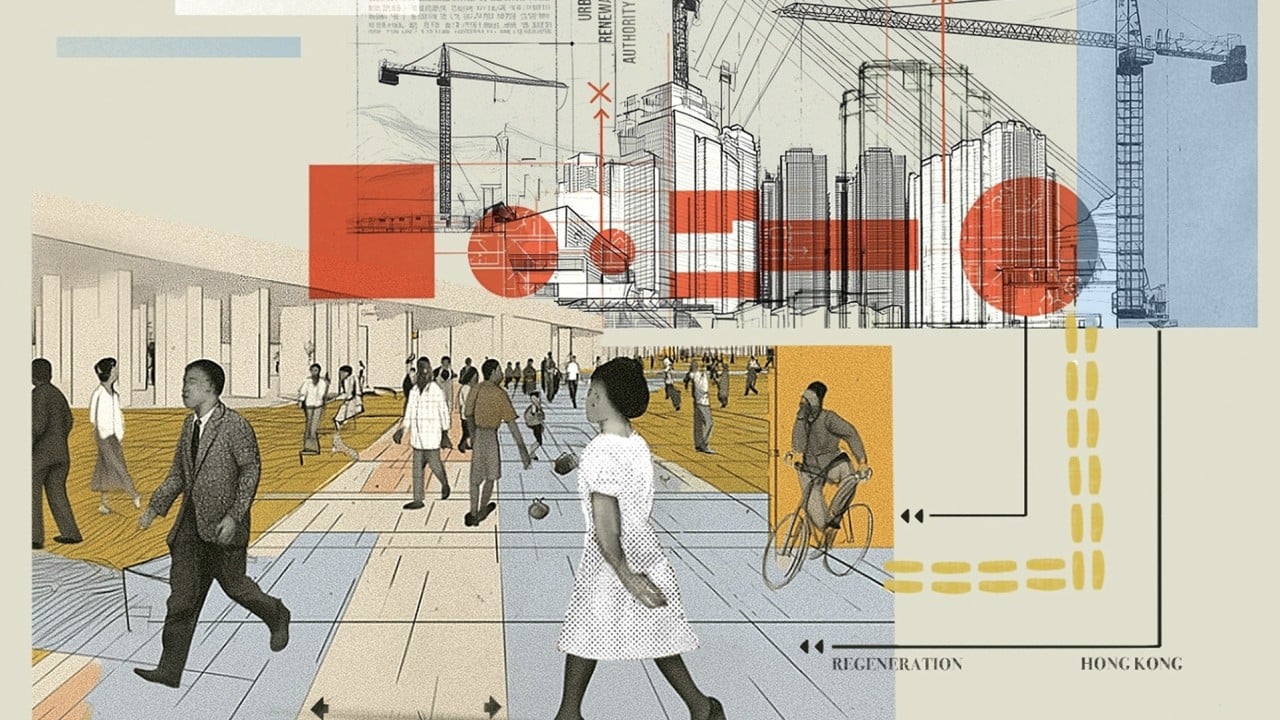
Hong Kong urban renewal is failing because authorities rely on fragmented building-by-building demolition rather than comprehensive district-wide restructuring. For decades, the Urban Renewal Authority has chased quick wins through single-site acquisitions. This piecemeal strategy generates maximum short-term land premiums while systematically dismantling the social fabric, straining aging infrastructure, and leaving dense neighborhoods structurally paralyzed.
Walk through any older corridor in Kowloon or Western District. The visual testimony of administrative failure stares you in the face. A gleaming, high-density residential monolith wrapped in glass towers over crumbling tenements that date back to the mid-twentieth century. This is not progress. It is urban patchworking. It treats the symptoms of structural decay while ignoring the systemic rot underneath.
The Economics of the Single-Site Trap
Property is religion in this city. Every square foot carries a monetary weight that dictates policy, drives bureaucracy, and warps administrative vision. Because land revenue forms the bedrock of public finance, the government and its statutory bodies are addicted to high-value parcel flips.
Single-site redevelopment is simple math for developers. Buy a cluster of old tenements, compensate the owners according to statutory valuation formulas, clear the site, and erect a luxury tower with smart elevators and a pocket-sized clubhouse. The financial return is immediate. The market absorption rate is calculable.
Yet this approach fails basic urban engineering metrics.
When you drop a high-density luxury residential tower into a neighborhood designed for British colonial-era capacities, you break the plumbing. You overload the transformer stations. You choke the narrow access roads with an influx of private vehicles that the original grid never anticipated.
The Urban Renewal Authority operates under immense pressure to balance its ledger. Redevelopment projects must theoretically be self-financing. This financial constraint forces the agency to prioritize profitable commercial and high-end residential conversions over public goods like open green spaces, widened pedestrian corridors, or integrated community facilities.
As a result, every time an old block falls to the wrecking ball, the surrounding district becomes marginally more congested, less breathable, and structurally more vulnerable to failure.
The Social Cost of Displacement
Bricks and mortar tell only half the story. Behind every rusted metal gate in a dilapidated tenement is a complex micro-economy built over decades.
Hardware stores, traditional herbalists, family-run noodle shops, and independent print-makers form the lifeblood of these older districts. They operate on thin margins, sustained by loyal local foot traffic and low commercial rents. When piecemeal renewal hits a block, landlords empty out the spaces, and rents across the adjacent streets spike instantaneously.
The neighborhood network shatters.
Residents who have lived in To Kwa Wan or Sham Shui Po for forty years find themselves priced out of their own backyards. They are pushed toward the far-flung New Territories or isolated public housing estates, severing their connection to employment hubs, healthcare access, and familiar community support systems.
Displacement is rarely quantified in official planning documents. Economists calculate land values and developers project internal rates of return, but nobody charts the psychological toll of community dissolution. When you replace a vibrant, mixed-income streetscape with gated luxury compounds, you kill the street life that made the neighborhood desirable in the first place.
The Myth of Comprehensive Regeneration
Official rhetoric loves the word regeneration. Government press releases frequently promise visionary transformation, smart city integration, and sustainable urban living.
The reality on the ground is far more pedestrian.
True district-wide regeneration requires patience, capital commitment, and a willingness to accept lower short-term financial yields in exchange for long-term urban resilience. It means rethinking entire drainage networks, burying utilities, creating contiguous pedestrian networks, and preserving historical architectural character where it serves a functional or cultural purpose.
Instead, Hong Kong gets the assembly-line approach.
A consultant drafts a report. A bureaucratic committee approves a boundary line. Notices are posted on rusted doors. Acquisition offers are made. The bulldozers move in.
This is not planning. This is property extraction.
Consider the stark contrast between how industrial zones and residential districts are handled. When old industrial areas undergo transformation, master planning guidelines occasionally force a broader view because the parcels are larger. But in densely populated residential quarters, the land ownership is fragmented among thousands of individual flat owners.
Dealing with fragmented ownership is messy. It involves protracted legal battles, stubborn holdouts, and complex compensation disputes. To avoid this administrative headache, the authorities take the path of least resistance: small, manageable project footprints that can be cleared and monetized quickly.
Infrastructure on the Brink
The physical infrastructure supporting Hong Kong's urban core is aging faster than it is being replaced.
Underneath the bustling asphalt lie cast-iron water mains, electrical conduits, and sewage lines laid down when the city’s population was a fraction of its current size. Piecemeal redevelopment does nothing to upgrade these subterranean arteries. In fact, it places an additional burden on them.
When a developer builds a fifty-story tower on a plot that previously held a five-story walk-up, the population density of that specific parcel increases tenfold. The local sewage connection must now handle ten times the waste. The local substation must channel ten times the power.
Municipal authorities often scramble to patch the surface—repaving sidewalks, adding traffic lights, or installing superficial street furniture—while the foundational engineering systems quietly approach critical overload.
Without a coordinated subterranean master plan that aligns building approvals with actual infrastructure capacity, the city is borrowing against its future.
What Real Reform Looks Like
Fixing the urban renewal crisis requires abandoning the addiction to quick land sales and single-site profit margins.
First, the planning paradigm must shift from site-by-site clearance to integrated corridor management. Instead of viewing a single block in isolation, planners must evaluate entire catchment areas—spanning multiple neighborhoods—to assess how transport, drainage, and open space can be upgraded simultaneously.
Second, the financial model of urban renewal must be decoupled from the expectation of immediate profitability. If public agencies treat renewal strictly as a commercial real estate venture, they will always prioritize luxury over livability. Public capital must subsidize the creation of civic infrastructure within redeveloped zones, ensuring that parks, community centers, and wider sidewalks are non-negotiable baselines rather than optional afterthoughts.
Third, community retention strategies must replace blunt-force displacement. When older districts are upgraded, mechanisms should exist to allow existing residents and small businesses to return to the regenerated area under fair, regulated lease terms. Preserving the economic DNA of a neighborhood is just as important as pouring new concrete.
Hong Kong stands at a critical juncture. The easy land has already been developed. The low-hanging fruit of single-site clearance has been picked clean. What remains are complex, interconnected, aging districts that demand sophisticated, courageous, and systemic intervention.
Continuing down the path of piecemeal renewal will not save the city. It will merely accelerate its structural decay, one overpriced luxury tower at a time.


