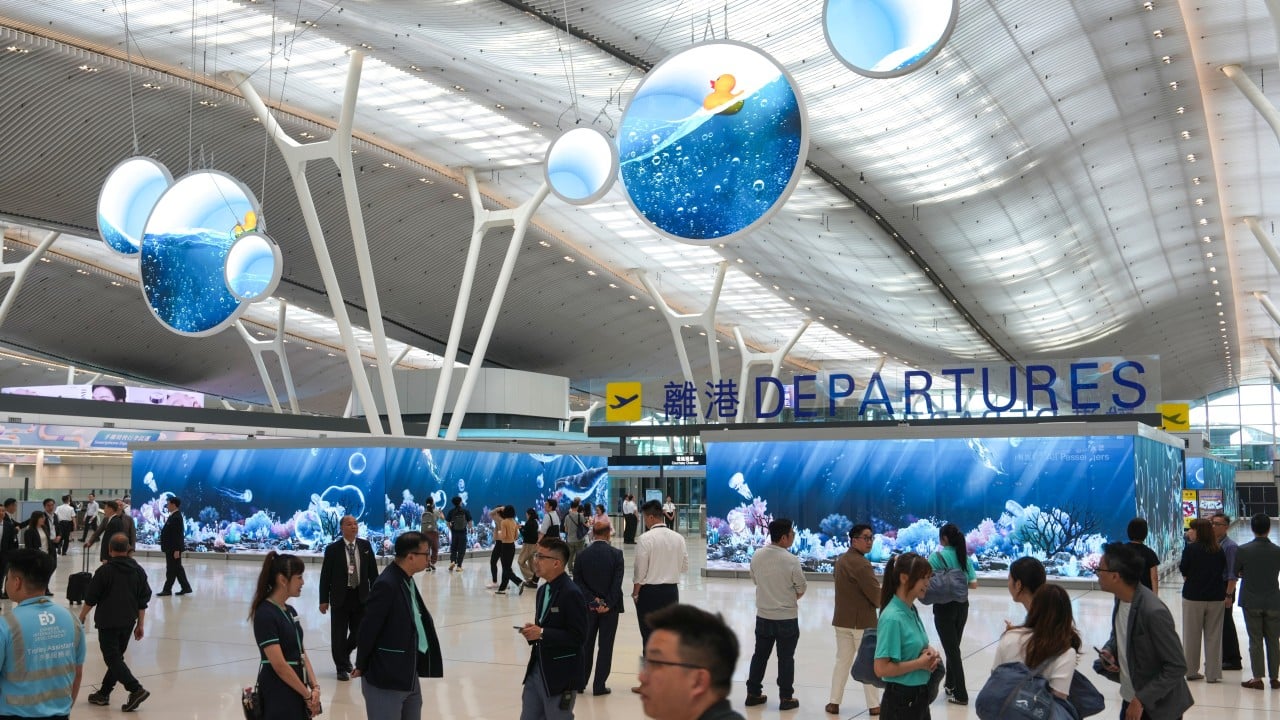
Hong Kong International Airport handles millions of passengers every single month, but its latest financial scorecard shows that crowded terminals don't always mean a overflowing treasury. The Airport Authority Hong Kong recently posted a 16.8% drop in annual net profit, with earnings sliding down to HK$2 billion.
If you just look at the long queues at check-in counters, this drop makes no sense. Passenger traffic is up, planes are flying, and the cargo terminals are humming along. Yet, the bottom line took a visible hit.
The reality is simple. Running a mega-hub gets incredibly expensive when you are simultaneously expanding your footprint and cleaning up unexpected operational messes. A combination of surging operating expenses and a costly salvage operation quietly ate away at the gains from the travel recovery.
The Hidden Costs Behind the Profit Slide
Most people assume that more passengers automatically equal more profit. That is a massive misconception in the aviation business.
While revenue climbed on the back of a 10.2% year-on-year jump in passenger numbers, the cost of keeping the lights on rose even faster. The airport has been aggressively expanding its capacity. Opening new terminal facilities and scaling up staff numbers to handle the post-pandemic rush creates a massive financial drag before the new revenue fully kicks in.
Then came the unexpected operational disruptions. Emergency salvage operations and localized infrastructure fixes during the fiscal period created immediate, unbudgeted cash drains. When a major airport has to pause operations, divert resources, or deploy heavy machinery to fix a sudden field issue, the bill racks up in millions per hour.
High Traffic Cannot Hide Rising Overhead
Look at the underlying data. The airport managed to handle over 27 million passengers in the first half of the year alone. Transfer and transit traffic actually climbed past pre-pandemic levels, showing that the city still functions as a vital international transit point.
Passenger Segment Share (Jan-May)
• Transfer & Transit: 31.8%
• Local Residents: 31.0%
• Destination Visitors: 23.5%
• Mainland Travelers: 13.4%
This heavy reliance on transit passengers is a double-edged sword. Transit passengers keep flight schedules full, but they spend significantly less on airport retail and dining than origin-and-destination travelers who arrive hours before their flights. Furthermore, transfer passengers are widely exempted from the city's newly increased HK$200 air passenger departure tax. The government raked in over HK$2 billion from that tax hike, but that money goes straight to public coffers, not to the airport authority's net profit margin.
Compounding this, global airlines face localized labor shortages in Hong Kong, which keeps ground handling fees elevated. The airport authority had to absorb higher utility bills, increased security costs, and maintenance outlays for the expanding Three-Runway System.
How the Airport Moves Forward
You can't fix rising costs by simply hoping for more flights. The management has to optimize its existing space. To balance the books, the focus shifts toward squeezing more value out of commercial retail spaces and lowering the baseline maintenance costs of the new infrastructure.
Airlines are gradually stabilizing their capacities, which should make ground handling costs more predictable. For retail operators inside the terminal, the challenge involves converting high foot traffic into actual sales, especially when regional travelers remain highly cost-conscious.
If you want a deeper look into the unique economics of how this hub manages its terminal revenue, check out this short analysis on Hong Kong Airport Pricing Strategies, which explains the consumer protection programs that shape its retail ecosystem.
The profit drop is a loud reminder that volume is vain without cost control. The hub remains structurally sound, but the era of easy post-opening profits has officially ended. Managers now face the hard, unglamorous work of trimming operational fat.