The United States government has officially weaponized its financial system against the International Criminal Court, placing targeted sanctions on the tribunal’s president, Tomoko Akane, and senior trial lawyer Abdoulaye Seye. This move marks a significant escalation in the ongoing campaign by the Trump administration to dismantle the legitimacy of the Hague-based institution. By freezing assets held within American jurisdiction and effectively blacklisting these judicial officers from the global financial grid, the White House is signaling that national sovereignty now trumps the established framework of international criminal law.
For decades, the tension between Washington and the ICC has been a low-boil diplomatic friction. Today, it is an open conflict. Secretary of State Marco Rubio, spearheading this initiative, has characterized the court as a corrupt entity that has maliciously exceeded its mandate. The administration’s core grievance remains unchanged: the court’s insistence on investigating potential war crimes committed by officials and military personnel from the United States and Israel—nations that have not signed the Rome Statute.
This administrative action carries consequences that extend far beyond mere diplomatic rhetoric. When you sanction a sitting judge, you are not merely attacking an individual; you are actively subverting the judicial process itself. The court’s ability to function depends on the perception of its independence. If the individuals tasked with presiding over cases are treated as enemies of the state by a global superpower, the impartiality of the tribunal becomes impossible to maintain in the eyes of its critics.
The practical reality of these sanctions is severe. They function as a form of total exclusion. Beyond the obvious freezing of assets, the travel bans and the disruption of basic financial services make the daily operations of these officials nearly impossible. Imagine a scenario where a high-ranking judge cannot access a bank account to pay for basic necessities because they held a firm stance on a legal investigation. This is the reality being engineered by the State Department.
Critics of this approach see a darker motive. By systematically targeting the personnel of the ICC, the administration is creating a chilling effect. If a prosecutor or a judge knows that pursuing a specific case will result in their personal financial ruin or an indefinite ban from the United States, the threshold for launching an investigation rises significantly. This creates an implicit immunity for those in power. It forces the court to choose between its duty to the law and its own institutional survival.
The international response has been fragmented but vocal. Japan, the home country of President Akane, has characterized the move as intolerable. Yet, statements of support provide little practical cover for those currently caught in the crosshairs. The administration’s broader strategy, as articulated by Rubio, involves pressuring the court’s 125 member states to withdraw their membership and sever their ties to the organization.
We are witnessing a slow-motion unraveling of the post-World War II consensus on international justice. The Rome Statute was intended to create a neutral ground for holding the most powerful actors accountable for the most serious crimes. By positioning the court as a threat to national sovereignty, the current administration is effectively arguing that the concept of universal accountability is incompatible with American interests.
This argument rests on a binary view of global power. In this perspective, any institution that can hold a state actor accountable is inherently a threat to that state’s survival. It is an argument of pure strength, ignoring the long-term utility of a global legal system in preventing the total breakdown of order during conflicts. If the ICC falls, there will be no remaining framework to mediate these extreme disputes.
The legal fallout has already begun in the United States. A coalition of groups, including Human Rights Watch, has initiated litigation in the Southern District of New York, labeling the administration’s campaign as a violation of basic legal norms. They argue that the executive orders issued to target the court represent an abuse of power that should be struck down by the judiciary. These cases will likely drag on for years, creating a bizarre irony where the American legal system is tasked with deciding the legality of a campaign meant to weaken a different, international legal system.
The true cost of this conflict will not be measured in the assets frozen or the travel bans enforced. It will be measured in the cases that are never opened. It will be measured in the silence of victims who see the door to justice permanently locked by bureaucratic intimidation. The administration has made its choice. It has decided that the risk of being held accountable is too high, and it has built a wall to keep that reality at bay.
Whether this wall holds, or whether it ultimately collapses under the weight of its own isolationism, remains the defining question of current international relations. The court claims it will continue to discharge its mandate despite these threats. But the world is watching, and the precedent being set is one where justice is not served, but actively dismantled.
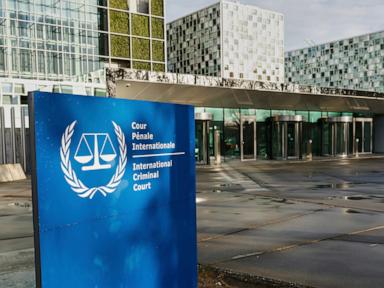
ICC slams US decision to sanction court's president and a senior prosecution lawyer
This video provides context regarding the U.S. government's recent diplomatic and financial actions targeting senior members of the International Criminal Court.