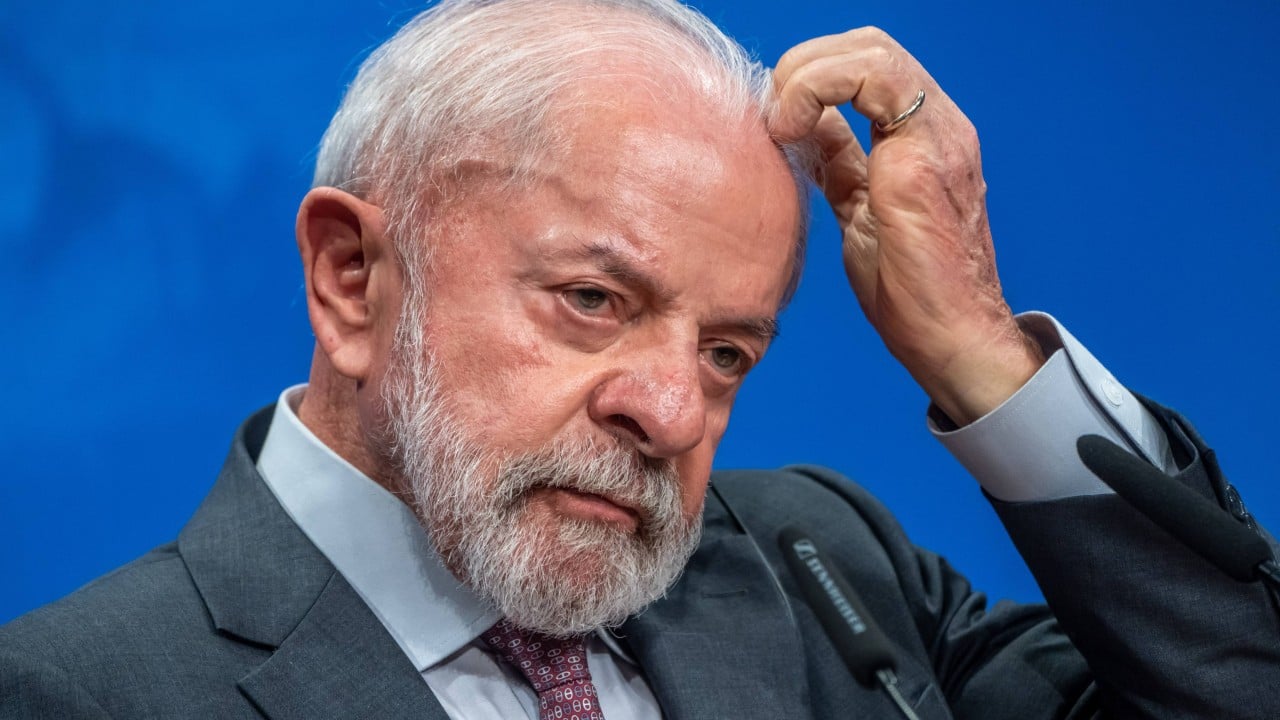
Brazilian President Luiz Inacio Lula da Silva recently engaged in an hour-and-twenty-minute phone call with United States President Donald Trump to demand the immediate withdrawal of aggressive new trade penalties. The White House imposed a 25 percent levy on specific Brazilian exports alongside a 12.5 percent duty targeting alleged lax labor enforcement. Brasilia maintains that these economic barriers are fundamentally unfounded, designed on shaky pretexts, and damaging to mutual commercial channels. Yet beneath the diplomatic posturing lies a much harsher economic reality. High-stakes political maneuvering routinely overrides bilateral trade stability, leaving South America's largest economy scrambling to protect its foundational export markets.
Trade policy rarely exists in a vacuum. When Washington slaps heavy duties on foreign goods, analysts tend to look at standard ledger sheets, supply chains, and deficit numbers. That approach misses the core friction point. The current tariff confrontation stems directly from deep ideological clashes and judicial actions involving former Brazilian leadership. White House officials have historically tied economic penalties to domestic political outcomes in South America, treating commerce as a blunt instrument of diplomatic coercion. Lula faces an uphill battle because his counterpart views trade concessions not through the lens of market efficiency, but as transactional leverage.
The immediate domestic political calculation inside Brazil explains why Brasilia cannot simply roll over. Accepting foreign interference regarding domestic judicial proceedings or labor regulations would permanently shatter the current administration's credibility. Consequently, Lula initiated formal consultation procedures with trade authorities, signaling a path toward reciprocal countermeasures. Retaliation carries a steep price tag. Brazil runs a historically significant commercial relationship with North America, and entering a protracted customs war risks choking off vital revenue streams for key agricultural and industrial sectors.
Consider a hypothetical mid-sized agricultural exporter in the state of Mato Grosso. Under normal market conditions, shipping soy or processed goods northward follows predictable logistical patterns governed by established maritime routes and predictable tariff schedules. When sudden executive orders introduce double-digit punitive levies, profit margins evaporate overnight. Exporters cannot absorb a 25 percent tax hike without passing costs down or losing market share to competitors in regions untouched by White House penalties. This micro-level disruption translates directly into macroeconomic stagnation, forcing domestic producers to seek alternative buyers across Eurasia.
Washington points to structural grievances, citing intellectual property frameworks, environmental protections, and digital payment ecosystems like Brazil's Pix network. These technical justifications serve a dual purpose. They provide a legalistic veneer for protectionist measures while simultaneously appeasing domestic interest groups demanding protection from foreign competition. Brasilia has countered that these arguments collapse under close scrutiny, pointing out that historical trade surpluses favor the northern hemisphere.
The diplomatic theater extends far beyond bilateral ledgers. During their recent dialogue, both heads of state touched upon international security architectures, including global conflicts and organized crime classifications. By intertwining security cooperation with trade disputes, the negotiation table becomes congested with competing priorities. Lula attempts to compartmentalize these discussions, offering partnership on transnational crime while firmly rejecting ideological labels that equate local criminal syndicates with global terrorist organizations. Washington, conversely, prefers a holistic approach where compliance across all geopolitical fronts is demanded simultaneously.
This friction accelerates a broader structural shift in global commerce. For decades, South American economies maintained a heavy orientation toward North American markets. Continuous tariff volatility acts as a natural repellent, driving traditional exporters toward alternative multilateral blocs. Beijing watches these developments with keen interest, ready to absorb commodities displaced by customs barriers. Every percentage point of punitive duty imposed by Washington quietly erodes decades of diplomatic goodwill and commercial integration, pushing Brasilia further into a multipolar alignment strategy.
Trump suggested that administrative teams should meet soon to parse through the remaining disagreements. Experience suggests that working-level committees can spend months debating technical nuances without altering the fundamental political calculus of the Oval Office. Temporary exemptions and selective waivers may offer short-term relief to specific industrial players, but they fail to resolve the core structural unpredictability. As long as trade policy remains tethered to erratic political grievances, Brazilian statecraft must prepare for a permanent state of commercial friction.
Negotiation tables will remain crowded with mutual grievances as long as domestic political survival dictates foreign economic policy. Brasilia's insistence on sovereign independence plays well to domestic constituencies, yet it hardens resistance within the Beltway. The underlying structural divide defies simple diplomatic fixes, ensuring that the current trade truce remains fragile, provisional, and perpetually vulnerable to the next political shockwave
Watch the Associated Press report on Brazil's response to US tariffs
This video provides additional context on how Brazil triggered formal trade dispute procedures to counter aggressive U.S. economic measures.