The smell hits you before the smoke does.
It is not the familiar, sweet-and-sour tang of burning brush or a backyard barbecue, nor is it the clean, sharp scent of pine crackling in a hearth. It is the thick, suffocating stench of melting vulcanized rubber, boiling radiator fluid, and diesel fuel igniting against sun-baked asphalt. When you are trapped inside a rental sedan with the air conditioning recirculating stale cabin air, that odor feels less like a warning and more like a physical weight pressing against your chest. You might also find this connected article insightful: Inside India’s Quiet Diplomatic Push to Protect Its Diaspora in Eritrea.
Wait.
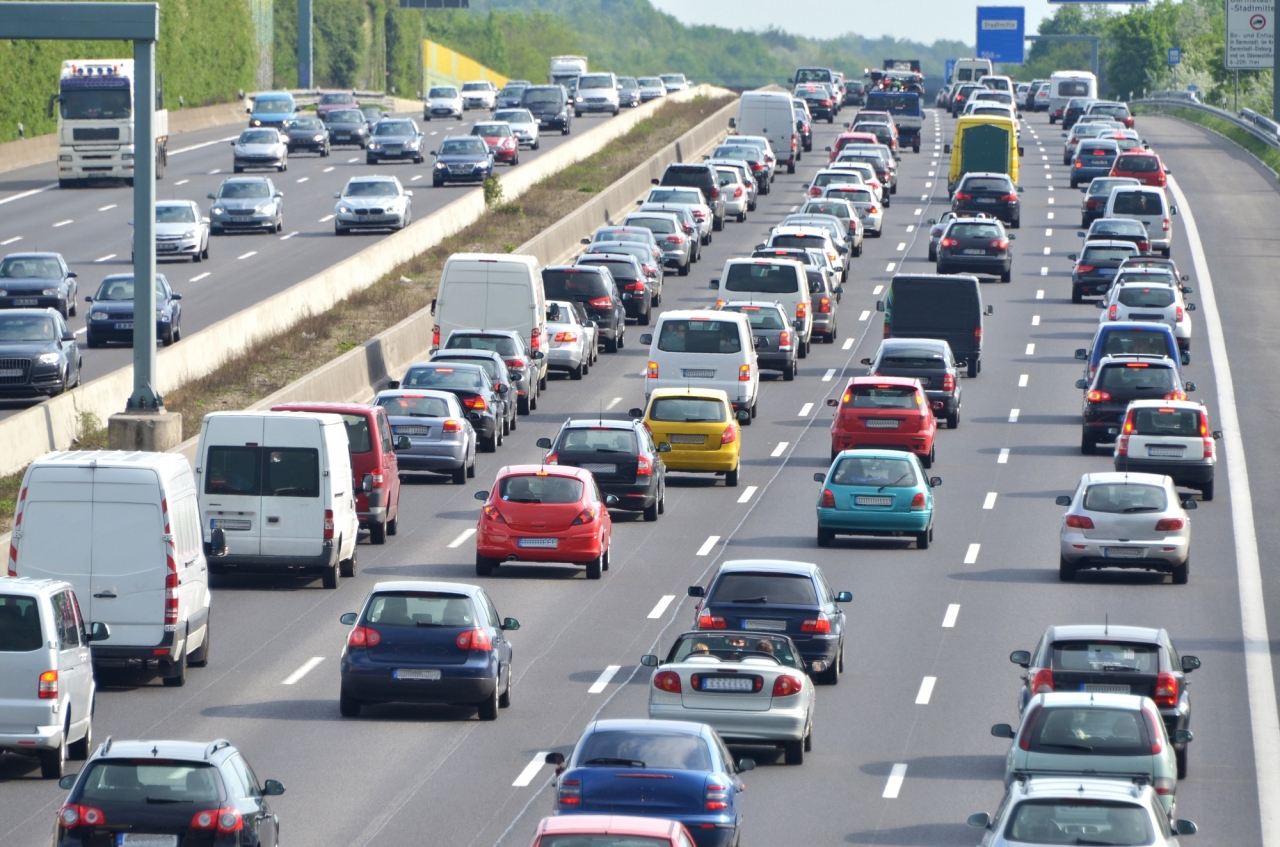
Ahead of you, across four lanes of Highway 15 just outside Culiacán, a jackknifed semi-truck is burning from the cab backward. Beside it, two stripped-down pickup trucks sit angled across the shoulder, their tires slashed, their frames blackened by accelerant. There are no flashing red-and-blue lights. There are no paramedics. There is only the rhythmic, guttural whump of exploding tires and the sudden, unnatural silence of a hundred stalled cars whose drivers have realized, all at the exact same second, that the rules of the road have just been rewritten. As highlighted in latest coverage by Associated Press, the implications are significant.
If you read the standard wire reports—the kind published in three-paragraph bursts under dry, bureaucratic headlines—you will learn that the U.S. Embassy and Consulates in Mexico recently issued a security alert for Americans in Sinaloa following cartel violence and road blockades. You will read about "shelter-in-place" orders, "Level 4: Do Not Travel" advisories, and "localized disruptions to transportation networks."
Those words are accurate. They are also completely bloodless. They sanitize a visceral, terrifying reality into administrative jargon, leaving travelers, expats, and worried families back home staring at a screen without ever understanding what a narcobloqueo actually feels like when you are the one sitting behind the steering wheel.
To understand why a diplomatic alert in Washington translates into paralyzed highways in northwestern Mexico, you have to strip away the policy speak and look at the human mechanics of fear, geography, and the fragile illusion of routine.
The Anatomy of a Sudden Paralysis
Consider a hypothetical scenario, built from the documented accounts of travelers and residents who have lived through Sinaloa's recurring flashpoints. Picture Elena, a dual citizen from Phoenix who drives down to Mazatlán every autumn to check on her aging father's coastal property. She knows the route by heart. She knows which caseta toll booths take exact change in pesos, where the best roadside birria stands cluster under corrugated tin roofs, and which stretches of the Pacific coast highway offer uninterrupted cell reception.
On a Tuesday morning, Elena leaves her father's house before dawn to beat the heat on her drive north. Everything is ordinary. The radio plays classic banda tracks. A fruit vendor waves from a dusty intersection near Elota.
Then, within four minutes, the world shifts on its axis.
A convoy of unmarked SUVs speeds past her on the shoulder, kicking up gravel that pings against her windshield like hail. Two miles ahead, black smoke begins to curl into the pale morning sky. Drivers in front of her slam on their brakes, throwing their transmissions into reverse, tires squealing as men and women try to execute three-point turns on a divided highway with nowhere to go. Her phone buzzes on the dashboard—not a call, because the local towers are already overwhelmed, but a delayed text alert from the Smart Traveler Enrollment Program, known as STEP, urging U.S. citizens to seek immediate shelter.
What happens in Elena's chest at that moment is something no travel advisory can ever fully prepare you for. It is the realization that the invisible infrastructure we take for granted every single day—the assumption that roads stay open, that emergency services answer when called, that borders remain porous—can evaporate before your coffee gets cold.
When cartel factions clash, or when federal authorities move in to capture a high-ranking figure, the resulting road blockades are not chaotic accidents. They are calculated military tactics. Think of a city's highway system like the circulatory system of a human body; by hijacking commercial freight trucks and setting them ablaze at critical arterial junctions, armed groups effectively induce a stroke. Military reinforcements cannot reach the flashpoint. Local police are pinned down. Within twenty minutes, an entire state of three million people is carved into isolated, breathless pockets.
Why Diplomatic Alerts Feel So Distant Until They Don't
Most Americans view State Department travel advisories the way they view the fine print on a rental car agreement. You glance at the bold text, maybe notice that Sinaloa has carried a Level 4 "Do Not Travel" designation for years—the same classification assigned to active war zones like Ukraine or Syria—and then you weigh it against the sunlit Instagram photos of Mazatlán's Golden Zone, the bustling cruise ship terminals, and the thousands of snowbirds who winter there without incident.
That contradiction is where confusion takes root. And frankly, it is easy to see why travelers get mixed signals.
Mexico is not a monolith. Even within Sinaloa itself, life operates on split screens. On a normal Wednesday, you can walk along the Malecón in Mazatlán, eat fresh ceviche while watching cliff divers plunge into the Pacific, and feel entirely safe. Meanwhile, a hundred and thirty miles north in Culiacán—the state capital and the historical nerve center of the Sinaloa Cartel—an internal power struggle or a federal raid can ignite gun battles that shut down the international airport, close schools, and turn major boulevards into no-man's-lands.
When the U.S. Consulate General in Hermosillo, which oversees consular services for Sinaloa, issues an urgent security alert, it is not crying wolf. Diplomats do not hit the red button lightly, because doing so triggers massive logistical ripples across tourism, cross-border trade, and bilateral relations. An emergency alert means intelligence on the ground has shifted from chronic background risk to acute, active danger.
I remember the first time I stood in a hotel lobby in northern Mexico during an active shelter-in-place order, watching the faces of tourists who had arrived three hours earlier expecting margaritas and beach chairs. The confusion in that room was palpable. A retired couple from Minnesota kept asking the front desk clerk when the shuttle to the marina would resume, unable to process the clerk's quiet, shaking insistence that nobody was stepping outside the glass doors until the military cleared the perimeter. In the distance, you could hear the dry, popping crackle of automatic gunfire—a sound that, if you have never heard it in person, your brain stubbornly tries to translate as firecrackers or exhaust backfires.
It takes a long time for the human mind to accept that the ordinary rules have been suspended.
The Invisible Stakes Behind the Headlines
When news outlets cover cartel blockades, the cameras naturally gravitate toward the burning buses and the armored vehicles rolling down palm-lined avenues. Those images are dramatic, visceral, and easy to digest in a thirty-second broadcast clip.
Yet the deeper story lies in what happens inside the shuttered homes, the stranded buses, and the quiet grocery stores once the smoke rises.
First, there is the immediate economic strangulation. Sinaloa is known as the breadbasket of Mexico, producing vast quantities of tomatoes, corn, and winter vegetables that end up on dinner tables across the United States and Canada. When Highway 15 is severed by burning semi-trucks, perishable cargo rots in the sun. Independent truckers—men who are simply trying to earn a living—watch their livelihoods go up in flames at gunpoint, forced out of their cabs by teenagers carrying rifles who douse the upholstery in gasoline and toss a match.
Second, there is the psychological toll on dual-national families. Millions of Americans have deep roots in western Mexico. They are not reckless thrill-seekers ignoring warning labels; they are sons, daughters, grandchildren, and business owners visiting family, attending weddings, or managing estates. When a security alert drops, phones light up across Los Angeles, Chicago, Phoenix, and Dallas. Mothers stare at frozen WhatsApp timestamps, praying that "last seen today at 8:14 AM" simply means a dead battery rather than a wrong turn at a cartel checkpoint.
And then there is the sheer vulnerability of being an outsider in a conflict whose unwritten rules you cannot read. Locals in Culiacán or Los Mochis have developed an instinctive sixth sense over decades of living alongside cartel dynamics. They know which neighborhoods to avoid after dark, how to read the sudden emptiness of a normally crowded street, and how to behave if approached by armed men—keep your hands visible, avoid eye contact, answer softly, never reach toward a glovebox or a pocket.
A vacationer or an unseasoned traveler possesses none of that muscle memory. Panic makes people do dangerous things, like trying to speed past a roadblock or filming armed men through a tinted window. In an environment where suspicion is lethal, ignorance is not bliss. It is a liability.
Navigating Reality When the Map Fails You
So what does a person actually do when a diplomatic warning stops being an abstract webpage and becomes the air you breathe?
If you are planning travel to Mexico, or if you have loved ones currently on the ground in Sinaloa, the answer does not lie in paranoia, nor does it lie in blind optimism. It lies in radical situational awareness and preparation before a crisis ever sparks.
Consider what happens next when a traveler takes the right precautions versus when they wing it:
- The Digital Lifeline: Enrolling in the State Department's Smart Traveler Enrollment Program (STEP) is free and takes less than five minutes, yet a staggering number of travelers skip it. When cell networks clog or local news struggles to verify rumors on social media—where fake videos from five years ago routinely circulate alongside real-time threats—STEP alerts deliver vetted, location-specific intelligence directly from consular officers who are coordinating with Mexican federal authorities.
- The Geography of Risk: Understanding the difference between air travel and overland transit in northern and western Mexico is critical. Driving between cities in Sinaloa, especially after dusk or along secondary highways, exposes you to the exact choke points where blockades occur. Commercial flights directly into resort hubs like Mazatlán bypass the vulnerable highway corridors, though even airports can temporarily suspend operations if violence spills onto access roads—meaning any traveler needs an emergency cash reserve and flexible booking options, not a rigid itinerary.
- The Protocol of Stillness: The hardest instinct to override during an outbreak of street violence is the urge to run. If a security alert instructs you to shelter in place, staying inside a solid structure away from exterior windows is infinitely safer than trying to outrun a blockade in a rental car. Roads become traps; concrete walls become shields.
The Quiet After the Sirens
Eventually, the fires on Highway 15 burn themselves out.
Heavy cranes arrive under military escort to drag the blackened skeletons of the semi-trucks onto the gravel shoulders. Municipal crews sweep away the shattered glass and melted plastic. Within twenty-four or forty-eight hours, traffic begins to creep forward again, single-file at first, drivers craning their necks to look at the scorched black scars burned into the asphalt.
Life in Sinaloa has an astonishing, almost heartbreaking resilience. Street vendors wheel their carts back onto the corners. Bakeries roll up their metal shutters. The Embassy eventually downgrades the urgent alert back to its baseline advisory, and the news cycle moves on to another crisis in another time zone.
Yet for anyone who sat in that line of stalled cars, breathing in the acrid smoke while watching the horizon turn black, the landscape never looks quite the same again. You drive past a stretch of open highway, beneath a cloudless blue sky, and you remember how thin the veneer of safety really is—and how quickly an ordinary Tuesday morning can vanish into ash.