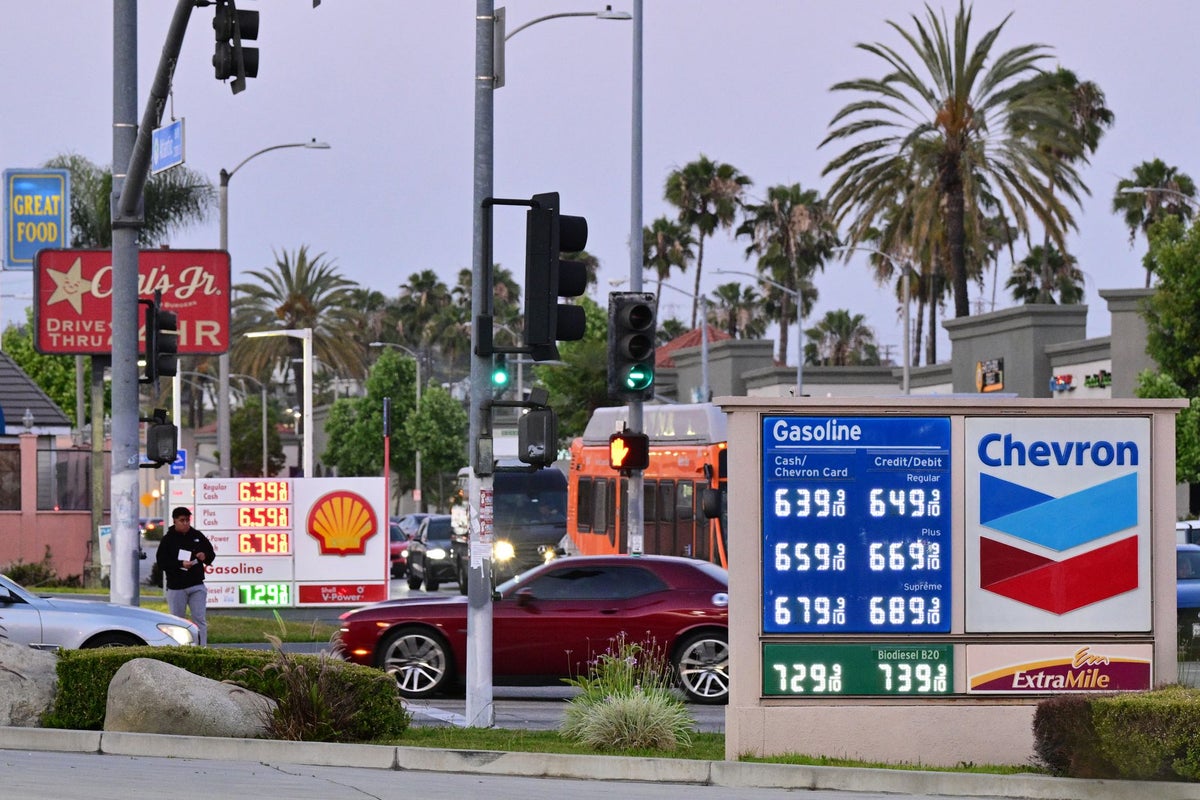
The hand-wringing over an "oil crisis" is the ultimate industry gaslight.
When a CEO like Mike Wirth sounds the alarm about price volatility or supply crunches under a new administration, he isn’t worried about your gas bill. He is managing expectations for shareholders while navigating the messy reality that the U.S. shale patch is no longer a growth engine—it is a cash cow that requires high prices to stay alive.
The mainstream narrative suggests that lower prices are a sign of a healthy economy. This is a fundamental misunderstanding of energy physics and capital markets. Cheap oil doesn't just hurt producers; it destroys the incentive to maintain the very infrastructure that prevents a total systemic collapse. We have entered an era where the "crisis" isn't high prices—it’s the delusion that we can ever return to $40 barrels without bankrupting the entire domestic supply chain.
The Shale Myth and the Death of "Drill Baby Drill"
For a decade, the American public was fed a fairy tale about energy independence driven by technological brilliance. The reality was much grimier. The "Shale Revolution" was built on a foundation of zero-interest rates and venture-capital-style burning of cash.
I have watched companies burn through billions in private equity just to keep production flat. They weren't making a profit; they were cannibalizing their own balance sheets. Now that the era of free money is over, the industry has shifted to "value over volume."
When political figures or CEOs talk about a crisis, they are usually referring to a threat to this new, fragile profitability. They want the public to believe that regulatory hurdles are the primary bottleneck. They aren't. The bottleneck is geology and the cold, hard math of Wall Street. Investors are demanding dividends and buybacks, not new rigs. If prices drop too low, the rigs stop moving, the crews scatter, and the next spike—whenever it hits—becomes a permanent plateau because the talent and hardware have vanished.
Why You Should Want Expensive Gas
It sounds counter-intuitive, perhaps even elitist, but low energy prices are a sedative that masks a terminal illness.
- Infrastructure Rot: When margins are thin, maintenance is the first thing to go. We see this in aging pipelines and refineries that operate at 95% capacity because no one can afford the downtime for upgrades.
- The Innovation Stall: Cheap oil kills the transition. Not just the green transition, but the efficiency transition within the fossil fuel sector itself.
- Geopolitical Irrelevance: If the U.S. cannot profitably produce its own barrels, we return to the era of being a hostage to the OPEC+ price floor.
The "crisis" isn't that prices might go up; it's that we’ve spent forty years building a society that breaks if a gallon of gas costs more than a Starbucks latte. We are addicted to an artificial price point that does not reflect the true cost of extraction, refining, and environmental mitigation.
The Regulatory Bogeyman is a Distraction
Both sides of the aisle love to use "permitting" as a weapon. One side says it’s too slow; the other says it’s too loose. Both are missing the point.
The U.S. is currently producing more crude oil than any country in history. Ever. If regulations were truly strangling the industry, that number would be impossible. The "crisis" warnings from C-suite executives are a tactical maneuver to secure even more favorable tax treatments and long-term lease guarantees. It is a play for "regulatory certainty," which is corporate-speak for "guaranteed profits regardless of market shifts."
I’ve sat in rooms where "environmental hurdles" were blamed for project delays that were actually caused by a lack of available steel or a shortage of qualified petroleum engineers. It’s easier to blame a politician than to admit your supply chain is held together by duct tape and hope.
The Truth About Spare Capacity
The most dangerous lie in the current energy discourse is that the U.S. can simply "turn on the tap" to lower global prices.
We are near peak capacity for our current geological footprint. The Tier 1 acreage—the "sweet spots" where the oil flows easily—is being depleted at an alarming rate. What’s left is Tier 2 and Tier 3 rock. This oil is harder to get, more expensive to refine, and requires significantly more water and pressure to extract.
In conventional drilling, a well might produce steadily for twenty years. In shale, production often drops by 60-70% in the first year. We are on a treadmill that is spinning faster and faster just to stay in the same place. This is why a "crisis" is always around the corner. We aren't building reserves; we are living hand-to-mouth.
The Efficiency Trap
People often ask: "If we're so good at this, why isn't it getting cheaper?"
It’s called the Jevons Paradox. As we become more efficient at using a resource, we don't use less of it; we find more ways to use it, which drives demand back up. Our cars are more efficient, so we drive more miles. Our homes are better insulated, so we build them larger.
The industry insider knows that "solving" an oil crisis by increasing supply is like trying to put out a fire with gasoline. It only expands the scale of the eventual reckoning.
The Brutal Reality of Refining
Even if we pulled 20 million barrels a day out of the ground tomorrow, gas prices wouldn't necessarily drop. Why? Because you can’t put crude oil in your Ford F-150.
The U.S. refining circuit is designed for heavy, sour crude from overseas—the very stuff we’ve spent years trying to replace. The light, sweet crude coming out of Permian shale is often exported because our own refineries aren't optimized for it. We are exporting the "good" stuff and importing the "bad" stuff to keep the lights on.
This mismatch is a structural failure that no amount of "drilling more" will fix. It requires billions in capital expenditure to retool refineries—investments that boards are hesitant to make if they think the world is moving away from internal combustion engines in twenty years.
Stop Asking for Lower Prices
If you want a stable energy future, you should be praying for $100 oil.
At $100, the "shaky" players get flushed out, leaving only the operators who can actually manage a balance sheet. At $100, the capital exists to fix leaky pipelines. At $100, the ROI for alternative energy finally matches the risk, allowing for a genuine, market-driven transition rather than one forced by subsidies.
The CEO warnings aren't for you. They are for the administration. They are a demand for a floor, not a ceiling. They want the government to underwrite the risk of their expansion while they reap the rewards of the scarcity.
The real crisis isn't the price at the pump. It’s the fact that the entire global economy is a derivative of a commodity that we are increasingly bad at extracting and even worse at managing.
Stop looking at the ticker. Start looking at the depletion rates. The party isn't over, but the lights are flickering, and no one in a suit is going to tell you that the house is built on sand.
Own the scarcity. Pay the price. It’s the only way to fund the exit strategy.