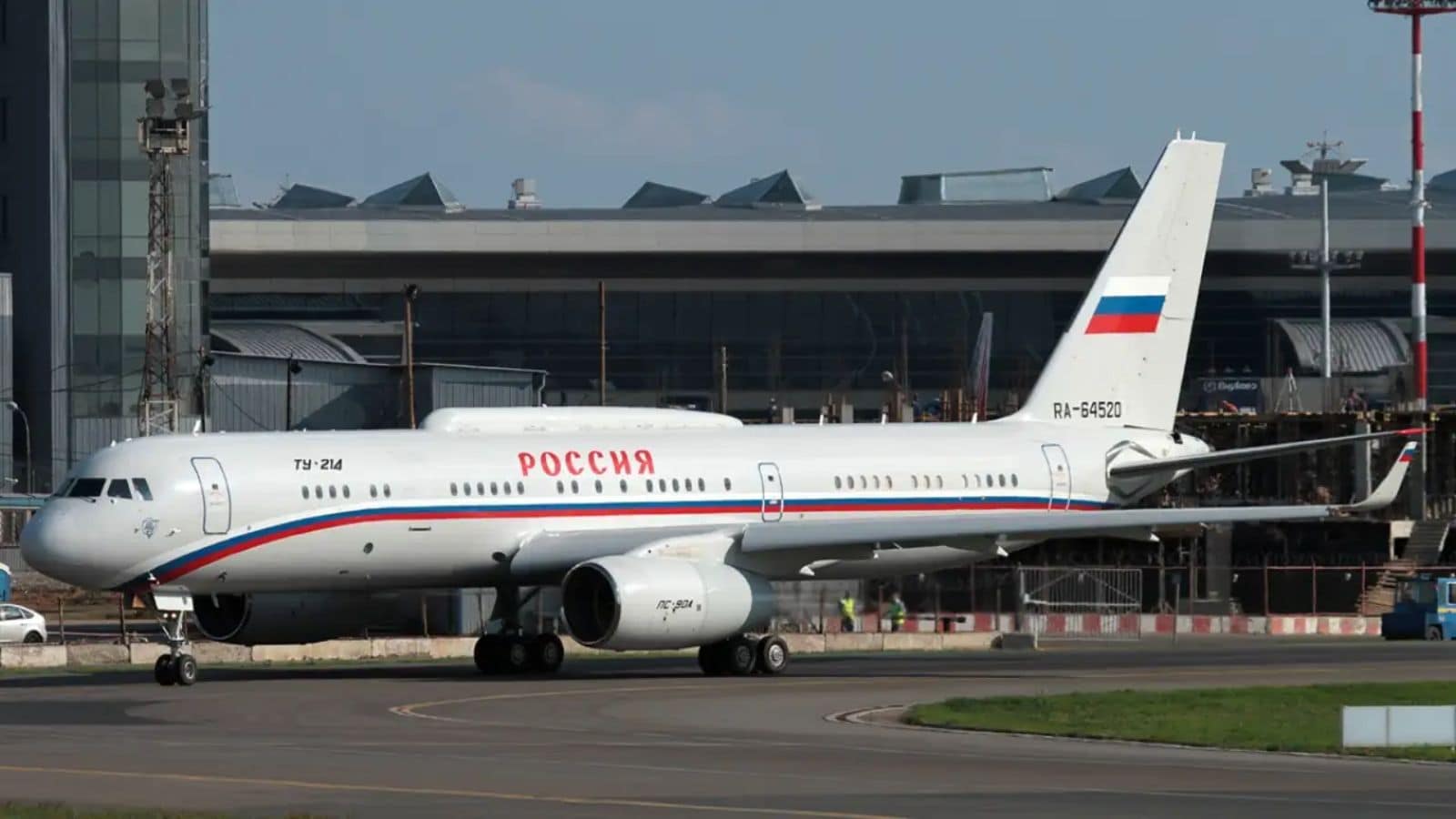
Russia dispatched its Il-80 Maxdome airborne command post—frequently dubbed the doomsday plane—to Iran to secure infallible strategic communications and signal a nuclear-capable deterrent during a period of critical geopolitical volatility. While mainstream speculation focuses on a superficial show of solidarity, the deployment serves a deeply practical military purpose. Moscow is safeguarding its southern flank and ensuring that any potential decapitation strike by Western or regional adversaries cannot sever the command-and-control links between the Kremlin and its critical Middle Eastern partner. This aerial command hub guarantees that even if ground-based communications networks are completely obliterated, senior military officials can direct operations in real time.
The presence of this highly specialized aircraft marks a significant escalation in bilateral military integration. It moves the relationship far beyond a mere transactional exchange of drones and ballistic missiles.
Beyond the Optics of Airborne Command
Military deployments of this scale are rarely about symbolism alone. The Il-80 Maxdome is a flying bunker designed to survive a nuclear blast, stripped of passenger windows and shielded against electromagnetic pulses. Sending this specific asset to Iranian airspace reveals a mutual recognition that conventional communication channels are no longer safe from Western cyber penetration or electronic jamming.
Western intelligence agencies have spent decades mapping the physical fiber-optic and satellite infrastructure of the Middle East. In a full-scale conflict, these networks would be the first to go dark. The doomsday plane bypasses this vulnerability entirely by utilizing ultra-high frequency and very-low frequency transmitters, allowing the Kremlin to maintain a continuous, un-jammable link with its strategic forces and Iranian military headquarters.
This is about survivability. If an adversary launches a preemptive strike on Tehran’s command centers, the airborne platform maintains the operational picture, preventing total chaos on the ground.
The Triad of Strategic Imperatives
Three distinct operational requirements drove Moscow to position the Il-80 in this specific theater.
Hardening the Electronic Shield
Iran’s domestic air defense network, while sprawling, possesses known vulnerabilities against sophisticated electronic warfare suites. By operating the Il-80 in tandem with localized radar installations, Russia introduces an advanced layer of electronic counter-countermeasures. The aircraft acts as a high-altitude relay, collecting sensory data from Russian ships in the Caspian Sea and transferring it directly to Iranian air defense batteries. This integration complicates the targeting matrix for any attacking force.
Securing the Caspian Corridor
The Caspian Sea has become Russia’s most secure supply route for moving sensitive material away from the prying eyes of NATO monitoring flights in the Black Sea. A destabilized Iran directly threatens this corridor. By maintaining an airborne command presence, Russia ensures that the shipping lanes and airspace connecting Astrakhan to Iranian ports remain open, regardless of how intense the surrounding regional conflict becomes.
A Direct Signal of Strategic Alignment
Moscow is explicitly demonstrating that its security architecture is bound to Tehran’s survival. This is a message aimed directly at Washington and Tel Aviv. The deployment indicates that Russia views an attack on Iranian command infrastructure as a direct threat to its own regional posture, raising the stakes of any potential military intervention.
Overlooked Vulnerabilities in the Kremlin Strategy
This aggressive positioning is not without severe risks for Moscow. Deploying a rare and irreplaceable asset like the Il-80 outside of Russian territory exposes it to a unique set of operational hazards.
Russia possesses only a handful of these airframes. Pulling one away from its primary mission of safeguarding the Russian domestic nuclear triad stretches an already strained strategic fleet. Should the aircraft suffer a mechanical failure or come under fire while stationed at an Iranian airfield, the blow to Russian military prestige and capability would be immense.
Furthermore, total integration with Iranian command structures requires a level of trust that historically has not existed between Moscow and Tehran. The two nations are partners of convenience, bound by shared adversaries rather than a formal, long-term alliance. Sharing highly classified, encrypted data streams during a live crisis risks exposing Russia’s most sensitive military communications protocols to foreign intelligence services if Iran’s internal security is breached.
The Reality of Regional Escalation
The introduction of an airborne command post fundamentally alters the escalation calculus in the Middle East. It removes the possibility of a swift, isolated strike against Iranian targets without involving Russian assets.
Adversaries planning a response to Iranian actions must now calculate the physical presence of a Russian strategic platform operating in the same airspace. This forces a choice between scaling back planned operations to avoid hitting a Russian asset, or risking a direct confrontation with a nuclear-armed superpower. Moscow has successfully complicated the rules of engagement, turning a regional standoff into a highly volatile multi-national chess match where a single tactical miscalculation could trigger a much wider conflict.


