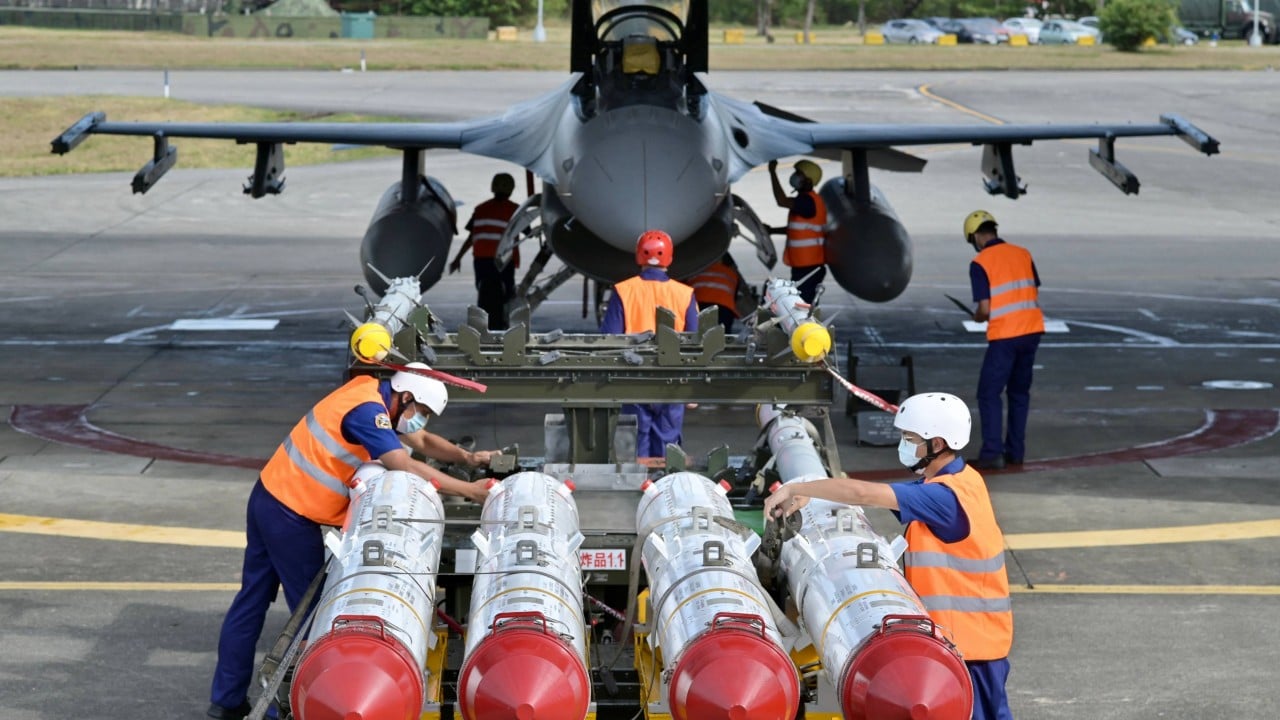
Washington is holding back. The White House has quietly frozen a fourteen billion dollar arms package for Taiwan, keeping major military notifications off the table as high-stakes diplomatic summits approach. It is a calculated maneuver designed to secure short-term economic truces and smooth over bilateral tensions with Beijing. Yet beneath the diplomatic calculus lies a troubling reality. Every month of hesitation chips away at deterrence across the Taiwan Strait, sending mixed signals to allies who rely on American backing while validating Beijing's strategy of diplomatic pressure.
To understand why this pause is happening, look at the calendar. Major international gatherings such as the Asia-Pacific Economic Cooperation forum and the Group of Twenty meetings create intense pressure for diplomatic choreography. Administrations of both political parties have historically faced a stark choice when summit season rolls around. They can either confront Beijing head-on with public announcements of advanced weaponry destined for Taipei, or they can hit the pause button to ensure leaders can shake hands without immediate diplomatic retaliation.
The current administration chose the pause. Behind closed doors, Chinese officials made it clear that fresh military sales would poison the atmosphere before bilateral meetings. Washington listened. By withholding formal congressional notifications for items like advanced air defense batteries, Patriot interceptors, and integrated battle command systems, the White House bought itself a temporary diplomatic bubble. Trade truces remain intact for the moment. Rare earth supply chain discussions continue without immediate disruption.
Yet this diplomatic bubble comes at a steep price. Strategic clarity requires consistency. When security assistance is treated like a dimmer switch that can be dimmed or brightened depending on who is visiting Washington, adversaries take note. Beijing watches closely to see whether American resolve bends under pressure. Every frozen package teaches a quiet lesson that patience and diplomatic friction can alter American schedules.
The Anatomy of a Diplomatic Freeze
The friction points go far beyond a simple administrative delay. In early months, congressional offices informally cleared a massive package intended to bolster Taiwan's layered air defense network, often referred to locally as the T-Dome. This included National Advanced Surface-to-Air Missile Systems, advanced interceptors, and command architecture designed to counter low-to-medium altitude threats like drones and cruise missiles. Yet months later, formal White House notification has failed to materialize.
This foot-dragging creates immediate ripples in Taiwan's domestic political environment. Taiwan President Lai Ching-te has pushed to increase defense spending to meet growing threats, pledging multi-percentage gross domestic product allocations over the coming decade. However, the legislative branch in Taipei is tightly contested. Opposition parties, including the Kuomintang and the Taiwan People's Party, control key committees and hold substantial legislative sway.
When Washington stalls on delivering or even notifying approved packages, local skeptics in Taipei gain powerful ammunition. Opposition politicians routinely argue that American commitments are conditional, unreliable, or entirely rhetorical. When billions in defense spending are locked up in administrative limbo, critics ask why domestic taxpayers should shoulder heavy burdens for hardware that may never arrive. The pause directly undermines pro-defense political factions in Taiwan, transforming procurement into a bitter partisan weapon.
The Reality of Industrial Bottlenecks
Defenders of the delay argue that the pause changes very little on the ground anyway. They point to a massive, multi-billion dollar backlog of undelivered weapons that Taiwan has accumulated over recent years. American defense contractors are stretched thin. Production lines face severe constraints, hobbled by supply chain bottlenecks, skilled labor shortages, and competing priority demands from active conflicts in the Middle East and Eastern Europe.
When manufacturing queues stretch for years, waiting a few extra months for a formal White House notification seems harmless on paper. After all, a congressional notification does not instantly translate into hardware on a tarmac in Taipei. Factories must still build the systems. Priority lists must still be cleared.
This argument relies on a fundamental misunderstanding of how deterrence functions. Defense policy is psychological as much as it is logistical. A formal congressional notification is a public declaration of commitment. It signals to Taipei that the security architecture remains solid and that American commitments have teeth. When that notification is delayed indefinitely without a clear public rationale, the psychological pillar cracks.
Beijing is learning a powerful lesson from these recurring pauses. Past administrations from both parties have hit similar brakes, whether during the Obama years or the George W. Bush administration. Each freeze teaches Beijing that persistent pressure and summit diplomacy can successfully delay American arms shipments. By taking incremental steps that avoid triggering an outright military crisis, China establishes a new normal where American resolve appears negotiable.
The Dangers of Viewing Security as a Bargaining Chip
Treating national defense as a variable in trade negotiations introduces deep instability. Remarks from senior figures characterizing arms sales as a useful bargaining chip in broader economic talks fundamentally misunderstand the nature of sovereign security commitments. When weapons become currency for trade concessions, everything is up for sale.
Taiwan is not a secondary market or a temporary asset to be traded away for lower tariffs on critical minerals or rare earth metals. It is a democracy operating under intense geopolitical pressure, staring down an adversary that explicitly refuses to renounce the use of force. Treating its defense as a temporary card to be played during summit negotiations invites severe miscalculation.
Beijing operates with long-term strategic patience. It masters the gray zone, establishing new precedents through incremental shifts that meet no resistance. A freeze that is never officially announced and never formally ended fits this mold perfectly. It costs Beijing nothing, yet it creates diplomatic friction between Washington and its closest regional partners.
The danger is compounded by the nature of modern great power competition. If Beijing believes that enough diplomatic pressure can stall arms notifications, it will increase that pressure ahead of every future summit. The threshold for what triggers an American delay lowers incrementally, turning a temporary expedient into a permanent policy default.
Navigating the Industrial Quagmire
Fixing this dynamic requires confronting uncomfortable truths about American manufacturing capabilities. The defense industrial base is not built for a prolonged era of great power competition. Decades of consolidation have left critical sectors dependent on fragile supply chains and single-source suppliers.
When Taiwan orders advanced defense systems, those orders queue behind domestic military replenishment and urgent foreign military financing requests heading to conflict zones elsewhere. Expanding production capacity requires more than writing blank checks. It demands long-term capital investments, workforce training initiatives, and structural regulatory reforms that few administrations have the political will to enact.
Until those industrial bottlenecks are cleared, the temptation to use diplomatic delays as a pressure-release valve will remain strong. It is politically easier to quietly shelve a notification than to explain to the public why a critical ally must wait half a decade for air defense systems.
Yet ease is not strategy. Every delay shifts the balance just a fraction further toward uncertainty.
The Stakes for Regional Stability
The upcoming months will test whether Washington can maintain a steady course. Think tanks and national security analysts in Washington continue to urge the administration to break the cycle of hesitation and resume regular, predictable arms notifications. They argue that clarity is the ultimate deterrent.
If the White House continues to tether security assistance to the whims of bilateral summit calendars, it risks hollowing out the very alliances it claims to defend. Deterrence relies on predictability. When rules change based on who sits across the negotiating table, allies stop planning for the worst and start hedging their bets.
The fundamental question facing American foreign policy is whether strategic partnerships are treated as enduring commitments or disposable conveniences. The answer is unfolding in quiet conference rooms and delayed announcements.
The pause may buy a few months of quiet diplomacy, but the bill will come due. Deterrence once lost is infinitely harder to reclaim than deterrence maintained through unyielding consistency. The administration must decide whether short-term summit comfort is worth the long-term erosion of regional stability before the window for correction closes entirely.