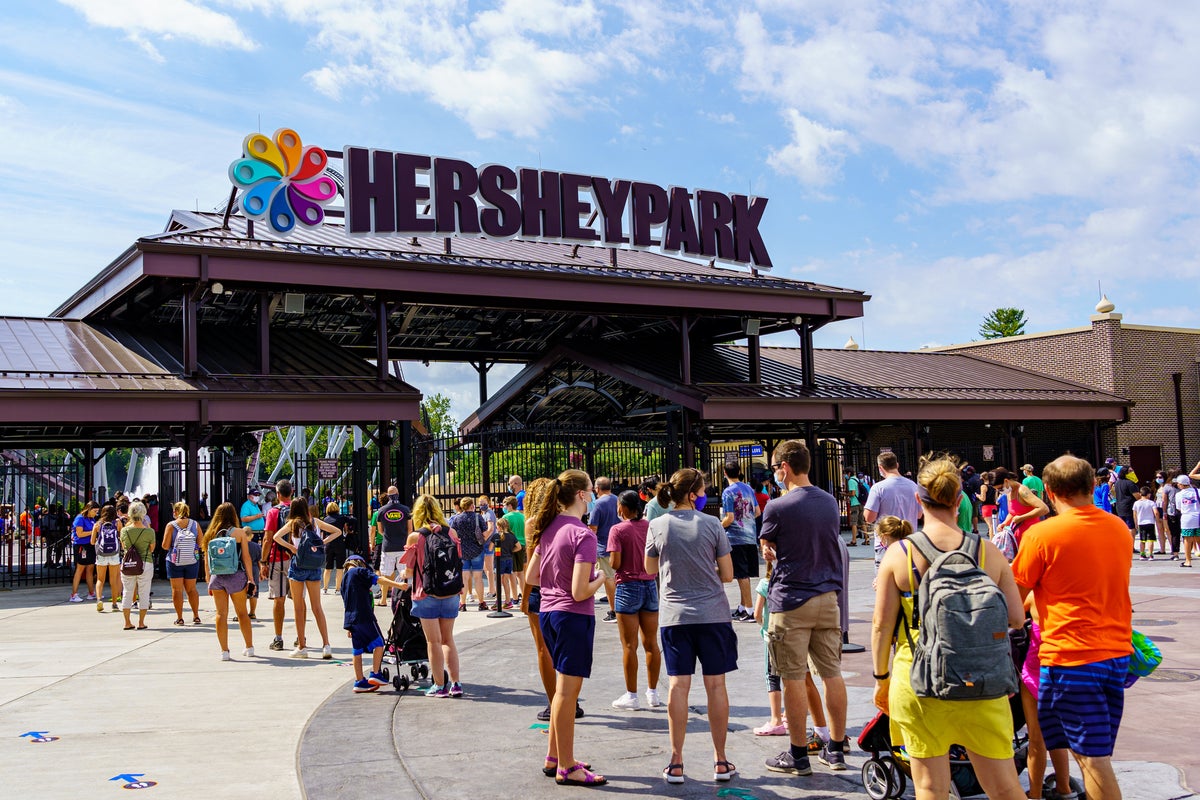
Hersheypark learned a brutal lesson in modern brand management when it attempted to reinstate a restrictive mask policy during a period of shifting public sentiment. The Pennsylvania theme park giant initially signaled a return to stricter health protocols, only to scrap the plan within hours. This wasn't just a simple mistake in communication. It was a total collapse of corporate will in the face of a digital-age uprising. When the park's leadership saw the immediate, vitriolic feedback from its core customer base, they realized that sticking to their guns would cost more than just a few ticket sales; it threatened the very identity of the "Sweetest Place on Earth."
The reversal highlights a growing crisis in the service and hospitality industry. Companies no longer dictate the terms of engagement to their customers. Instead, they are locked in a constant, high-stakes negotiation with a public that is more organized, more vocal, and more willing to boycott than ever before. For Hershey, the pivot was so fast it caused whiplash. It revealed a deep-seated fear within the boardroom: the fear of being out of step with the people who pay the bills. You might also find this connected coverage useful: Justin Sun and the Death of the Decentralized Dream.
The Anatomy of a PR Retreat
The timeline of the Hersheypark mask reversal serves as a case study in crisis mismanagement. In the morning, a policy change was drafted and shared, intended to align with certain health recommendations. By the afternoon, the policy was a ghost, deleted from social media and official websites as if it never existed.
This rapid-fire retreat suggests that the park's internal data did not match the external reality. Management likely expected a moderate level of debate. They were met with a firestorm. The volume of negative comments, combined with a surge in refund requests for season passes, created a financial pressure point that the park could not ignore. In the hospitality sector, certainty is the most valuable currency. When a brand introduces a policy that creates friction at the front gate, it risks destroying the escapism that people are actually buying. As highlighted in recent coverage by Investopedia, the implications are significant.
The incident shows that "safety" is no longer a neutral term in the business world. It has become a battleground. For Hershey, trying to find a middle ground resulted in a failure to satisfy anyone. Those who wanted the masks felt abandoned by the quick reversal, while those who fought the policy saw the park as weak and easily swayed.
The Power Shift from Boardrooms to Comment Sections
For decades, large corporations operated with a top-down approach. They set the rules, and the public followed. That era is over. The Hersheypark situation is a prime example of how digital feedback loops have stripped power away from executives and handed it to the crowd.
When the park announced the mask requirement, the reaction was not just a collection of individual complaints. It was a coordinated wave of resistance. Critics used the park's own marketing language against it, arguing that a return to mandates was inconsistent with the "family-friendly fun" the brand promises. This type of brand-jacking is difficult for even the most experienced PR teams to counter.
The Financial Risk of Alienating the Core Fanbase
Theme parks rely on a specific demographic: the "super-fan." These are the families who buy the highest-tier season passes, stay in the branded hotels, and eat at the premium restaurants. They are the lifeblood of the park’s recurring revenue.
- Season Pass Retention: A sudden policy shift can trigger a mass exodus of pass holders.
- Ancillary Spending: Angry guests don't buy $15 milkshakes or $40 t-shirts.
- Word of Mouth: In the age of social media, one bad experience at the gate can reach a million potential visitors before the sun sets.
Hershey’s quick pivot was a desperate attempt to protect these revenue streams. They understood that a mask, while seemingly a small piece of cloth, represented a massive psychological barrier for their most loyal customers.
Why Pennsylvania is a Unique Testing Ground
Location matters. Hersheypark isn't in a vacuum; it’s located in a region where cultural and political divisions are particularly sharp. Pennsylvania exists as a microcosm of the broader national debate over public health and personal liberty.
Unlike Disney in Florida or Universal in California, Hershey operates in a "purple" environment. This means any policy decision is inherently viewed through a partisan lens. By attempting to mandate masks, the park accidentally stepped into a cultural minefield. They underestimated the extent to which their local and regional visitors had moved on from the pandemic-era mindset.
This regional sensitivity is something many national brands fail to grasp. A policy that might fly in a deep-blue urban center will cause a revolt in Central Pennsylvania. Hershey’s mistake was applying a broad health recommendation to a specific, localized culture that was already at its breaking point with government-adjacent regulations.
The Illusion of Choice in Corporate Governance
There is a nagging suspicion among industry analysts that Hershey’s reversal wasn't just about the comments on Facebook. There is a high probability that internal pushback from staff and local contractors played a role. Running a massive theme park requires thousands of hourly workers. If those workers refuse to enforce a policy, the policy doesn't exist.
Enforcement is the silent killer of many corporate mandates. It falls on the shoulders of nineteen-year-old ride operators to tell an angry parent to put on a mask. When the "front line" is unwilling or unable to act as the mask police, the corporate office has no choice but to fold. It is easier to change a website blurb than it is to manage five hundred confrontations at the entrance to a roller coaster.
The Long Term Cost of Indecision
The most damaging aspect of the Hersheypark mask flip-flop isn't the policy itself, but the appearance of instability. Consistency is what builds brand trust. When a company changes its mind in the span of eight hours, it signals that it doesn't have a firm grasp on its own values or its operational strategy.
This creates a "cry wolf" scenario. Future announcements regarding safety, pricing, or park expansions will be met with skepticism. The public now knows that if they yell loud enough, the park will blink. This sets a dangerous precedent for future management. How do you handle a necessary price hike or a safety-related ride closure if the audience knows you are susceptible to online bullying?
Moving Toward a Frictionless Guest Experience
The takeaway for the rest of the travel and leisure industry is clear. The "new normal" isn't about masks or health protocols; it's about the total removal of friction. Guests are now paying a premium for a world where they don't have to think about rules, mandates, or societal debates. They are paying for a bubble.
Hershey’s error was popping that bubble. They reminded their guests of the outside world’s complexities at the exact moment those guests were looking to forget them. To fix this, brands must move toward a model of "suggested" rather than "mandated." This allows the corporation to check the box of social responsibility without the heavy-handed enforcement that triggers a populist backlash.
The days of the unilateral corporate decree are dead. Companies that want to survive in this environment must develop a much thinner skin for online feedback while maintaining a much thicker backbone for their core operational values. If you can't stand behind a policy for more than a business day, you shouldn't have proposed it in the first place.
Stop looking at spreadsheets and start looking at the parking lot. The people there aren't "units of consumption" or "data points." They are tired, they are paying a lot of money, and they have zero patience for a brand that can't decide what it stands for. If you want to run a world-class destination, you need to decide if you are a health agency or an amusement park. You cannot be both.