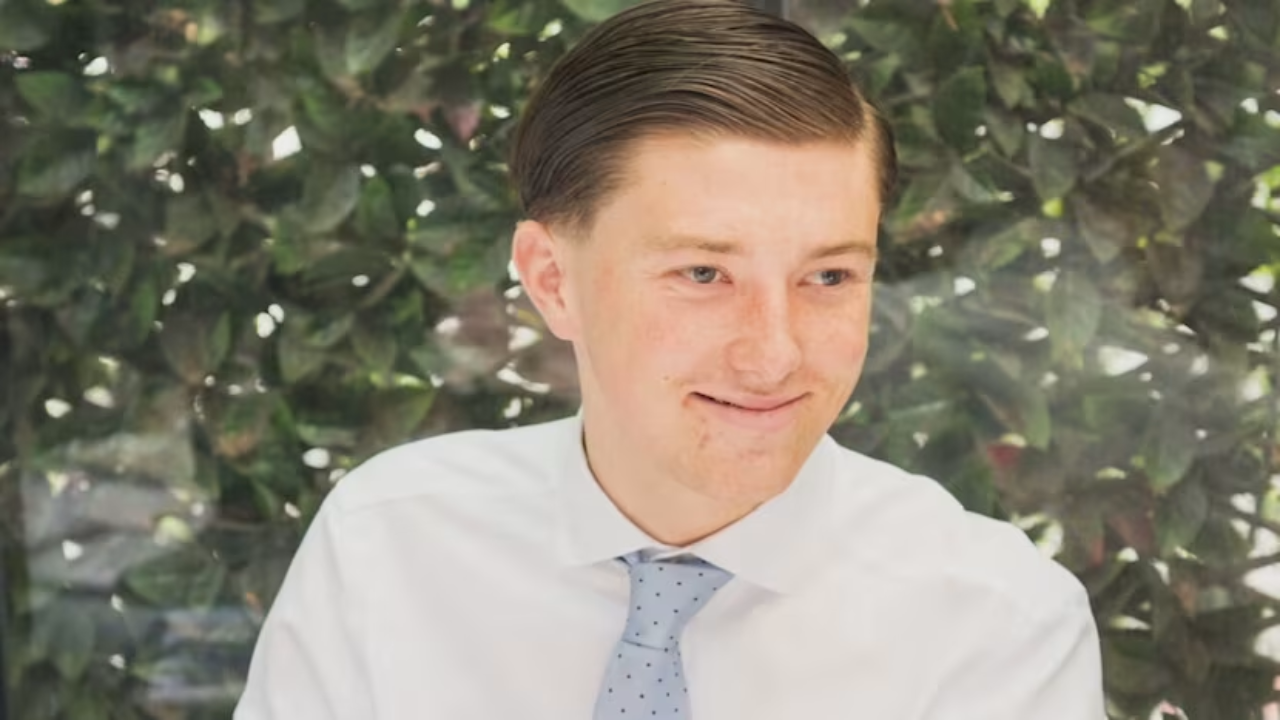
The death of 18-year-old university student Henry Nowak on a dark Southampton pavement has triggered a multi-layered crisis that extends far beyond the walls of the crown court. While the trial centers on a tragic street encounter, the public fallout has escalated into a high-stakes debate involving national politics, online misinformation, and the legal status of religious items. British Sikh organizations took the unusual step of issuing a nationwide public statement. They expressed condolences to the Nowak family while urging the public not to let the trial color perceptions of their entire faith.
This pre-emptive move by community leaders highlights a growing vulnerability. When an individual case involves distinct cultural or religious identifiers, the internet routinely bypasses the justice system to put an entire demographic on trial.
Anatomy of a Street Escalation
The events of December 3, 2025, unfolded within minutes. Henry Nowak, a first-year University of Southampton student originally from Chafford Hundred, Essex, was walking back from a night out along Belmont Road. He crossed paths with Vickrum Digwa, 23, who was heading toward his car. What began as a minor physical brush on the pavement rapidly degraded.
According to evidence presented in court, mobile phone footage captured Nowak recording Digwa. The recording preserves a tense exchange, with Nowak questioning Digwa and Digwa responding aggressively before the camera cuts out. Digwa testified that Nowak was heavily intoxicated, delivered racial slurs, and initiated physical violence by punching him, dislodging his turban, and pulling his hair.
The physical struggle transformed from an ordinary street fight into a lethal incident because of what Digwa was carrying. Underneath his clothing, he wore a 21cm kirpan—a ceremonial blade that initiated baptized Sikhs are required by their faith to carry. Digwa claimed that during the struggle, he feared Nowak would discover the sheathed blade and use it against him. To prevent this, Digwa drew the weapon himself.
Nowak suffered five distinct blade wounds, including deep cuts to the back of his legs and a fatal penetration to his chest. He collapsed while attempting to escape over a nearby fence.
The Political Combustion
The tragedy became a national talking point due to the immediate actions of the responding police officers. When emergency services arrived, officers handcuffed the bleeding teenager on the pavement while trying to sort out conflicting stories from the chaotic scene. Nowak repeatedly told officers he had been stabbed. His final words before losing consciousness were recorded as "I can't breathe."
The optics of a dying teenager being restrained by law enforcement created an instant political lightning rod. High-profile political figures quickly seized on the operational failure. Reform UK politician Robert Jenrick raised the case during Prime Minister’s Questions in the House of Commons, questioning whether British policing had lost its bearings by prioritizing allegations of racism over immediate life-saving care. Simultaneously, tech billionaire Elon Musk publicly offered to fund a wrongful death lawsuit against the Hampshire Police on behalf of the Nowak family.
This outside intervention forced a complex criminal case into the culture wars. The online discourse split into two hostile camps. One side framed the event as an indictment of institutional police incompetence driven by political correctness. The other used it to stoke anti-minority sentiment, portraying the kirpan not as a religious article, but as an inherent threat to public safety.
The Legal Tightrope of the Kirpan
Under UK law, carrying a blade in public is a severe criminal offense, but specific exemptions exist for religious reasons under the Criminal Justice Act 1988. The presence of the 21cm kirpan in this case has re-opened an uncomfortable legal debate that British courts have spent decades trying to balance.
Judge William Mousley KC instructed the jury that carrying a blade of that magnitude requires a legitimate justification, noting that religious obligation is recognized, but it must be balanced against the context of use. The prosecution maintains that Digwa crossed the line from defensive posturing to intentional, lethal force, pointing out that two of the wounds were delivered to the back of the victim’s legs.
The defense argues that the chest wound was an unintentional consequence of a frantic, blind scuffle while the defendant's vision was obscured by his unraveled turban. To accommodate this gray area, the court recently added a charge of manslaughter as an alternative to murder. Digwa has pleaded not guilty to both, as well as to the charge of carrying a knife in public. His mother, Kiran Kaur, faces a separate charge of assisting an offender for allegedly removing the blade from the scene—a charge she denies.
The Defensive Mobilization
The collective anxiety within the British Sikh community explains their rapid public intervention. For years, minority communities have watched isolated criminal incidents trigger widespread digital harassment and real-world retaliatory violence. The statement from the British Sikh Federation was a tactical attempt to decouple the actions of one individual from the broader population of peaceful, integrated citizens.
Community leaders are operating on historical precedent. They understand that nuanced legal arguments about self-defense are easily lost in viral social media echo chambers. By emphasizing that the use of a ceremonial blade in a street brawl contradicts the foundational tenets of compassion and human service, the community is trying to insulate itself from collective blame before the jury even returns a verdict.
The trial continues to test the boundaries of how the British legal system manages the intersection of knife legislation, religious exemptions, and high-visibility policing. A verdict will eventually determine Vickrum Digwa's fate, but the broader societal fractures exposed on Belmont Road will take much longer to heal.


