The bulb above the kitchen table flickered twice, buzzed like an angry wasp, and died.
Silence.
For Sipho, a retired schoolteacher living in a modest brick house on the edge of Soweto, that sudden plunge into darkness is no longer a shock; it is a nightly appointment, a cold, suffocating routine that arrives with the bitter certainty of the winter wind off the Highveld. Consider this composite character—Sipho, representing millions of ordinary South Africans—as he reaches into the top drawer for a half-melted stub of a paraffin candle, his arthritic fingers brushing past a faded photograph taken in April 1994. In that yellowing snapshot, a younger Sipho stands in a winding queue beneath a blistering autumn sun, smiling with a fierce, intoxicating hope that seemed capable of moving mountains. He was waiting to cast his first democratic vote for Nelson Mandela and the African National Congress, believing with every fiber of his being that the long nightmare of apartheid was finally over and that the dawn had arrived to stay.
Thirty years later, sitting in the gray gloom of a state-enforced blackout known euphemistically as load shedding, Sipho does not feel angry anymore. He feels tired. And in politics, exhaustion is far more lethal than rage.
To understand how the African National Congress—the oldest liberation movement on the continent, the party of Oliver Tambo, Walter Sisulu, and Nelson Mandela—tumbled below the sacred 50 percent threshold in the May 2024 general election, shedding nearly twenty percentage points from its 2019 showing and collapsing to roughly 40.2 percent of the national vote, you cannot simply read a spreadsheet of economic indicators. You have to sit at Sipho’s table in the dark. You have to smell the sharp, acrid smoke of the paraffin lamp and listen to the hum of your neighbors' diesel generators drowning out the evening cricket song. You have to understand that a liberation movement does not lose a country overnight; it loses it millimeter by millimeter, broken promise by broken promise, until the sacred bond between liberator and liberated snaps under the weight of sheer, undeniable reality.
The Architecture of a Broken Promise
When Nelson Mandela walked out of Victor Verster Prison in 1990 and into the presidency four years later, the ANC was not merely a political party. It was a secular religion. For generations of Black South Africans, supporting the movement was woven into the very fabric of identity, survival, and dignity. To vote against the ANC felt, to many, like betraying the blood spilled on the dusty streets of Sharpeville in 1960 or the schoolchildren gunned down in Soweto in 1976.
The early years justified that devotion. Millions of homes were connected to the national electrical grid for the first time. Clean water flowed from communal taps where women had once walked miles carrying plastic jerrycans on their heads. Millions of modest concrete homes, known as RDP houses, rose across the peri-urban sprawl, offering shelter and a stake in the land to families who had been treated as temporary sojourners in the country of their birth. Social grants expanded into a vital safety net that kept millions of children and elderly citizens from starvation.
Yet hidden inside the triumphant machinery of the new state was a quiet, creeping rot.
Think of a liberation movement transitioning into a governing party like a legendary ocean liner built to smash through icebergs, suddenly tasked with navigating delicate, shallow coral reefs. The very traits that made the ANC invincible in exile and underground—fierce internal loyalty, rigid centralization, and an instinct to close ranks against outside criticism—became catastrophic liabilities once the party held the keys to the national treasury. Under the policy of cadre deployment, party loyalty began to trump technical competence across state-owned enterprises, municipal councils, and civil service departments. If you were a faithful comrade, you got the job running the water utility, the railway network, or the power grid, regardless of whether you knew how to read an engineering blueprint or balance a ledger.
At first, the cracks were easy to plaster over with the sheer moral capital of the Mandela era and the steady economic growth of Thabo Mbeki’s presidency. During the mid-2000s, South Africa’s economy grew at around 5 percent annually, buoyed by a global commodities boom and the euphoria of winning the bid to host the 2010 FIFA World Cup. A vibrant Black middle class emerged, moving into suburbs once reserved exclusively for white citizens, sending their children to integrated schools, and buying German sedans. From the gleaming glass towers of Sandton in Johannesburg, the Rainbow Nation looked like an unstoppable miracle.
Down on the ground, however, the foundations were already washing away.
The Decade of Hollowing Out
Every collapse has an inflection point, a moment when slow decay accelerates into structural failure. For South Africa, that turning point arrived in the late 2000s and hardened into a lost decade under the presidency of Jacob Zuma, who took office in 2009 promising a populist revival for the working class.
What unfolded instead was a systematic looting of the state so brazen, so methodical, and so deeply entrenched that South Africans coined a chilling new phrase to describe it: State Capture.
To grasp the scale of what happened between 2009 and 2018, picture a house where the trustees hired to guard the family savings quietly dismantled the copper pipes from the walls, sold the roof tiles to friends, and took out massive loans against the deed, leaving the children to sleep in the rain. According to the exhaustive, multi-volume judicial commission of inquiry led by Chief Justice Raymond Zondo, hundreds of billions of rand—tens of billions of US dollars—were siphoned away from public coffers through rigged procurement contracts, inflated tenders, and kickback schemes orchestrated by politically connected networks, most notoriously the Gupta family, alongside complicit cabinet ministers and executives.
The casualties of that decade were not abstract budget lines. They were the arteries of daily life.
Eskom, the state power utility that once produced some of the cheapest, most reliable electricity in the world, was hollowed out by corrupt coal contracts, mismanaged mega-projects like the Medupi and Kusile power stations—which ran years behind schedule and hundreds of billions of rand over budget—and a chronic neglect of basic maintenance. By 2023, South Africans endured more than 330 days of scheduled power cuts, some lasting up to ten or twelve hours a day. Small businesses shuttered because they could not afford diesel for generators. Cold-chain logistics failed, rotting food on shelves. Traffic lights went dead at major intersections in Johannesburg and Pretoria, turning the daily commute into a perilous game of chicken.
Transnet, the state freight rail and port operator, suffered a similar fate. Cable theft, stripped tracks, and chronic mismanagement crippled the rail lines that carry coal, iron ore, and agricultural exports to the coast. Thousands of heavy trucks spilled onto national highways, chewing up the asphalt and costing the economy hundreds of billions of rand in lost export revenue.
Even water—the most basic measure of municipal governance—began to vanish from taps across major metros and rural towns alike, victims of crumbling treatment plants, unmaintained pipes, and municipal funds diverted into inflated contracts or lost to irregular expenditure.
I remember standing on a cracked sidewalk in a town in the Free State province a few years ago, watching an elderly woman push a wheelbarrow loaded with empty buckets toward a municipal water tanker parked beside a pothole wide enough to swallow a compact car. When I asked her how long the taps in her neighborhood had been dry, she didn't even look up from her buckets. "Since before the last election," she said softly, her voice stripped of all inflection. "They came with T-shirts and food parcels a week before we voted. The water came back for three days. The Tuesday after the election, the pipes went dry again."
That quiet exchange captures the profound psychological shift that took place across South Africa. For years, ANC leaders blamed the ghosts of apartheid, global headwinds, or bad luck for the deteriorating state of the country. Voters listened, nodded, and forgave. After all, dismantling three centuries of colonial and apartheid engineering was never going to be easy.
Eventually, however, excuses collide with lived reality. When you walk past an uncollected mountain of rotting garbage on your street corner every morning, when your unemployed son with a university degree sits on the porch staring at his phone because the economy is growing at less than 1 percent a year, and when you watch politicians on the evening news driving armored luxury SUVs while explaining why there is no money to fix the local clinic, the old liberation songs stop working their magic.
The Illusion of Renewal and the Great Fragmentation
When Cyril Ramaphosa narrowly defeated Zuma’s preferred successor to become ANC president in December 2017 and president of the country two months later, a wave of fragile optimism briefly swept across the nation. Ramaphosa was a former trade unionist, Mandela’s chief negotiator during the constitutional talks, and a wealthy businessman who promised a "New Dawn"—an era of anti-corruption reform, economic revival, and institutional rebuilding.
Yet Ramaphosa soon discovered a brutal political truth: you cannot easily clean a house when the people holding the brooms are the same ones who tracked in the mud.
Bound by the delicate factional arithmetic of the ANC’s National Executive Committee, Ramaphosa moved cautiously, reluctant to trigger an outright civil war inside his own party. Prosecutions of high-profile state capture suspects dragged on at a glacial pace. Meanwhile, the COVID-19 pandemic struck in 2020, plunging an already stagnant economy into deep recession and exposing a fresh wave of pandemic-era tender corruption involving personal protective equipment—even as ordinary citizens went hungry under one of the strictest lockdowns in the world. Then came the Phala Phala scandal in 2022, involving hundreds of thousands of US dollars in foreign currency hidden inside a sofa at Ramaphosa’s private game farm, which severely damaged his carefully cultivated image as a leader above financial reproach.
By the time voters headed to the polls in May 2024, the numbers told a devastating story of national frustration. Unemployment stood at roughly 32.9 percent—and over 45 percent among young people aged 15 to 34, one of the highest youth jobless rates on earth. Nearly half of South Africans eligible to vote did not even bother to register or show up at the ballot box, particularly younger voters born after 1994—the so-called "Born Frees"—who feel no personal debt to a liberation struggle they only know from history textbooks.
Those who did show up fractured the political landscape in ways that would have been unthinkable a decade earlier.
In KwaZulu-Natal, the ANC’s single largest provincial voting bloc, former president Jacob Zuma returned from political exile at the helm of a brand-new party, uMkhonto weSizwe (MK), named after the ANC’s former armed wing. Tapping into Zulu regional identity, populist nostalgia, and fierce resentment against Ramaphosa’s leadership, Zuma’s party stunned pollsters by capturing 14.6 percent of the national vote and over 45 percent in KwaZulu-Natal, effectively hollowing out the ANC in its traditional eastern stronghold.
On the left, Julius Malema’s Economic Freedom Fighters continued to siphon away disillusioned youth with fiery rhetoric demanding the expropriation of land without compensation and the nationalization of mines and banks. On the center-right, the Democratic Alliance held firm at nearly 22 percent, projecting itself as an island of clean municipal administration in the Western Cape, even as critics accused it of failing to connect deeply enough with the aspirations of the Black majority.
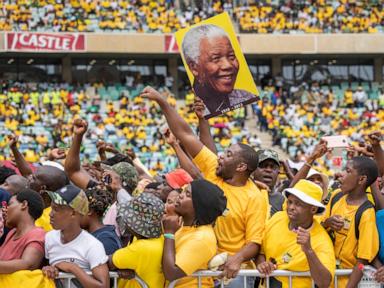
When the final tally was announced at the Independent Electoral Commission’s results center in Midrand, the verdict was unmistakable. For the first time since the birth of democracy in 1994, the ANC could no longer govern alone. The era of one-party dominance was dead.
What Comes After the Monopoly Breaks
Forced into uncharted territory, the ANC entered into a sprawling Government of National Unity alongside its longtime arch-rival, the Democratic Alliance, as well as several smaller parties—a historic, uneasy marriage of necessity born out of sheer survival rather than ideological harmony.
Is this forced coalition the beginning of South Africa’s long-awaited turnaround, or merely the start of a messy, paralyzed new chapter? The honest answer is that nobody knows, and anyone claiming certainty is selling you a fairy tale.
On one hand, breaking a thirty-year political monopoly is the healthiest thing that can happen to a maturing democracy. Power without the credible threat of removal inevitably curdles into arrogance. Now, cabinet ministers from rival parties sit around the same table, watching each other’s budgets, questioning procurement decisions, and knowing that voters have finally demonstrated they are willing to fire the incumbents. Power generation at Eskom began showing tentative signs of stabilization in 2024 as private renewable energy projects came online and maintenance routines improved, offering a flicker of hope that the worst of the blackouts might slowly recede.
On the other hand, coalition politics in South Africa has a volatile, treacherous track record. Across major metropolitan municipalities like Johannesburg, Tshwane, and Ekurhuleni, fragile multi-party coalitions have collapsed repeatedly over petty ego clashes, patronage disputes, and shifting alliances, cycling through mayors every few months while residents watch basic services deteriorate even further. Scaling that fragility up to the national government carries immense risk when deep ideological divides over economic policy, land reform, and healthcare threaten to deadlock decision-making at every turn.
Think back to Sipho, sitting at his kitchen table in Soweto as the evening chill settles into the floorboards.
On his shelf sits that fading photograph from April 1994, still framed behind glass, carefully dusted every Sunday morning. He has not thrown it away, and he likely never will. The pride of that day—the sheer, breathtaking triumph of claiming human dignity after centuries of oppression—remains real, untouchable, and sacred.
Yet when Sipho looks at the stub of paraffin candle burning down toward the tin saucer in front of him, he understands something that the men and women in tailored suits debating inside Parliament in Cape Town took far too long to grasp. History can earn a movement the right to lead once. It cannot keep the lights on, it cannot put food on a child’s plate, and it cannot ask a hungry, tired nation to live on memories forever.
Outside his window, somewhere down the dark, silent street, a neighbor’s generator coughs, sputters, and dies out for the night, leaving only the wind moving through the dry winter grass.


