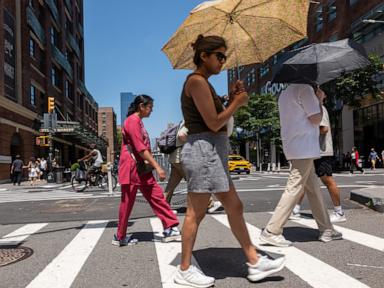
The air in July does not move. It hangs in the backyard like a wet wool blanket, heavy enough to choke the breath right out of your lungs. I stood by the tomato plants last summer, watching the leaves curl inward into tight, brittle fists, praying for a stray gust that never came. The hose water hissed against the parched dirt, turning to steam before it could sink an inch.
We talk about global temperatures breaking records like it is a sports score. A new high. A fresh milestone. A bold red number flashing on a television screen.
It is not a score. It is a fever.
And right now, the planet is burning up from the inside out, fueled by a relentless natural cycle that has decided to punch our collective ticket.
Consider what happens next: the Pacific Ocean begins to wake up. Deep beneath the surface, thousands of miles away from my scorched garden, a massive pulse of warm water breaks loose. This is El Niño, the periodic climate phenomenon that acts like a gigantic radiator switch for the globe. When the eastern tropical Pacific warms up, the atmosphere notices. The jet stream bends. Weather patterns scramble. The baseline temperature of the entire earth takes a violent, upward lurch.
Scientists at agencies like NOAA and the World Meteorological Organization tracked the numbers climb. They recorded anomalies that broke historical charts dating back to the mid-nineteenth century. They published graphs with lines shooting upward like jagged mountain peaks, leaving previous record years in the dust.
Data. Percentages. Degrees Celsius.
Strip away the dry scientific reporting, and you find a much simpler, harsher truth. The earth is running a high temperature, and the medicine chest is empty.
To understand why this matters, you have to look past the global averages and look at the kitchen table.
Imagine Elena, a hypothetical coffee farmer living in the lush highlands of Central America. (Note: Elena represents the lived reality of millions of agricultural workers documented in recent climate impact assessments). For generations, her family knew the rhythm of the rains. They planted in April, harvested in November, and trusted the sky to do its job. But last year, the rains did not come. Then, when they finally broke, they came all at once, washing away the topsoil along with the young coffee cherries.
Elena did not read the reports about the El Niño strength index. She only knew that the wells ran dry, the leaves withered, and the market price for beans skyrocketed because half the region suffered the exact same fate.
That is the invisible stake of a warming world. It is not just about feeling sticky on a July afternoon. It is about the quiet unraveling of the systems we built our entire civilization upon. Food supply chains snap. Power grids strain under the crushing weight of millions of air conditioners running full blast. Coral reefs bleach and turn ghost-white in water that feels like a warm bath.
We built our modern life on carbon. We lit the match a century ago, and now we are surprised that the house is hot.
Yet, there is a strange psychological comfort in denial. We look out the window, see a sunny day, and think everything is fine. We crank the thermostat down inside our air-conditioned offices and pretend the outside world does not exist. We treat climate shifts as abstract political talking points rather than an unfolding emergency happening right beneath our feet.
The danger of an El Niño year is that it acts as an amplifier. It takes the steady, long-term warming trend driven by human greenhouse gas emissions and puts a megaphone to it. It pushes us past thresholds we were not supposed to cross for another decade. It forces the future into the present, all at once.
We are standing in the middle of a burning room, arguing about who left the door open.
The thermometer does not care about our debates. It does not care about policy delays, economic projections, or stubborn disbelief. Mercury expands when it gets hot. That is physics. And the mercury is rising.
Every record broken is a warning flare. Every dry well is a flashing red light. We can continue to treat these anomalies as statistical blips, or we can look at the withered tomato plants in our yards and accept that the climate we grew up in is gone.
The heat is here. The question is whether we will wake up before the shade runs out entirely.