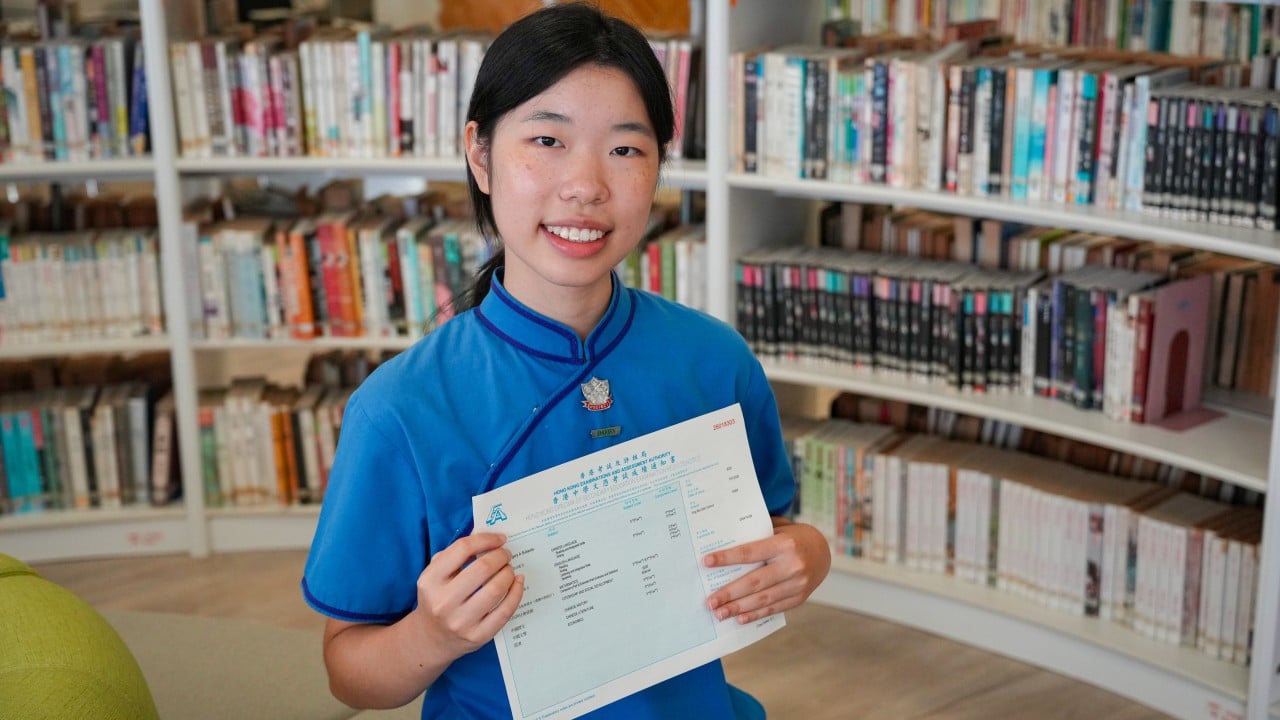
Every year in July, Hong Kong goes through the exact same ritual. The results of the Diploma of Secondary Education (DSE) examinations drop, and the media rushes to interview the top scorers. We see pictures of smiling teenagers holding up their results slips, surrounded by proud parents and school principals.
Most people look at these high achievers and think they are just different. They think these students have photographic memories, superhuman focus, or simply did nothing but study for eighteen hours a day.
That is a lie.
The reality is much simpler, and honestly, a lot more encouraging. Hard work is only half the battle. If you are just grinding through past papers without a clear system, you are wasting your time.
The 2026 DSE results produced a record-breaking 24 top scorers. Eleven of them earned the "super top scorer" title by bagging 5** in seven subjects. When you actually listen to how these students prepared, you realize they did not win by working harder than everyone else. They won by working smarter.
The Death of the Fourteen Hour Study Day
We have all heard the horror stories. Students locking themselves in their rooms, drinking energy drinks, and sleeping four hours a night. It sounds dedicated.
It is actually incredibly stupid.
Your brain is not a machine. After a certain point, cognitive fatigue sets in, and you stop absorbing information. You are just staring at pages and pretending to study.
Take Wong Lok-yin, the first-ever super top scorer from Po Leung Kuk Laws Foundation College. He did not burn the candle at both ends. He kept his brain sharp and avoided burnout by using a simple Pomodoro timer.
He broke his study sessions into highly focused 25-minute sprints, followed by a strict five-minute break. During those five minutes, he stepped away from his desk. He let his brain relax.
It sounds too simple to work, but there is real science behind it. Constant focus drains your brain’s cognitive resources. By taking short, structured breaks, you allow your mind to consolidate the information you just processed. You reset your attention span.
If you want to survive the DSE grind, throw away the idea of marathon study sessions. Aim for high-intensity intervals instead.
Why You Need a Mistakes Booklet
Careless mistakes are the silent killer of DSE scores. You know the feeling. You walk out of the exam room feeling confident, only to get your paper back and realize you made a silly math error or misread a prompt.
Soniya Tong Siu-nga, a super top scorer from Ying Wa Girls' College, had this exact problem. Back in Form One, she kept making careless errors in math. She would accidentally turn a subtraction sign into an addition sign or completely misread what the question was asking.
She did not just resolve to "try harder" next time. She created a dedicated mistakes booklet.
Whenever she got a question wrong, she wrote it down in this booklet. She recorded the specific reason why she made the mistake. Was it a conceptual gap? Was it a reading error? Was it a calculation slip?
Before every mock exam and practice session, she reviewed this booklet. It served as a highly personalized warning system. By constantly reminding herself of her specific weaknesses, she trained her brain to avoid those exact traps under pressure.
Stop doing past papers just to tick a box. If you do a paper, score it, and immediately throw it in a pile, you learned nothing. The real value of a past paper lies in analyzing every single mark you lost.
The Right and Wrong Way to Use AI
By 2026, artificial intelligence has become a standard study tool for Hong Kong students. But there is a massive divide in how students use it.
Some students use AI to write their essays for them. They copy and paste prompts, generate answers, and call it a day. This is lazy, and it will guarantee you fail on exam day when you have nothing but a pen and a piece of paper.
Vincent, a super top scorer from Queen’s College, took a completely different approach. He used AI as a personal tutor, not as a shortcut.
If he struggled to understand a highly complex concept, he would ask the AI to explain it to him in simple terms. He used it to generate practice prompts or to explain why a specific answer in a marking scheme was correct.
The distinction here is crucial. You should use technology to build your understanding, not to replace your thinking. If you rely on AI to do the heavy lifting, you will never genuinely absorb the knowledge.
Think Like an Examiner
The DSE is not a test of general intelligence. It is a highly specific game with a very rigid set of rules. To win, you must understand exactly how the game is scored.
Many students write brilliant, beautifully phrased English essays or incredibly detailed science answers, yet they fail to get a 5**. Why? Because they did not use the exact keywords the marking scheme demanded.
You have to realize that examiners are human beings. They are paid to grade hundreds of papers in a very short window. They are not reading your essay like a classic novel. They are scanning your page for specific terms, structures, and criteria.
- Learn the command words. In subjects like Biology or History, words like "describe," "explain," and "evaluate" require completely different answer structures. If a question asks you to "evaluate" and you only "describe," you will lose half the marks immediately, no matter how much you write.
- Analyze the marking schemes. Don't just check if your final answer is right. Look at where the individual marks are awarded. Sometimes a tiny step in a math calculation is worth a whole mark, while the final answer is only worth one.
- Structure your writing. Use clear frameworks. For long-form answers, the Point-Evidence-Explanation-Link (PEEL) method ensures you stay on track and hit every marking point.
The Bottom Up Turnaround
Perhaps the most inspiring story from the 2026 cohort is Cheng from Shatin Tsung Tsin Secondary School. When he entered Form One, his academic performance put him in the bottom 90 students of his entire year.
He was not a natural-born academic star. But he did not let his starting point define his ceiling. Through steady, daily progress, he climbed his way to the top, ultimately becoming his school's first-ever DSE top scorer.
It is easy to look at top scorers and assume they have always been perfect. Cheng’s story proves that consistency is a massive equalizer.
You don't need to be perfect today. You just need to be slightly better than you were yesterday.
Your Plan for Tomorrow Morning
Stop looking for a magic bullet. There isn't one. If you want to change your academic trajectory, you need to change your daily habits.
Start by buying a simple notebook. This is your new mistakes booklet. Go back through the last practice paper you did, find every single error, and write them down.
Next, download a basic Pomodoro app or just use the timer on your phone. Commit to doing just four focused 25-minute study sessions tomorrow, with zero distractions. No social media, no notifications, no multitasking.
You might be surprised by how much you actually get done when you stop trying to do everything at once.