Picture the world's largest diplomatic body ringing in January 1, 2027, with nobody legally in charge. That isn't a hypothetical thriller plot anymore. It's a very real possibility sitting right in front of the United Nations.
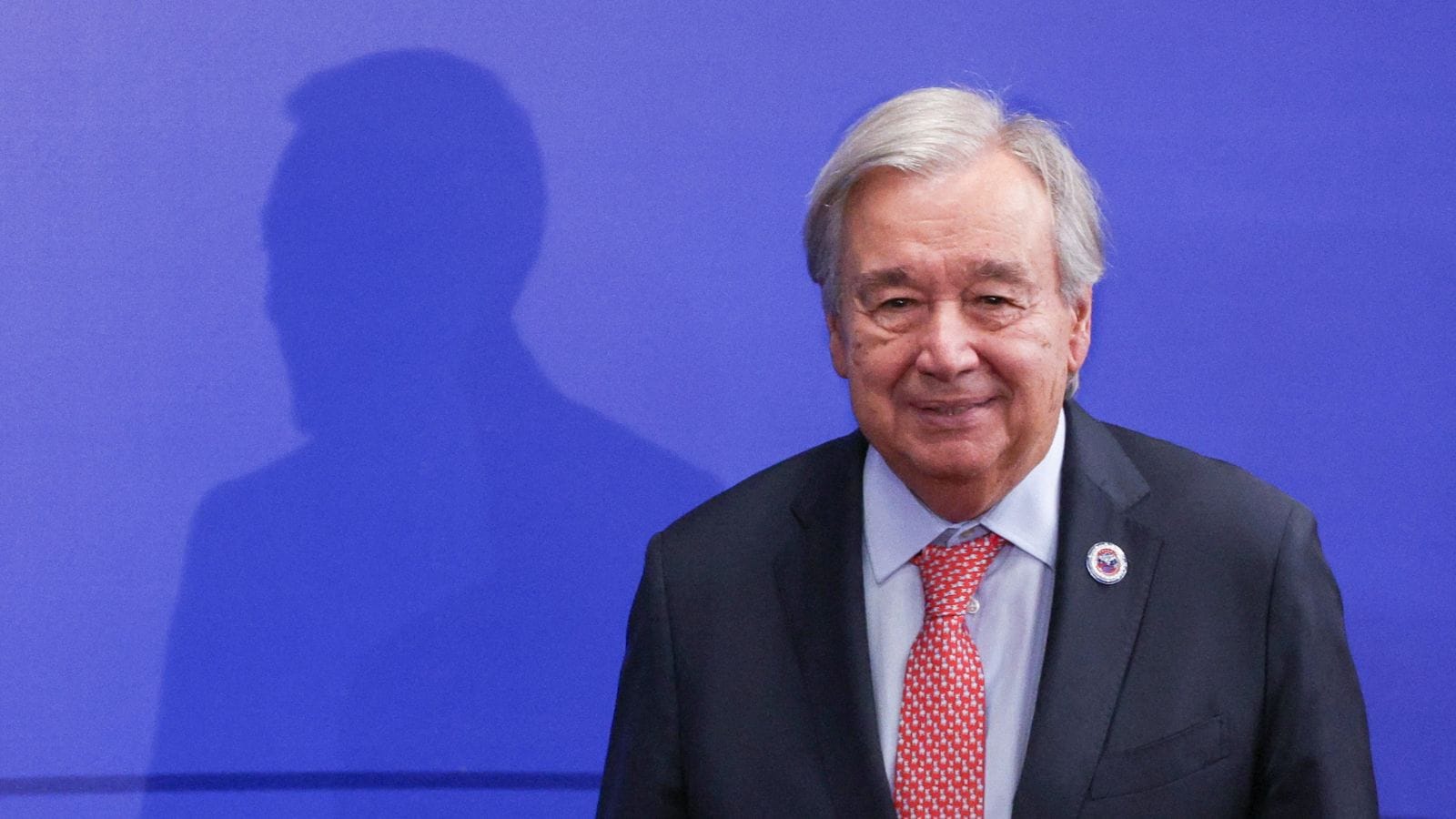
António Guterres wraps up his second five-year term on December 31, 2026. Yet after nine confidential straw polls—including the latest round on November 20—the UN Security Council remains completely deadlocked on who should replace him. None of the eight candidates on the ballot has cleared the veto gauntlet of the Council's five permanent members, and senior diplomats are already quietly dusting off emergency contingency plans for a leadership vacuum.
If you've been wondering why the UN Secretary-General selection has dragged into late November without a nominee, or what actually happens to global diplomacy if the clock runs out at midnight on New Year's Eve, you're looking at one of the biggest institutional crises in Turtle Bay's 80-year history.
Why the Security Council Is Stuck on Guterres's Successor
On paper, picking a Secretary-General looks straightforward. Under Article 97 of the UN Charter, the 15-member Security Council recommends a candidate, and the 193-member General Assembly votes to appoint them.
In practice, it's brutal power politics. To win the Council's recommendation, a candidate needs at least nine "encourage" votes out of 15 and zero "discourage" votes from the P5—the United States, Russia, China, the United Kingdom, and France. Any single P5 power can quietly kill a candidacy using colored ballots that distinguish permanent-member vetoes from elected-member votes.
Look at the numbers from the November 20 straw poll, and you'll see the exact math behind the paralysis:
- Rebeca Grynspan Mayufis (Costa Rica), the head of UN Trade and Development, leads the pack with 10 "encourage" votes overall. Seven of those come from elected members. Among the P5, though, she sits at three "encourage" and two "discourage" votes. Two permanent members are actively blocking her.
- Rafael Mariano Grossi (Argentina), Director General of the International Atomic Energy Agency, pulled eight "encourage" votes—one short of the nine-vote threshold—while facing three P5 "discourage" votes.
- Lana Zaki Nusseibeh (United Arab Emirates), a late entrant nominated in October, drew seven "encourage" votes and three P5 "discourage" votes.
- Carolyn Rodrigues-Birkett (Guyana) dropped to six "encourage" votes alongside two P5 "discourage" votes.
- Feridun Hadi Sinirlioğlu (Türkiye), Olara Otunnu (Uganda), María Fernanda Espinosa Garcés (Ecuador), and Ivonne A-Baki (Ecuador) all trailed with between one and five "encourage" votes and heavy P5 opposition.
Notice the pattern? Across the entire field, total "encourage" votes actually fell from 47 in the eighth round to 42 in the ninth, while "discourage" votes jumped from 59 to 69. The Council isn't converging around a frontrunner. It's hardening into rival camps.
Washington, Moscow, and Beijing are locked in fierce geopolitical friction—over wars in Ukraine, Gaza, and Sudan, over UN budget cuts, and over who gets to steer the Secretariat's top political and humanitarian posts. Analysts like Richard Gowan at the International Crisis Group have pointed out that Guterres struggled with influence precisely because he fell out with both Washington and Moscow. Now, none of the P5 wants to wave through a successor they suspect might lean toward a rival bloc.
The Unspoken Battle Over Regional Rotation and Gender
There's another layer to this standoff that diplomats rarely admit out loud in press briefings. By informal tradition, the Secretary-General's office rotates geographically, and Latin America and the Caribbean haven't held the post since Peru's Javier Pérez de Cuéllar stepped down at the end of 1991. At the same time, civil society coalitions like 1 for 8 Billion and dozens of member states spent the past year pushing hard for the UN to finally elect its first woman Secretary-General after eight men in a row.
Early on, that dual push made former Chilean president Michelle Bachelet and Costa Rica's Rebeca Grynspan look like natural favorites. Bachelet withdrew in September after tanking in the third straw poll, and former Senegalese president Macky Sall bowed out in October. Instead of clearing the lane for Grynspan, the race fractured further when the UAE nominated Lana Nusseibeh and Türkiye put forward Feridun Sinirlioğlu.
That late scramble tells you everything. P5 capitals aren't treating regional rotation or gender parity as binding rules. They're hunting for a political compromise they can live with, even if it means sidelining the entire current slate of eight candidates.
What Actually Happens If Nobody Is Picked by December 31
Here is the legal headache nobody in New York wanted to test: the UN Charter has no automatic rollover clause. When Guterres's term ends at 11:59 p.m. on December 31, he doesn't automatically stay on as a caretaker until someone replaces him. His legal mandate simply expires.
And it gets messier. The Deputy Secretary-General, currently Amina J. Mohammed, serves at the pleasure of the Secretary-General. Under General Assembly Resolution 52/12B, the Deputy can step in as officer-in-charge when a sitting Secretary-General is absent or incapacitated. Legal scholars and UN governance researchers, including contributors to EJIL: Talk! and the 1 for 8 Billion campaign, have flagged a glaring problem with relying on that rule here—if the Secretary-General's term expires completely, the Deputy's own mandate expires right alongside it.
If the Security Council fails to agree on a permanent nominee in December, the UN has only four messy off-ramps.
1. A Joint Security Council and General Assembly Interim Appointment
The cleanest legal fix is for the Security Council to recommend an interim or acting Secretary-General for a short, fixed window—say, three or six months—and have the General Assembly vote it through. That's basically how Burmese diplomat U Thant took over as Acting Secretary-General in November 1961 after Dag Hammarskjöld died in a plane crash. The catch? If the P5 can't agree on a permanent chief, agreeing on a temporary one who gets to control senior Secretariat appointments on January 1 is almost as hard.
2. Extending Guterres's Term Temporarily
The Council and Assembly could pass a one-off extension keeping Guterres in office for a few extra months while horse-trading continues. Most diplomats consider this a non-starter. Confidential diplomatic reporting indicates the United States strongly opposes keeping Guterres past December 31, and Guterres himself has given zero indication he wants to linger in a lame-duck extension.
3. The General Assembly Acts Alone
What if the Security Council stays frozen and the 193-member General Assembly decides to break the glass? There is a famous precedent. In November 1950, the Soviet Union vetoed extending the term of the first Secretary-General, Trygve Lie, over his support for UN intervention in the Korean War. The General Assembly bypassed the Council and voted on its own to extend Lie's term by three years.
Moscow refused to recognize Lie as legitimate after that, boycotting him until he resigned in 1952. Trying a unilateral Assembly extension or interim appointment in 2027 would ignite an instant constitutional war over Article 97 and invite P5 powers to ignore whoever sits on the 38th floor.
4. An Actual Vacant Chair at the Top
If every political route fails, the Secretariat falls back on administrative survival mode. Under-Secretaries-General would keep running individual departments—peacekeeping, humanitarian relief, management—just as a collective group of senior officials managed day-to-day operations for six weeks in late 1961 before U Thant was confirmed.
Operations wouldn't freeze overnight. Food trucks would still roll, and peacekeepers wouldn't vanish from their posts. Yet nobody would hold the political authority of Article 99 of the UN Charter—the power that lets a Secretary-General bring urgent threats to international peace directly before the Security Council. Senior leadership contracts across political and humanitarian departments would sit in limbo, paralyzing major policy calls right when global crises demand fast mediation.
How History Shows Deadlocks Usually Break
If you're betting on how December plays out, don't assume the next Secretary-General is among the eight names currently on the table.
History strongly favors a late dark horse. In 1981, Kurt Waldheim and Tanzania's Salim Ahmed Salim fought through 16 deadlocked Security Council ballots across weeks of mutual vetoes. Neither could break through. Both eventually stepped aside, opening the door for Javier Pérez de Cuéllar—a diplomat who hadn't even campaigned in the early rounds—to emerge as the compromise choice.
Something very similar happened in 1996 when the US vetoed Boutros Boutros-Ghali's second term, triggering weeks of stalemate before Kofi Annan surfaced as the consensus pick. Even in 2016, António Guterres didn't lock down the race until early October after six straw polls.
We're already past October and nine polls deep in 2026. That means the real action over the next four weeks won't happen in public General Assembly town halls. It'll happen in closed-door bilateral deals between Washington, Beijing, and Moscow, where ambassadors trade assurances over top Under-Secretary-General jobs—who gets Political Affairs, who gets Peace Operations, who gets Humanitarian Coordination—in exchange for lifting a veto.
What to Watch Over the Next Four Weeks
If you follow international affairs, policy risk, or multilateral governance, skip the generic commentary and track four concrete signals between now and New Year's Eve:
- Watch for fresh nominations in early December. The nomination window never formally closes until the Security Council makes its recommendation. If member states suddenly nominate a low-profile technocrat or veteran diplomat who wasn't part of the first nine straw polls, you're watching the Pérez de Cuéllar playbook kick in.
- Track leaks from the tenth straw poll. Keep an eye on Security Council Report and the 1 for 8 Billion tracker. Specifically, look at whether Rebeca Grynspan's two P5 "discourage" votes drop to zero, or whether a compromise candidate suddenly jumps past the nine-vote mark without red-ballot vetoes.
- Listen to the December Security Council President. The monthly rotating presidency sets the pace for straw polls and private consultations. Frequent, back-to-back closed consultations mean serious horse-trading is underway; silence means the P5 are still miles apart.
- Look for General Assembly procedural motions before the holiday recess. If mid-December passes without a Council recommendation, watch whether the President of the General Assembly puts emergency continuity arrangements on the plenary agenda before delegates leave New York for the end-of-year break.
The UN can survive a messy December, and it has survived deadlocked elections before. What it cannot afford is drifting past December 31 with an empty office on the 38th floor while major wars rage across three continents. Either the five permanent powers cut a backroom deal in the next 33 days, or the world's premier diplomatic organization enters 2027 running on autopilot.