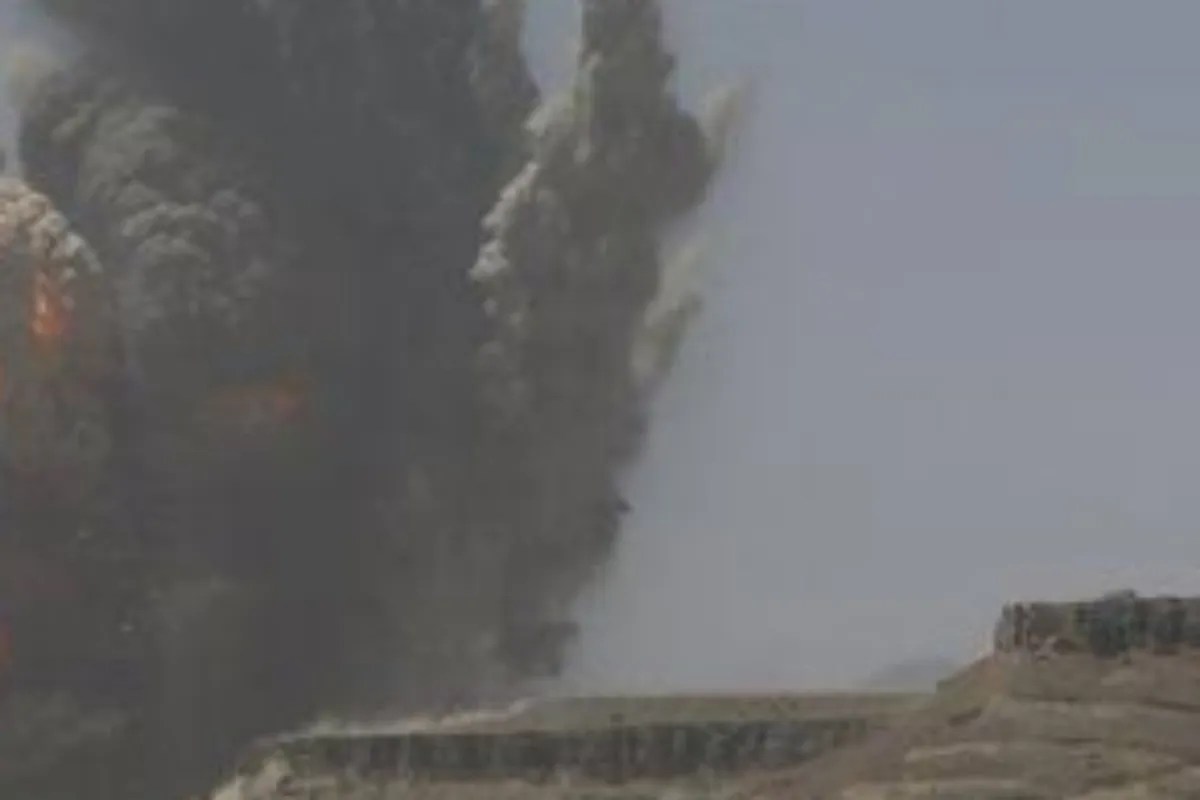
Dust. That is the first thing you remember when you have spent enough time in the high valleys and dry washes of Yemen, clinging to the edges of fractured frontlines where news dispatches turn into three-line summaries.
A strike. Vehicles hit. Weapons destroyed.
When a headline reads like a ledger—Yemeni forces attacking Houthi militants, targeting vehicles and weapons—it is easy to skim past it over morning coffee as just another entry in a long, exhausting ledger of conflict. You see nouns. You see verbs. You do not see the radiator hissing into the cool mountain air after a pickup truck loses its axle on a rutted track. You do not hear the sudden silence in a dry riverbed when an engine dies and leaves only wind scraping against sandstone.
I have stood beside roads like those, breathing air that tastes of diesel and chalk, watching ordinary people try to guess whether the rumble in the distance means a routine patrol, a supply run, or an ambush that will close the road for three weeks. War in Yemen rarely announces itself with cinematic clarity. Often it arrives as a shift in sound, a plume of dark smoke rising behind a ridge, or a neighbor walking back along the dirt shoulder carrying a jerrycan instead of driving it.
To understand what a strike against vehicles and weapons actually means on the ground, we have to look past the clean geometry of a military bulletin and trace what moves along those roads—and who breaks when movement stops.
The Anatomy of a Target
In modern irregular warfare, a vehicle is never just a vehicle, and a weapon cache is never just metal resting in a trench.
In Yemen's prolonged civil conflict—which fractured state authority after the Houthi movement, formally known as Ansar Allah, seized Sanaa in 2014 and triggered years of shifting alliances, counter-offensives, and rival administrations—control over logistics has often mattered more than control over a single hill. When Yemeni government-aligned forces or allied units strike Houthi positions, hitting transport vehicles and weapons is designed to sever the circulatory system of an offensive. A rocket launcher without a truck to haul it across wadis and mountain passes is far harder to reposition before counter-fire arrives. A pickup mounted with heavy ordnance loses its chief advantage—speed and unpredictability—the moment its tires or drivetrain are shredded.
Think of a supply line like the veins in the back of your hand. You do not need to stop the heart all at once if you can pinch off the vessels feeding the fingers. Sever the transport, and even an active position begins to starve for ammunition, spare parts, food, and rotation.
Yet that clean strategic logic collides immediately with a messy reality. Vehicles on Yemeni roads are dual-use in ways outsiders rarely appreciate. The same rugged flatbeds and four-wheel-drive trucks used to ferry fighters, mortar shells, or spare batteries also haul sacks of flour, water tanks, medicine, and families trying to reach a clinic before dusk. When forces target vehicles and weapons, precision is an aspiration pursued under stress, incomplete intelligence, and shifting frontlines.
Let us construct a hypothetical scenario to make that tension concrete. This scenario is hypothetical, created to illustrate how strikes on mobile assets ripple through a local community. Picture a narrow valley road connecting a contested ridge to a market town twenty miles away. Early one morning, a small convoy of modified trucks moves toward a forward staging point carrying munitions and communications gear. Hours later, an airstrike or artillery barrage hits the cluster of vehicles and an adjacent depot. Militarily, the strike degrades immediate offensive capacity; fighters on the ridge suddenly have fewer rounds and slower mobility. Socially, the ripple hits the tea stall owner half a mile down the track whose brother drove water trucks along the same corridor, and the family waiting for medicine that was supposed to ride behind the next fuel tanker.
That is the invisible stake inside every tactical report. Every vehicle destroyed removes a piece of hardware from the battlefield, while simultaneously tightening the knot around civilian life along the same arteries.
Why People Ask What Really Changes
Whenever news breaks that Yemeni forces have struck Houthi targets—specifically hitting vehicles and weapons—readers naturally ask the same practical questions. Who are "Yemeni forces" in this context? Does a strike like this shift the frontline, or is it a local skirmish? And why do weapons and vehicles keep reappearing even after repeated hits?
None of those questions have a tidy, one-line answer, which is part of why the conflict feels so bewildering from afar.
Yemen does not have a single, unified command structure operating in isolation. Over the years, anti-Houthi resistance has involved internationally recognized government forces, local tribes, regional coalitions, and distinct armed factions with overlapping and sometimes competing aims. Meanwhile, the Houthis have built a resilient military and administrative apparatus centered in northern highlands and key ports, relying on decentralized storage, tunnel networks, mountain cover, and improvised transport to absorb losses.
Frontlines.
Sometimes a strike on vehicles and weapons precedes a ground push or disrupts an incoming column before it can threaten a town. Other times, it is retaliatory or preventive—an effort to keep pressure on a rival force without committing infantry into dense, mined terrain. A single successful hit on a weapons cache or convoy rarely ends a campaign by itself. Wars of attrition grind forward through dozens of small shocks, pauses, rumors, and adjustments.
If you are wondering why damaged fleets and depleted arsenals keep getting replenished, the answer lies in adaptation. When a main highway becomes too exposed, drivers take goat paths and dry riverbeds. When large depots are struck, smaller stashes are scattered across farms and rock crevices. When heavy armor is scarce or vulnerable, lighter, faster vehicles take its place. Adaptation is not a sign of invulnerability; it is how an entrenched force survives punishment without collapsing overnight.
I will admit something candidly: even for people who follow Middle Eastern security affairs closely, keeping track of every faction, valley, and tactical shift in Yemen can feel like trying to read a map drawn in shifting sand. One week a road is open; the next week a checkpoint moves three miles north and a single strike alters local calculations. Anyone who claims total certainty about what happens next on a contested Yemeni road is selling more confidence than the facts justify.
The Human Weight Behind the Hardware
Numbers are seductive because they look objective. Two trucks hit. Three weapons caches struck. Five militants killed or wounded.
Numbers.
They let us distance ourselves from the heat of the day, the smell of cordite and hot oil, the tremor in a teenager's hands as he checks whether the family goat is still tethered behind the mud-brick wall.
In Yemen, a conflict that has dragged on for more than a decade has worn down institutions, hospitals, schools, and household savings to a razor's edge. Even when a military action is framed strictly around neutralizing hostile fighters, vehicles, and weaponry, civilians bear the secondary weight of every disruption. Prices spike when transport grows risky. Ambulances take longer detours. Parents decide whether to send children to school or keep them indoors until the sky and the ridges quiet down.
Consider what happens next when a key transit route is hit: a merchant delays a shipment, a clinic runs low on IV fluids, a mechanic spends three days welding scrap metal to keep a battered engine turning. None of that makes the headline about vehicles and weapons, yet all of it belongs to the same story.
We should also be honest about the moral and strategic paradox at the center of these strikes. A force defending territory or trying to roll back an armed movement faces a genuine dilemma: if you allow weapons and mobile units to accumulate unchallenged, you invite an attack on your own positions or towns. Yet every kinetic strike carries the risk of civilian harm, infrastructure damage, and fresh cycles of grievance that fuel recruitment for years.
There is no painless button to press in a war like this. Every choice has a bill attached, and the bill rarely arrives all at once.
Reading Between the Lines of War
The next time you see a short dispatch reporting that Yemeni forces attacked Houthi positions and targeted vehicles and weapons, do not treat it as a finished story. Treat it as a clue.
Look at where it happened—near a pass, a coast, a border, or a contested governorate. Ask what moves through that spot. Ask who depends on the road staying open and who benefits from its being closed. Remember that behind the clinical phrase "vehicles and weapons" lie engines, roads, supply chains, rivalries, and human lives caught inside a grinding stalemate.
Down in a quiet valley after dusk, when the engines cool and the dust finally settles onto the stones, a single question hangs in the dark: whose road is this tomorrow morning, and who will dare to drive it?


