Silence.
It settles over a courtroom long before the gavel ever strikes, thick enough to feel on the back of your neck, heavy with the weight of everything that came before and everything still waiting to be tested.
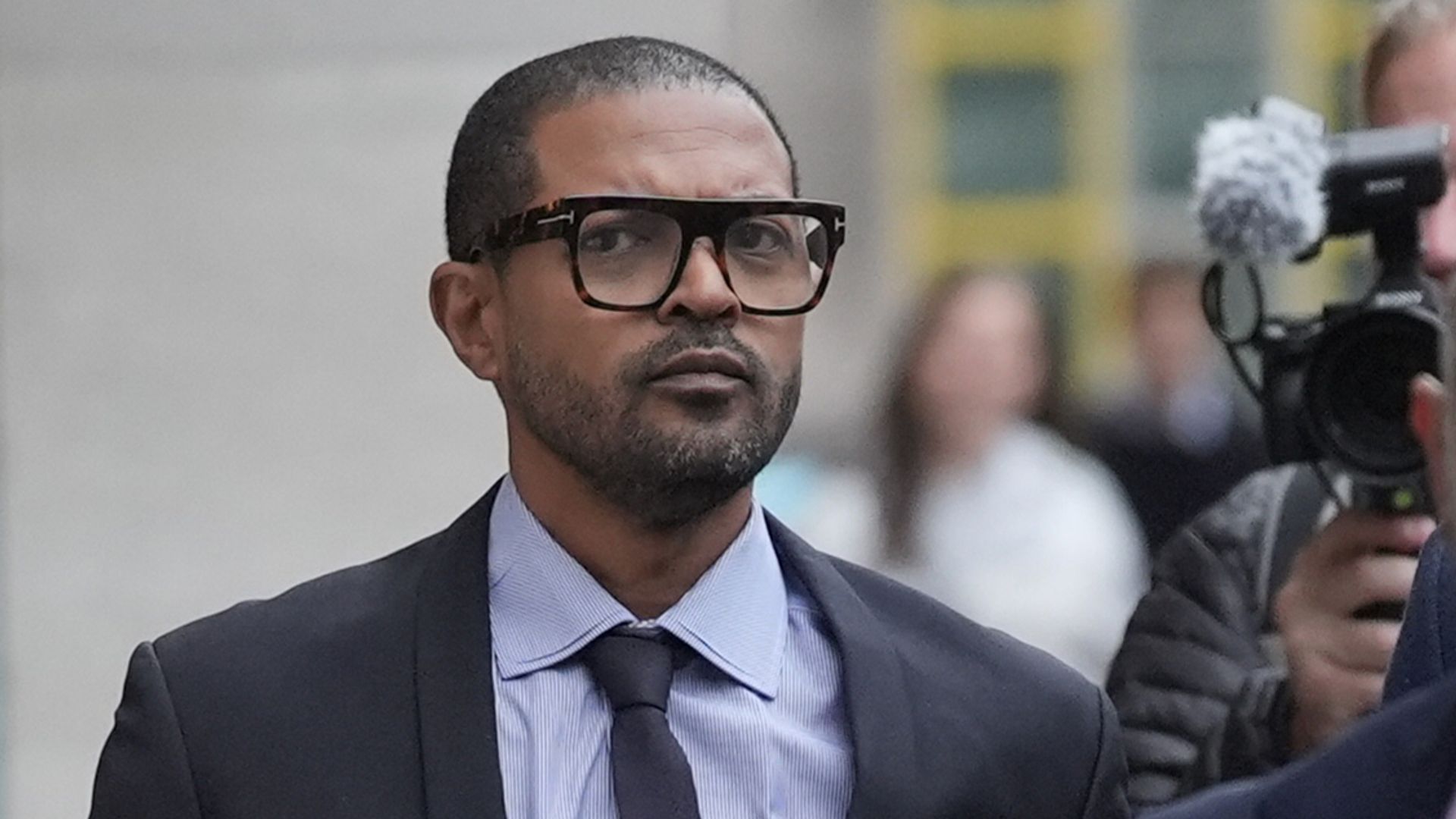
In October 2026, actor and filmmaker Noel Clarke stood before Westminster Magistrates’ Court and indicated not guilty pleas to six sexual offences involving five women, alleged to have occurred between 2007 and 2016 in London and Dorset. By mid-November 2026, following a brief appearance at Southwark Crown Court where he spoke only to confirm his name, a provisional six-to-eight-week trial was set for November 2027, with conditional bail granted and another hearing scheduled for March 2027.
To the casual reader scrolling past a headline, those are neat, tidy court lines. Dates. Charges. Pleas. A calendar entry a year away.
Yet real lives do not move in neat, tidy court lines. They move in memory, in dread, in paychecks that stopped arriving years ago, and in the quiet rooms where people decide whether to speak up or stay silent.
A Case Years in the Making
To understand what a not guilty plea means here, you have to rewind before the charges were filed in September 2026. You have to look back to April 2021, when The Guardian published allegations of sexual misconduct and bullying against Clarke, who had become a recognizable figure in British television and independent film through Doctor Who and his writing, directing, and starring work on Kidulthood, Adulthood, and Brotherhood.
Almost immediately, the industry shifted. Projects were paused, transferred, or cancelled. BAFTA suspended his membership and honorary award.
Then came the civil battle. Clarke sued The Guardian for libel, arguing the reporting had ruined his life and reputation. After a high-profile High Court trial in spring 2025, Mrs Justice Steyn handed down her judgment in August 2025, ruling against Clarke and finding that the newspaper’s reporting was substantially true and in the public interest. By early 2026, reports emerged that Clarke had been declared bankrupt, with massive legal costs looming over the dispute.
Now, the matter has crossed from civil defamation into criminal prosecution. The Crown Prosecution Service announced six charges—two counts of sexual assault, three counts of voyeurism, and one count of exposure—relating to five women across a nine-year span.
Those are the verified facts on the record.
Everything else is human friction.
What a Not Guilty Plea Actually Means
People often misread a not guilty plea. They hear those two words and assume the person is claiming nothing ever happened, or that the legal system has already picked a winner.
It doesn't work like that.
In criminal law, a not guilty plea is a formal stance that puts the prosecution to its proof. It tells the court: You must prove every element of every charge beyond reasonable doubt. Until a jury hears the evidence, cross-examination, legal arguments, and instructions—and reaches a verdict—the defendant is presumed innocent in the eyes of the criminal law.
Think of it as a bridge under construction over a wide river. The civil libel ruling in 2025 rested on the civil standard of proof and focused on whether The Guardian had justified its reporting. A criminal trial is a different structure altogether, built on stricter rules of evidence, specific statutory offences, and a much higher threshold for conviction.
A person can lose a civil libel claim and still plead not guilty—and still require the state to prove criminal guilt beyond reasonable doubt. Both things can be legally true at the exact same moment. That distinction confuses many people, because everyday language treats "proven" like a single light switch—either on or off—whereas the law uses different rooms with different lighting.
A Hypothetical Walk Through the Waiting Room
Suppose we step back from the headline for a moment. (What follows is a hypothetical scenario, created to show the human pressure around non-recent cases—not a depiction of any specific witness or party in this case.)
Imagine Hannah, a hypothetical young woman who worked near the edges of a creative industry a decade ago. For years, she barely talked about a bad night or an uncomfortable boundary crossed behind closed doors. At twenty-two, you tell yourself you are overreacting. At twenty-six, you tell yourself nobody will believe you over someone with a name and a publicist. At thirty-two, you just want to pay rent and move on.
Then a phone call comes years later. Police investigators ask if you remember dates, locations, messages, details from a decade back.
Suddenly, a memory you packed away in a cardboard box is pulled out onto a bright table under fluorescent lights. You have to relive moments you spent years trying to shrink down to size. And you know that if the case goes to trial in 2027, every detail of your recollection—and your life—may be examined in front of strangers.
That is the invisible stake in cases involving alleged offences from years earlier. Time erodes small details like street names and exact months, even when the emotional impact stays sharp. Witnesses carry anxiety. Defendants carry the weight of public scrutiny, bail conditions, and a calendar stretched out across months of pre-trial hearings.
Power on Set and Behind Closed Doors
Creative workplaces have a peculiar dynamic. When someone holds influence—as a writer, director, producer, or recognizable star—power rarely announces itself with a siren. Usually, it whispers. It sounds like we're all family here, or don't make trouble on your first job, or everyone knows how intense things get.
I have spent enough time around tight-knit teams and high-pressure environments to recognize how easily loyalty gets tangled up with silence. When your livelihood depends on reputation, word of mouth, and being invited back into the room, speaking up feels like pulling the fire alarm in a crowded theater when you aren't sure anyone else smells smoke.
Yet silence has a cost, too. It leaves people isolated with their doubts.
Consider what happens next when allegations move from whispers to court dockets. The spotlight gets harsher, not softer. For anyone watching from the outside, it is tempting to treat a case like a television drama with a neat twist at the end of every episode.
Real courtrooms do not have commercial breaks. They have adjournments, legal submissions, technical rulings, and long stretches of waiting—like the March 2027 hearing and the November 2027 trial window set by the court.
Why Waiting Changes Everything
A trial set for late 2027 feels distant on a winter morning in 2026. Twelve months is a long time for memories to be tested and for public attention to drift elsewhere.
A useful way to picture this stretch of time is like leaving wet concrete out in changing weather. While it is setting, every shift in temperature and pressure leaves its mark. By the time people walk back onto the site, the surface has hardened in ways nobody could fully predict at the start.
In legal terms, pre-trial months are where defense lawyers and prosecutors examine disclosure, argue points of law, and prepare their cases. Courts also warn against online commentary that could prejudice proceedings—a reminder that social media speculation is not evidence, and loud opinions online do not replace sworn testimony in a courtroom.
I find myself wondering, honestly, how many people follow these stories only to pick a side before a single witness is sworn in. It is human nature to want certainty fast. Uncertainty makes our stomachs knot. Admitting we don't know what a jury will decide next year is uncomfortable, especially when earlier headlines and civil rulings have already shaped how people feel.
Still, patience is part of fairness. A fair trial requires space for the prosecution to present its case, space for the defense to challenge it, and space for twelve jurors to weigh the evidence without noise from the bleachers.
Beyond the Courtroom Door
When the dust eventually settles on a case like this, the questions left behind are bigger than one person or one verdict.
They ask how workplaces protect people before harm happens. They ask how long it takes—and how much it costs—for complainants and defendants alike to reach a resolution. They ask what happens when fame and power collide with accountability, and how a society holds onto two principles at once: believing victims deserve to be heard seriously, and insisting that criminal guilt must be proved fairly in court.
No single headline resolves all of that. A not guilty plea simply opens the next chapter of a long, contested legal road.
Outside the courthouse steps, London traffic keeps moving, rain or shine, while inside, a clock ticks slowly toward next autumn—leaving five complainants, a defendant, and a public audience waiting to see what is proven when the doors finally open for trial.