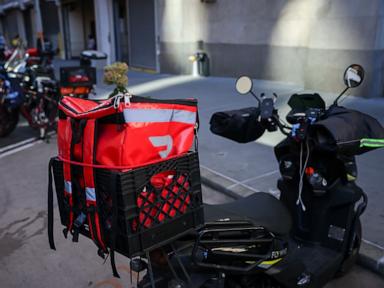
Seventeen billion dollars sounds like a number invented by people who never count coins at the bottom of a coat pocket.
Yet there it sits, attached to the idea of a DoorDash and Instacart deal—two names that have quietly moved from novelty phone icons into the floorboards of how millions of us eat, work, and survive a Tuesday night. A headline like that makes the whole thing feel like a boardroom chess match played with ticker symbols and lawyers in windowless rooms.
Move closer. Press your ear against the drywall of daily life, and you hear something else entirely. You hear the crinkle of a brown paper bag left on a porch before dawn. You hear the soft beep of an oven timer at 6:45 p.m. when a parent is still answering emails with one thumb. You hear the tired sigh of a shopper pushing a heavy cart through cold fluorescent aisles at 9:00 a.m., squinting at substitution notes while a toddler cries in the background of a home miles away.
Money moves in billions. People move in minutes, miles, and small acts of care.
The Porch at Dusk and the Cart at Dawn
To understand why a seventeen-billion-dollar union between DoorDash and Instacart matters beyond Wall Street chatter, picture two households separated by ten miles of asphalt and a whole philosophy of dinner. (Note: The following households are hypothetical illustrations created to show how real daily habits intersect with delivery economics.)
In the first house, Nadia comes home at 6:10 p.m. with wet sneakers and a backpack that feels full of bricks. Her son has soccer practice in forty minutes. There is half an onion in the crisper, three eggs, and a carton of oat milk that smells slightly suspicious. She opens a restaurant delivery app because cooking from scratch right now feels like climbing a mountain in flip-flops. Hot noodles arrive in twenty-eight minutes. Relief costs a service fee, a delivery charge, a tip, and a quiet little swell of guilt that she did not cook.
Ten miles away, Marcus is standing in the produce aisle of a neighborhood supermarket at 8:30 a.m. He is not shopping for himself. He is shopping for three strangers while his own knees ache from four hours on concrete. In his hand is a phone screen listing twelve items for a household across town: honeycrisp apples without bruises, low-sodium broth, diapers in size four, and cilantro—lots of cilantro. When the store is out of organic baby spinach, Marcus pauses. He knows that picking the wrong substitute can turn a carefully planned weeknight meal into a mild crisis for someone else.
For years, those two worlds lived beside each other without quite becoming the same habit. One app was built around the urgent craving of right now—warm food in a foil container, arriving before hunger turns sharp. The other grew out of the weekly or twice-weekly rhythm of stocking a pantry—planning meals, comparing sizes, picking avocados, and trusting a stranger to stand in for your own eyes and hands.
When a restaurant-delivery giant moves to absorb the premier grocery-delivery platform at a seventeen-billion-dollar valuation, those two tracks do not merely touch. They weld together.
Why This Deal Feels Personal Even If You Hate Delivery Fees
Plenty of people read news about massive corporate mergers and shrug. Big companies buy big companies every month. Why should your blood pressure budge?
Because food is not a gadget. You can wait six months to upgrade a phone or skip buying a new lamp when times get tight. You cannot skip eating, and you rarely have unlimited hours in the day to shop, chop, wash, and clean up. Over the last decade, convenience apps stopped being luxuries for tech insiders and became safety valves for stretched schedules, single parents, caregivers, shift workers, and people recovering from illness or injury.
I know what it feels like to rely on a delivery drop when your own body or schedule refuses to cooperate. Years ago, after a minor surgery left me moving at half-speed and staring at stairs like they were cliffs, a bag of groceries sitting outside my front door felt less like a tech transaction and more like a lifeline. Someone else had lifted the heavy milk. Someone else had walked the aisles I could not walk.
At the same time, I have also felt the sting of watching a thirty-dollar grocery run balloon near fifty dollars once fees, markups, and tips stack up. That tension is real. Convenience is wonderful until it starts feeling like a toll booth on basic living.
So when a deal of this scale surfaces, people naturally ask practical questions. Will prices go up because there is less competition? Will drivers and shoppers earn more or less? Will one single app start crowding out the independent choices we used to have?
Nobody can hand you a crystal ball with honest answers to every one of those questions on day one. Mergers on this scale carry real uncertainty. Regulators scrutinize them. Teams clash over culture. Pricing experiments happen quietly behind screens. Admitting that uncertainty is the only honest place to start—because pretending a seventeen-billion-dollar handshake automatically solves every flaw in delivery economics would insult anyone who has ever looked closely at a checkout receipt.
The Invisible Middleman Between Shelf and Stove
To grasp what is really changing, think of grocery and meal delivery not as magic, but as a bridge built out of human time. (Here is a metaphor: imagine a long wooden bridge stretching across a wide river, with thousands of people walking across it every hour carrying heavy loads.)
On one bank stands the store or restaurant, stacked with ingredients and hot pans. On the other bank stands your kitchen table. The app is the bridge—and the couriers and shoppers are the ones carrying the weight across the planks.
Historically, DoorDash built massive strength in last-mile logistics and hyper-local speed—figuring out how to get a single order from a kitchen to a doorstep quickly, efficiently, and at scale across neighborhoods and suburbs. Instacart built deep roots inside grocery aisles and retail partnerships—learning the messy, unglamorous art of catalog data, out-of-stock item logic, and turning supermarket shelves into a digital storefront.
Put those two capabilities under one roof, and the bridge gets wider.
Consider what happens next in an everyday kitchen. Right now, many of us live a split life. We order takeout on a chaotic Wednesday, then order groceries on a Sunday, juggling separate accounts, separate loyalty perks, separate delivery windows, and separate mental checklists. A combined platform promises a single place where a quick weeknight dinner and a full weekly restock live side by side.
Sounds tidy. Neat. Convenient.
Yet every bridge has stress points. When two giant operations merge, efficiency often becomes the loudest voice in the room. Leaders look for overlap. They look for ways to route orders smarter, batch deliveries together, and turn thin margins into steady profit. For a household, smarter routing can mean faster arrival times or fewer separate delivery fees if bundles work in the customer's favor. For a shopper or driver, however, algorithmic efficiency can sometimes feel like tighter timers, trickier batching, or shifting pay structures.
That is the human fault line running straight through a seventeen-billion-dollar deal. Efficiency on a spreadsheet can feel very different from fairness on a blistered foot.
What Groceries Carry That Takeout Never Could
There is an old behavioral truth about how humans shop for food: buying a meal is a transaction; buying groceries is a forecast.
When you order a burrito, you are solving the next forty-five minutes. When you buy a head of cabbage, a bag of rice, chicken thighs, and yogurt, you are making promises to your future self about who you plan to be this week. You are imagining sitting down with family, packing lunches, eating healthier, or stretching a tight grocery budget until payday.
Because groceries carry that quiet weight of planning and care, trust matters differently. If a restaurant forgets extra hot sauce, you sigh and move on. If a shopper grabs dented cans or ignores a note about ripe bananas when you are making baby food or baking for a birthday, it hits closer to home.
Instacart earned its place by leaning into that retail nuance—helping stores digitize inventory and helping shoppers navigate aisles where items move, sell out, or sit on endcaps without warning. DoorDash earned its scale by mastering rapid local dispatch across restaurants, convenience stops, and neighborhood merchants.
Bringing them together tests whether speed and retail depth can strengthen each other without flattening what makes grocery shopping distinct. If the combined company treats every delivery like a race against the clock, the careful touch that makes grocery shopping work could get rushed. If it uses smart logistics to cut wasted miles and give shoppers clearer, steadier routes while keeping prices fair for families, the payoff could be meaningful.
Which way the pendulum swings will not be decided in a press release. It will be decided in millions of small moments—in whether a carton of eggs arrives intact, whether checkout math feels transparent, and whether the people doing the physical legwork feel respected rather than squeezed.
The Quiet Stakes for Neighborhood Stores and Families
Beyond the two apps and the people delivering orders sits a third group with skin in the game: local grocers, regional chains, and neighborhood markets.
Supermarkets operate on razor-thin margins—often just a few pennies on every dollar of sales. Digital platforms became essential for many stores that could not afford to build custom apps and delivery fleets on their own. At the same time, giving a giant platform too much leverage over customer relationships and data makes independent grocers nervous. When one giant sits between a store and its regulars, the store has to think carefully about fees, visibility, and who actually owns the customer's loyalty.
For families watching their household budgets, the stakes are just as grounded. Grocery bills have felt heavier in recent years, and delivery fees have a way of turning a quick convenience into an expensive habit. A seventeen-billion-dollar price tag naturally raises a sharp question from the kitchen table: Who ends up paying back the seventeen billion?
Sometimes mergers lower costs through shared infrastructure and fewer duplicate expenses. Sometimes they raise costs—slowly, through subtle fee adjustments, membership tiers, or narrower choices—once rivals step back. Watching how pricing, promos, and everyday checkout totals behave over the coming quarters is the clearest way for any shopper to separate grand promises from actual value.
Still.
Pause for a second and notice how strange it is that we have reached a point where the ownership of two delivery apps can shape the rhythm of a family's evening meal. Fifty years ago, dinner plans revolved around who was home by five and what was thawed in the sink. Today, they revolve around signals bouncing off satellites, drivers navigating traffic lights, and software deciding how much your time is worth.
Technology did not invent hunger, busy schedules, or care for the people we feed. It simply stepped into the gap between them.
What to Watch Without Losing Your Head
If you use these apps occasionally—or every single week—you do not need a finance degree to stay smart about what this shift means for you.
Keep an eye on the real math at checkout, not just the headline promo. A discount on delivery can look generous until service fees or item markups quietly balance the scale. Pay attention to whether combining services genuinely saves you money or simply tempts you into ordering more often than you planned.
Notice how your own habits feel, too. Convenience is a tool, not a master. There is zero shame in ordering groceries or dinner when you are slammed, exhausted, or caring for someone else; that is what modern tools are for. Yet there is also a quiet freedom in walking the aisles yourself when you have the time, touching the produce, spotting unadvertised sales, and keeping your routines in your own hands.
A seventeen-billion-dollar deal will fill business columns with talk of market share, logistics networks, and strategic scale.
Out on the front porch, though, the test is much simpler. The bag lands with a soft thud on the mat, the evening breeze cools the air, and inside a kitchen light clicks on—revealing whether a giant corporate merger made life a little easier for the people trying to get dinner on the table, or just added one more middleman to the walk from shelf to stove.