Hanoi is not entering a "new era." It is undergoing a slow, expensive lobotomy.
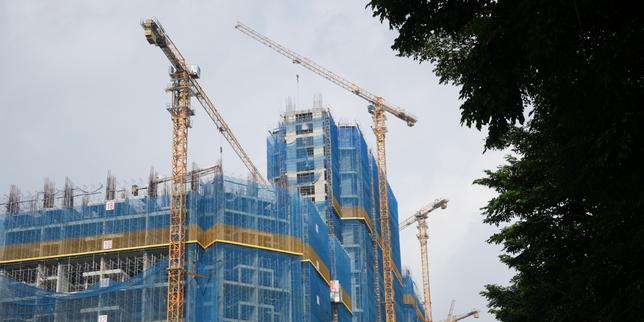
The breathless praise for the city’s skyline—the glass-and-steel shards rising from the Nam Tu Liem and Cau Giay districts—ignores a fundamental truth about urban success. To become a "global metropolis," a city must offer something the world cannot find elsewhere. Instead, Hanoi is trading its soul for a generic, third-rate imitation of Singapore or Pudong. This isn’t progress. It’s an identity crisis disguised as economic development.
The common consensus among urban planners is that verticality equals power. They see a skyscraper and think "modernity." They see a French colonial villa or a narrow nha ong (tube house) and think "inefficiency." They are wrong. They are chasing a 20th-century model of urbanism while the rest of the world is desperately trying to rediscover the human-scale density that Hanoi is currently bulldozing.
The Glass Trap and the Death of Cool
Every time a developer tears down a block of low-rise, mixed-use buildings to erect a luxury tower, Hanoi loses a bit of its competitive edge. The "global city" obsession relies on the idea that high-net-worth individuals and multinational corporations want a sterile, climate-controlled environment.
I have spent a decade walking the streets of cities from London to Ho Chi Minh City, watching this exact tragedy play out. When you sanitize the streetscape, you kill the friction that creates culture.
The true value of Hanoi lies in its "messy" urbanism. The sidewalk culture, the street food economy, and the intricate social networks of the Old Quarter are not relics to be modernized out of existence. They are the city's primary assets. By shifting the center of gravity to the outskirts and filling it with bland office parks, the city is effectively pricing out the very creativity that makes it a destination.
Nobody flies across the ocean to look at a glass box that looks exactly like the one in Dallas or Frankfurt.
The Myth of the Transit-Oriented Savior
The discourse around the Hanoi Metro and the Ring Roads is equally flawed. The "lazy consensus" suggests that better infrastructure will automatically fix the city’s notorious congestion and propel it into the big leagues.
The reality? Induced demand is a physical law, not a suggestion.
$$V = \frac{D}{T}$$
In urban economics, as you increase the capacity (supply) of roads, you simply invite more traffic until the system reaches the same level of equilibrium—usually a standstill. Hanoi’s obsession with car-centric infrastructure in its new districts is a 1950s solution to a 2026 problem.
- The Problem: Wide boulevards in the west of the city are designed for vehicles, not people.
- The Result: These areas feel dead. They lack the "eyes on the street" that Jane Jacobs identified as the core of urban safety and vitality.
- The Risk: Hanoi is creating a segregated city—one for the wealthy in air-conditioned bubbles and another for the rest, struggling through a heat island effect exacerbated by the removal of the city's green canopy.
We are seeing the creation of "ghost zones" where the lights are on in the skyscrapers, but there is no life on the pavement. A city without a street life is just a vertical parking lot.
Smart Cities are Stupid Cities
There is a lot of noise about "Smart City" initiatives in the Dong Anh area. These projects promise "integrated management," "IoT-driven grids," and "AI-optimized living."
Let’s be honest: "Smart City" is often just marketing jargon for "expensive surveillance state with better Wi-Fi."
True urban intelligence isn't found in a sensor attached to a lamppost. It is found in the way a grandmother in Hoan Kiem knows exactly how to navigate a flooded street or how a motorbike courier finds the most efficient route through a maze of alleys. This is organic, distributed intelligence.
When a city is built from the top-down by tech conglomerates and real estate giants, it lacks the flexibility to adapt. These "cities of the future" are rigid. They are built for a static version of the world. When the economy shifts or the climate changes, these rigid structures fail. The tube houses of the Old Quarter have survived a century of war, French occupation, and central planning because they are adaptable. A "smart" tower with proprietary software is a brick the moment the company that manages its elevators goes bankrupt.
The Luxury Apartment Delusion
Hanoi's skyline is being driven by speculative real estate, not actual housing needs. We see "Global Metropolis" branding on developments where 40% of the units sit empty, held as "gold in the sky" by investors.
This creates a hollow city.
When you prioritize real estate as an investment vehicle over real estate as a place to live, you drive the working class—the people who actually run the city—to the fringes. This increases commute times, degrades quality of life, and saps the city’s energy.
Imagine a scenario where the city government prioritized the preservation of the "micro-economy" of the alleys instead of the macro-prestige of the towers. Instead of a single 70-story building, imagine 700 renovated villas or upgraded tube houses with modern insulation and seismic retrofitting. You would have the same density, but with 10 times the social capital.
The Cost of the "Global" Tag
The "global city" dream is a race to the bottom. It requires cities to compete on how much they can resemble one another to attract the same pool of liquid capital.
Hanoi should be running the other way.
The cities that will win the next 50 years are the ones that lean into their idiosyncrasies. Tokyo is global because it is hyper-Japanese. Paris is global because it fought to stay Parisian. Hanoi is currently trying to be "not Hanoi."
We are witnessing a cultural liquidation. The loss of the city's "lakes and shade" architecture for the sake of Brutalist-lite apartment blocks is a trade no sane person should make.
Why You Are Asking the Wrong Questions
Most people ask: "When will Hanoi be as developed as Bangkok?"
The real question is: "How can Hanoi avoid the catastrophic urban mistakes that Bangkok is now trying to undo?"
Most people ask: "How many skyscrapers does Hanoi need?"
The real question is: "How much of the city can we walk without needing a mask?"
Stop Building Up, Start Building In
The solution isn't to stop growth. It’s to change the definition of it.
Hanoi needs to stop its sprawl into the rice paddies and start intensifying its existing urban fabric in a way that respects the climate.
- Passive Cooling over AC: Traditional Vietnamese architecture used courtyards and cross-ventilation. Modern towers are glass greenhouses that require massive energy to keep habitable.
- Motorbike Urbanism: Instead of fighting the motorbike, design for it. It is the most efficient form of transit for a high-density, narrow-street city. Stop trying to turn Hanoi into a car-city; that ship has sailed, and it's sinking.
- Human-Centric Density: We need to legalize and encourage the "messy" middle—four-to-six story buildings that provide density without destroying the street-level experience.
The path Hanoi is on leads to a future where the city is just another stop on a corporate itinerary—predictable, boring, and expensive. The "new era" isn't a dream; it's a generic nightmare.
If Hanoi wants to lead, it needs to stop following a map drawn in the 1990s by Western consultants who don't have to live in the heat of a Red River summer.
Burn the master plan. Save the alleys.
Stop trying to be global and start being Hanoi.