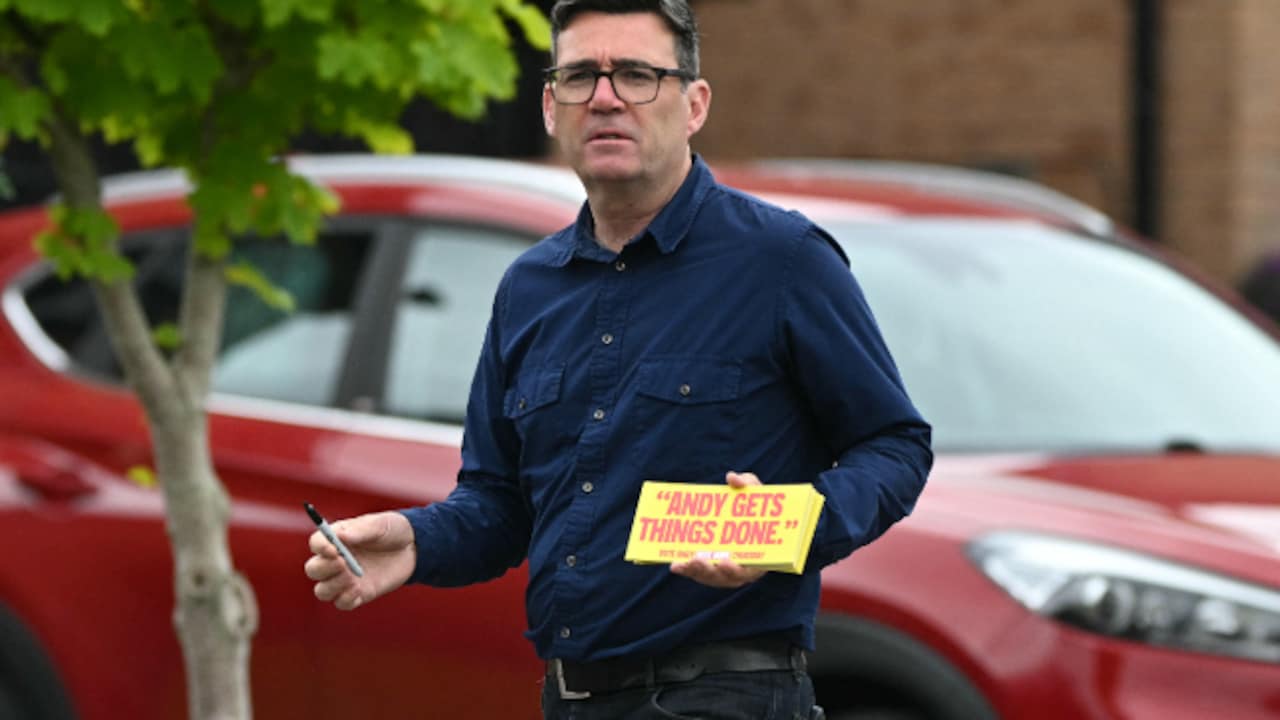
Andy Burnham wants to be Prime Minister, a reality that surprises absolutely no one who has watched British politics over the last two decades. The Mayor of Greater Manchester has spent years building a regional power base designed specifically to launch him back into Westminster. Yet, the path from regional mayor to 10 Downing Street is blocked by constitutional tripwires, party hostility, and a fundamental misunderstanding of how power actually works in modern Britain. He is betting that local delivery can override national party machinery, but history suggests the system is rigged against outsiders.
The Regional Strongman Strategy
The traditional route to the top of British politics runs entirely through SW1. You win a seat, climb the ministerial ladder, shadow a senior brief in opposition, and wait for your party leader to stumble. Burnham tore up that playbook in 2017. After two failed national leadership bids, he exited Parliament to become the first metro mayor of Greater Manchester, effectively creating a presidency in exile.
From the outside, it looks like a brilliant reinvention. He is no longer just another career politician; he is the "King in the North," a champion for millions of voters who feel abandoned by London. By taking control of local transport with the Bee Network, challenging central government during pandemic lockdowns, and taking a visible stand on homelessness, Burnham has crafted a distinct political brand. He has done something rare in modern Britain. He has made local government look impactful.
Behind the media savvy lies a stark institutional reality. Metro mayors in England possess remarkably little statutory power compared to their counterparts in New York or Paris. They are heavily dependent on central government grants, their tax-raising capabilities are severely restricted, and they must constantly negotiate with independent local council leaders who guard their own patches fiercely. Burnham’s success has not been built on vast constitutional authority, but on a masterclass in using the bully pulpit. He has used the media profile of his office to amplify his voice, turning local administrative hurdles into national political dramas.
The Westminster Barrier
To become Prime Minister, Burnham must first get back into the House of Commons. This is where the strategy hits a massive structural wall. Under the current British constitution, you cannot lead a major political party from a mayoral office. You need a constituency seat.
Finding that seat is not a simple matter of turning up and demanding a nomination. The national Labour Party machinery, currently dominated by the centrist faction aligned with Keir Starmer, views Burnham with deep suspicion. To the party elite, he is an unpredictable populist who routinely freelancer on policy and positions himself outside collective responsibility. They remember his time in Gordon Brown’s cabinet and his subsequent shifts in political identity. He was a centrist continuity candidate in 2010, a soft-left traditionalist in 2015, and is now a regional decentralist.
[Westminster Selection Process]
       │
       ▼
[National Executive Committee (NEC)] ───► Controls the shortlist
       │
       ▼
[Local Constituency Party]            ───► Votes on final candidate
The National Executive Committee holds ultimate sway over who gets onto parliamentary candidate shortlists. If a safe seat becomes vacant in the North West, the leadership can easily deploy administrative maneuvers to keep Burnham’s name off the ballot. They can cite rules regarding current term commitments or simply favor loyalists who have spent years working the Westminster corridors. Burnham cannot simply march back into parliament whenever he chooses; he requires the permission of the very people he has spent the last seven years criticizing.
The Myth of Devo Manc Success
The core of Burnham’s pitch to the wider nation is that his model of governance works better than Westminster’s centralization. He points to the re-regulation of buses, a feat achieved after years of legal battles with private operators, as proof that regional intervention delivers tangible benefits to working-class communities.
A closer inspection of Greater Manchester's metrics reveals a much more complicated picture. While the city center of Manchester is booming with glittering skyscrapers and tech investment, peripheral towns like Oldham, Rochdale, and Bolton continue to struggle with deep-seated economic decline. The wealth generated in the urban core is not automatically cascading down to the outer boroughs.
Health outcomes across the region remain stubbornly poor, despite Greater Manchester receiving a historic devolved health budget in 2016. Life expectancy in the poorest areas of the region is still significantly lower than the national average, and integration between social care and hospital trusts remains fragmented. Burnham has used his communication skills to frame these challenges as structural failures of national funding rather than limitations of his own administration. It is an effective defensive narrative, but it raises questions about whether the mayoral model is truly a silver bullet for regional inequality or merely a highly effective public relations platform.
The Changing Face of Electoral Geography
The political landscape that allowed Burnham to thrive as an anti-Westminster insurgent is shifting. His brand of northern populism was particularly potent during the chaotic years of Conservative governance, when he could position himself as the legitimate defender of northern interests against an indifferent southern elite.
With Labour in national power, that dynamic changes completely. He can no longer simply blame "the Tories" for every local funding shortfall or policy failure without risking open warfare with his own party leadership. If he attacks a Labour chancellor over infrastructure spending, he risks total alienation from the government benches. If he remains quiet to protect party unity, he loses the very outsider edge that makes him popular with his local electorate. It is a delicate balancing act that offers very little margin for error.
Voters are notoriously transactional. The goodwill Burnham accumulated by fighting pandemic restrictions has a shelf life. As the memory of those battles fades, residents in Greater Manchester will judge him on the daily realities of congested roads, knife crime statistics, and affordable housing shortages. The transition from a symbolic regional defender to a practical administrator with a track record to defend is well underway, and the scrutiny will only intensify.
The Final Act of the Long Game
Burnham is playing a generational game, waiting for national political currents to turn in his favor. He knows that prime ministers rarely enjoy prolonged periods of unalloyed popularity and that the internal dynamics of political parties are cyclical. His strategy relies on staying relevant, visible, and broadly liked by the public until a moment of profound national crisis or party exhaustion opens a door back to London.
This approach carries a profound risk of irrelevance. Political momentum is incredibly fragile. A few years of quiet administrative compromise can turn a radical outsider into yesterday's man. New political stars emerge constantly, and the Westminster commentariat quickly moves on to fresher narratives. Burnham’s calculation is that his regional base gives him a permanence that ordinary MPs lack, allowing him to survive political winters that would kill off other careers.
He remains a powerful figure in British public life, a politician who successfully anticipated the public's profound exhaustion with centralized Westminster rule. Whether that achievements can be translated into a successful bid for the highest office in the land depends entirely on factors he cannot control. He has built the launchpad, but the flight path remains heavily guarded by his rivals. The long march from Manchester to Downing Street is far from guaranteed, and the hardest miles are still ahead.