The media has a script for moments like this, and they follow it with exhausting obedience. A mother and her two young daughters are found dead in a quiet village home. The local community is predictably "shaken." The regional police force wheels out an assistant chief constable to look somber in front of a camera. They declare a major, fast-paced, complex investigation. They plaster the suspect’s face across every digital billboard and news broadcast in the country, announcing an international manhunt with all the gravity of a blockbuster movie trailer.
It is pure theater.
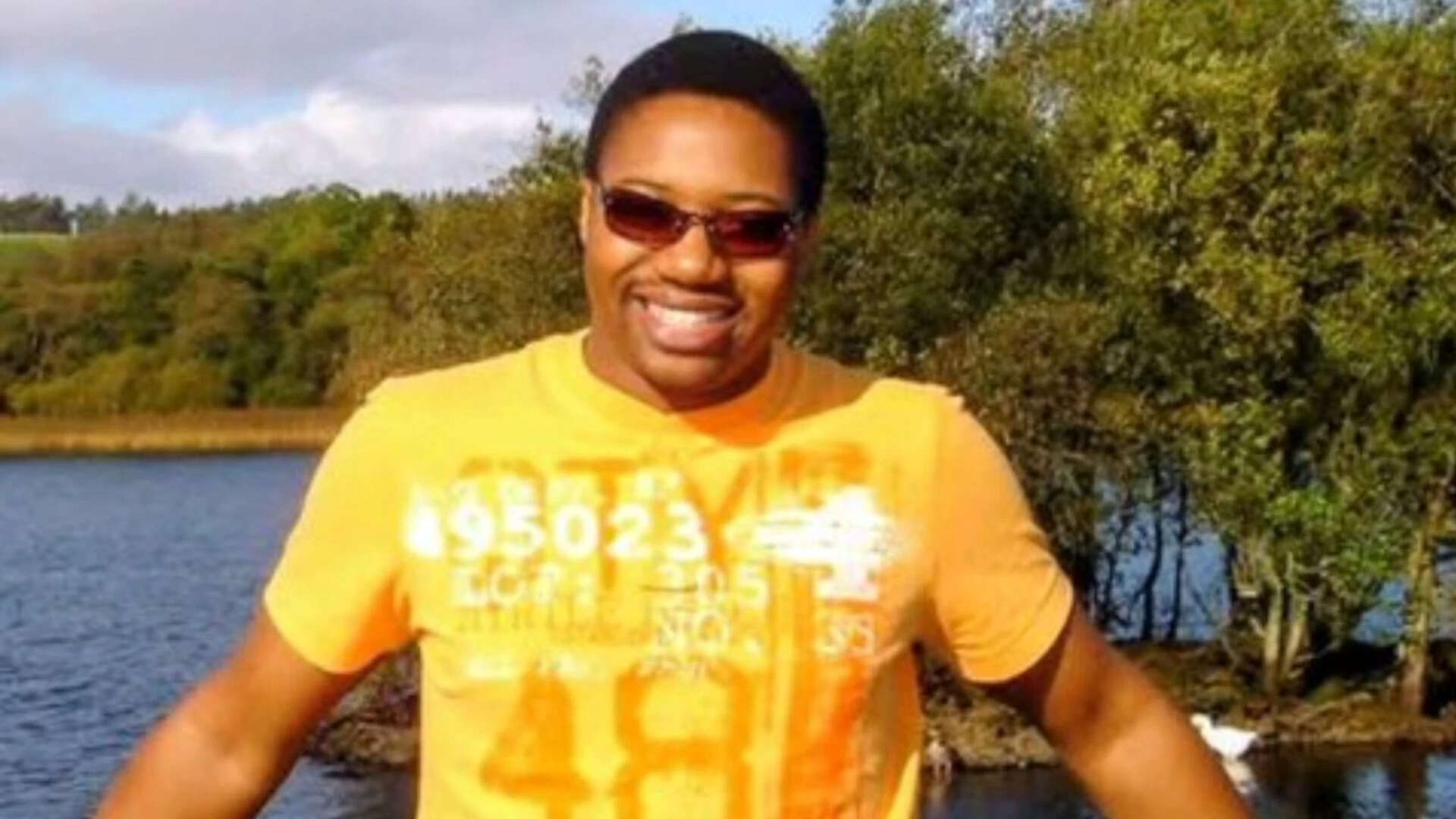
The standard coverage of the tragic deaths of Nothabo Zandile Tshuma and her daughters, Natalie and Nala, in Great Denham, Bedfordshire, treats the unfolding police action as a high-stakes, race-against-time operation. They tell you that international law enforcement agencies are closing in, that justice knows no borders, and that the suspect will be hunted down.
Here is the brutal truth that nobody in mainstream broadcasting wants to say out loud: the manhunt was over before it even began. The bureaucratic machinery designed to protect citizens failed at every single juncture, and the subsequent public appeal is an exercise in damage control rather than active policing.
The Heathrow Escape Valve
Consider the timeline. The bodies of the victims were discovered on Monday after concerned neighbors noticed they had not been seen for days. By the time Bedfordshire Police forced entry into the Carnoustie Drive property, the suspect, Ndodana Mkhanyisi Tshuma, was already thousands of miles away.
CCTV footage captured him walking through Heathrow Airport on Saturday. He boarded a flight using a valid British passport. He cleared exit security without a single red flag being raised. He landed in Zimbabwe days before a single police officer turned a door handle in Bedfordshire.
The media terms this an "international manhunt." In reality, it is a post-mortem tracking exercise. We are told that the UK border is a highly monitored, secure perimeter. I have spent decades analyzing criminal flight paths and the structural mechanics of international fugitives. The plain reality is that exit policing in the United Kingdom is practically non-existent for individuals who have not yet been flagged in an active system.
The UK does not run routine, manual exit checks where departing passengers are cross-examined against unfiled criminal complaints. If a crime has not yet been discovered, an offender has a window of absolute freedom. They can buy a ticket, check a bag, buy a coffee at the terminal, and fly to another continent.
Calling the search for a suspect who has already reached a non-extradition-friendly environment a "fast-paced investigation" is an insult to the intelligence of the public. It is a rhetorical shield used by police communications departments to deflect from a fundamental structural vulnerability: we only look for monsters after they have left the building.
The Myth of the Complex Investigation
When Assistant Chief Constable John Murphy addressed the public, he used a phrase that every veteran crime reporter knows by heart: "This is the early stages of what is an incredibly complex investigation."
What exactly is complex about it?
The suspect is known. The vehicle tracking data exists. The flight manifest is recorded. The passport used is identified. The destination is confirmed. This is not a classic whodunit requiring intricate forensic psychology or the untangling of a massive criminal syndicate. It is a straightforward, horrific instance of domestic violence resulting in femicide, followed by an immediate flight from justice.
The use of the word "complex" is a defensive linguistic tactic. It signals to the public that they should not expect rapid results, preparing them for months or even years of bureaucratic stagnation. By framing the logistics of international diplomacy as an investigative complexity, the police shift the blame from systemic delays to the inherent nature of the crime itself.
Let us dismantle the illusion of international police cooperation. Senior investigating officer Detective Inspector Lee Martin made a direct, public appeal to the suspect: "Criminal investigation knows no borders. Please do the right thing and hand yourself in to the local authorities."
This is not a real police strategy. It is a plea born of operational helplessness. Asking a suspect who deliberately planned an escape across continents to suddenly undergo a moral awakening and walk into a police station is absurd.
The Extradition Illusion
The public hears terms like "working with international law enforcement agencies" and assumes there is a seamless, digital network that allows a British police officer to press a button and have an arrest made in Harare.
The reality of international law enforcement is a sluggish, paper-heavy swamp of diplomatic protocols, sovereignty disputes, and legal challenges.
The UK’s extradition arrangements with nations outside of the European arrest warrant framework are notoriously fragile. Zimbabwe and the UK have a complicated diplomatic history. Extradition requires bilateral agreements, political will, and a judicial process within the host country that can take years to navigate. If a suspect possesses local ties, financial resources, or familial networks in the destination country, the legal friction increases exponentially.
Imagine a scenario where the suspect is located tomorrow. What happens next?
- The Crown Prosecution Service must draft an incredibly detailed extradition request.
- This request must be translated, certified, and sent through diplomatic channels.
- The host country’s ministry of justice must review it to ensure it does not violate local laws or political stances.
- A local warrant must be issued, and local police must prioritize finding a foreign fugitive over their own domestic caseload.
- Once arrested, the suspect has the right to appeal the extradition through every tier of the local court system.
This process does not take weeks. It takes years. In some high-profile cases, suspects have managed to live open, comfortable lives abroad for over a decade while lawyers argue over the semantics of treaty definitions.
The mainstream press presents the manhunt as a dynamic, physical pursuit—detectives on the ground, sirens wailing, tracking dogs sniffing the terrain. The truth is much less cinematic. The manhunt is currently a stack of documents sitting in an inbox, waiting for a foreign bureaucrat to sign off on a meeting.
The Reassurance Patrol Flaw
While the real battle moves to international diplomatic channels, the local response in Bedfordshire involves another classic piece of policing theater: the "increased police presence."
Police statements emphasized that extra neighborhood patrols were being deployed in Great Denham to reassure residents. They explicitly stated there is nothing to suggest any wider risk to the public.
If there is no wider risk to the public, why are resources being burned on reassurance patrols?
This is an allocation of scarce resources away from active crime prevention and into psychological comfort blankets. Putting high-visibility vests on a few PCSOs to walk up and down Carnoustie Drive does nothing to solve the crime, nor does it prevent the next domestic tragedy. It is a visual sedative designed to quieten community anxiety so that local politicians and police chiefs do not have to answer difficult questions about why the family’s absence went unnoticed for days.
We have created a culture that values the appearance of safety over the mechanics of prevention. The community of Great Denham is described as "stunned" and "shaken." Of course they are. But the shock is amplified by the fact that our societal metrics for safety are entirely superficial. We judge the safety of a neighborhood by its manicured lawns and quiet streets, completely ignoring the fact that the most dangerous place for a woman or a child is behind a locked front door in a peaceful village.
Dismantling the Wrong Questions
The public and the media are currently asking the wrong questions. They are asking: Where is he? How fast can we catch him? When will he be brought back?
The brutal, honest answer is that he may never be brought back, and if he is, it will be on a timeline that completely erodes the concept of swift justice.
The question we should be asking is: Why does the state remain completely blind to the early warning signs of domestic isolation?
Tragedies of this scale are rarely bolt-from-the-blue anomalies. They are almost always the culmination of a progressive escalation of coercive control, isolation, and unmonitored domestic distress. Yet, our public safety systems are entirely reactive. They require a body count before the machinery activates.
I have watched public institutions burn millions of pounds on post-incident reviews, international tracking, and public relations campaigns following high-profile domestic homicides. The investment is always heavily back-loaded. We will spend massive amounts of taxpayers' money attempting to extradite a man from another continent, but we will underfund the local services, refuge networks, and early-intervention units that could have identified a family in crisis before a passport was ever packed.
The system is designed to handle the aftermath because the aftermath is clear, measurable, and allows for public displays of institutional effort. You can photograph a floral tribute. You can film a police cordon. You can broadcast a press conference. You cannot easily film or measure the quiet, successful intervention that prevents a murder from happening in the first place.
The narrative of the shocking, unpredictable tragedy in a peaceful village is a comforting lie. It allows us to treat these events as natural disasters—horrific, unpreventable acts of god that require a unified community response after the fact. But domestic homicide is not a weather event. It is a systemic failure.
Stop looking at the CCTV images of Heathrow Airport as a clue in an active chase. Look at them for what they really are: a portrait of an institutional system being completely outpaced by a suspect who understood the bureaucratic blind spots of western law enforcement perfectly. The manhunt isn't a display of police strength; it is a monument to an entirely reactive system.
For a detailed look at how cross-border tracking works during international investigations, the Sky News report on the Bedfordshire case outlines the immediate response and initial complications faced by major crime units.