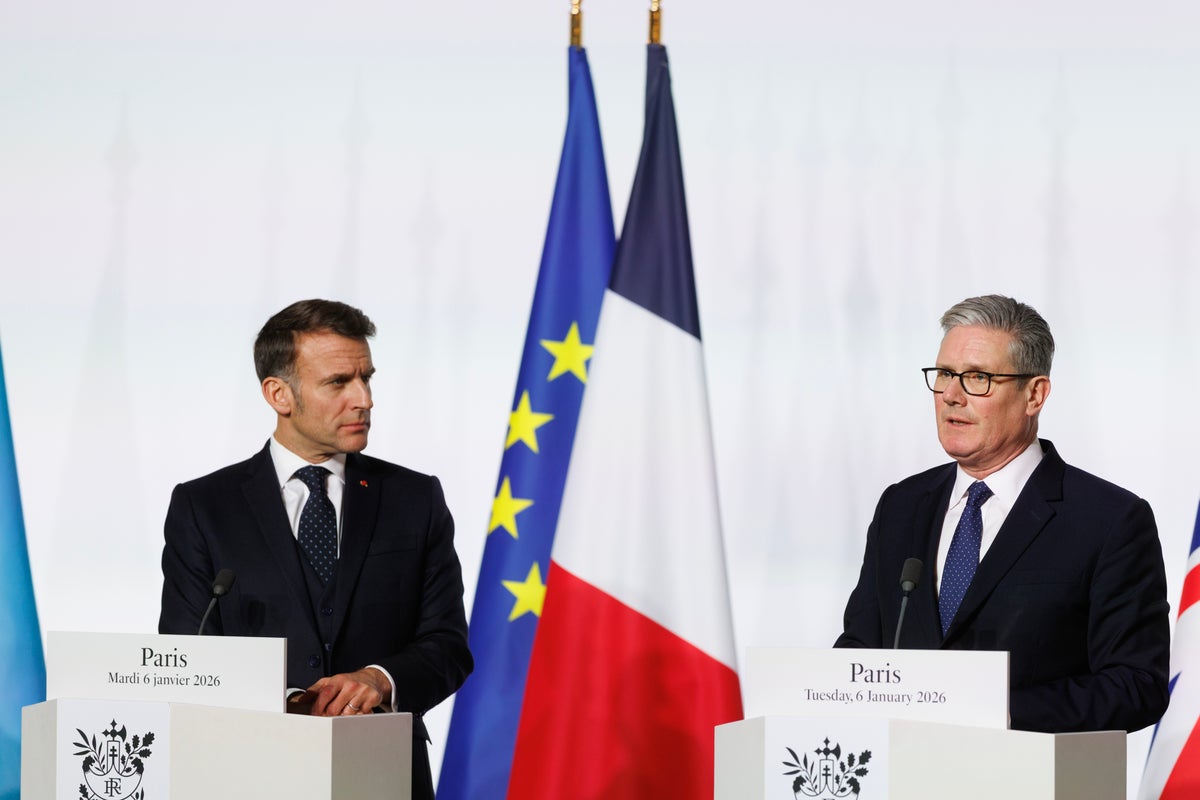
The maritime order that has underpinned global trade since 1945 is currently dissolving in the turquoise waters of the Persian Gulf. By refusing to back President Donald Trump’s naval blockade of Iranian ports, British Prime Minister Keir Starmer and French President Emmanuel Macron have done more than just schedule a summit; they have effectively declared diplomatic independence from Washington. This Friday, the two leaders will host a coalition of over 40 nations to plan a "strictly defensive" mission in the Strait of Hormuz, a move that places the traditional "Special Relationship" on life support and signals a tectonic shift in how Europe views its security.
At the heart of this confrontation is a fundamental disagreement over the definition of stability. While the Trump administration believes a total blockade will force Tehran to its knees following the collapse of ceasefire talks in Islamabad, London and Paris view the move as a reckless gamble that could permanently choke the global economy. The Strait, which handles roughly 20% of the world’s oil and liquefied natural gas, is already a ghost town. Crude prices have surged past $100 a barrel, and the European mission is a desperate attempt to create a "neutral lane" for shipping that avoids the crossfire of a brewing US-Iran war.
The Strategy of Disengagement
The upcoming Paris summit is not a standard diplomatic gathering. It is a frantic assembly of the "middle powers" who have the most to lose from a prolonged energy crisis. Starmer has been uncharacteristically blunt, stating that Britain will not support the blockade and will only participate in military actions with a "clear lawful basis." This is a coded rejection of the current American trajectory. The UK currently has minesweepers in the region, but they are being held in a defensive crouch rather than joining the US Navy’s offensive screen.
Macron is taking the rhetoric a step further. He has characterized the proposed European-led force as "independent and multinational," specifically designed to be separate from the warring parties. This is the "Third Way" of maritime security. By inviting 40 nations—likely including major energy consumers like India and Japan—Macron and Starmer are attempting to build a "Coalition of the Chokepoint" that can bypass the White House’s escalatory tactics.
The technical challenge of such a mission is immense. Protecting a commercial tanker from Iranian fast-attack craft is one thing; protecting it from the potential of being caught in a US-led blockade is an entirely different legal and military headache. If a British-flagged tanker is escorted through the Strait by a French frigate, and a US destroyer attempts to intercept it under the blockade orders, the resulting standoff would represent the most significant internal crisis in NATO’s history.
Why the Blockade is Different This Time
Previous tensions in the Strait of Hormuz usually involved Iran threatening to close the waterway. This time, the United States is the one actively enforcing a shutdown of Iranian maritime traffic. The Trump administration’s logic is rooted in "Maximum Pressure 2.0," an attempt to leverage the failure of the Pakistan talks into a total economic surrender. However, the geography of the Strait makes "selective" blockades nearly impossible.
The shipping lanes are narrow, and the radar environment is cluttered. Any attempt to board or turn back ships heading to Iranian ports like Bandar Abbas risks a kinetic response that would inevitably involve the entire waterway.
The Economic Toll of the Standoff
- Oil Prices: Crude has jumped nearly 40% since the February strikes, hitting levels not seen in years.
- Insurance Premiums: War-risk insurance for tankers has become prohibitively expensive, with some underwriters refusing to cover the route entirely.
- Supply Chain Contagion: The delay in LNG shipments is already causing electricity price spikes in the UK and Germany, directly threatening the political survival of the very leaders meeting in Paris.
Industry analysts are watching the "grey market" for Iranian oil with particular intensity. China remains the primary buyer of Iranian crude, and any US attempt to seize or sink tankers bound for Chinese refineries would transform a regional conflict into a direct confrontation between the world’s two largest economies. Starmer and Macron are acutely aware that if they don’t provide a "neutral" alternative, the global trade system might simply fracture into competing trade blocs.
The Risk of Irrelevance
For Starmer, the stakes are domestic. He is under immense pressure from a new Cabinet committee, the Middle East Response Committee, to prevent a full-blown energy recession. For Macron, this is the ultimate test of "strategic autonomy." If they fail to organize a credible force that can operate without US satellite data or logistical support, the Paris summit will be remembered as a hollow gesture of European vanity.
The mission, as currently envisioned, would wait until the most intense period of hostilities subsides. But the markets aren't waiting. Each day the Strait remains a "running sore," as Starmer described it, the more permanent the damage to global shipping routes becomes. Logistics firms are already rerouting around the Cape of Good Hope, adding weeks to transit times and billions to consumer costs.
The Paris summit is less about "reopening" the Strait and more about deciding who controls the keys to the global economy. If the US persists with a unilateral blockade while its closest allies attempt to build a separate security architecture, the concept of a unified "West" may not survive the summer. The reality is that the Strait of Hormuz is no longer just a geographical chokepoint; it has become the fracture point for a new era of global disorder.
Whatever happens in the coming days, the era of the US Navy acting as the sole guarantor of the world's sea lanes is over. Macron and Starmer are simply the first to admit it out loud.