Rahul sat in his third-floor office in Mumbai, watching the afternoon monsoon streak the glass, his coffee cooling untouched on the desk. On his Bloomberg terminal, numbers flickered like distant stars—steady, bright, and impossibly high. For years, the Indian market had carried a certain swagger. It was a valuation premium earned through the sheer kinetic energy of a billion-plus people stepping into the formal economy, a collective bet that tomorrow would always outshine today. Investors paid more for a rupee of earnings in Mumbai than they did for a dollar in New York or London, simply because the growth story felt bulletproof.
Then came the whisper from Washington.
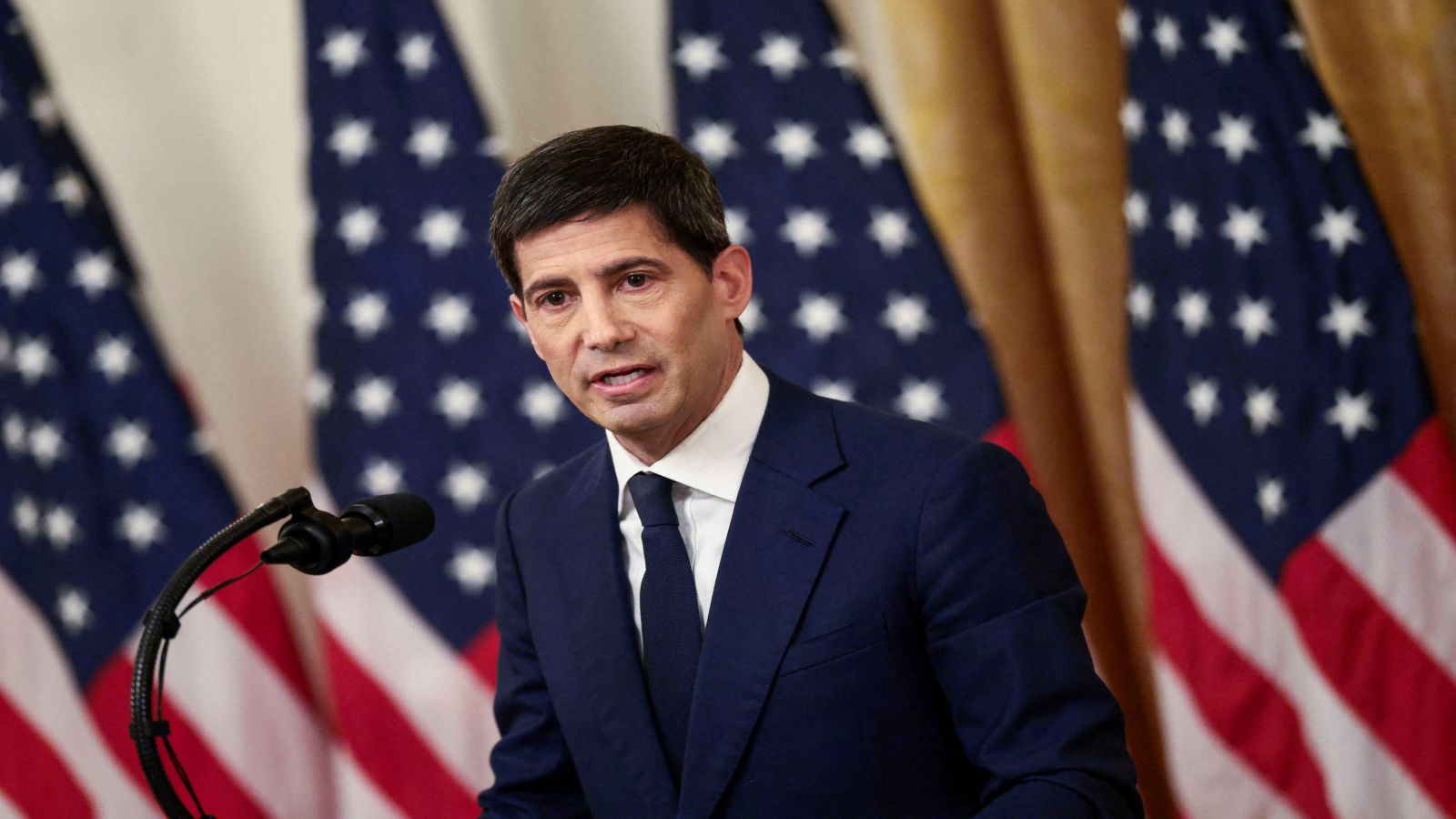
Kevin Warsh’s name floated across financial tickers, carrying the heavy, unbending gravity of a central banker who viewed easy money with suspicion. To the untrained eye, a shift in American monetary policy or leadership philosophy is just boardroom theater. But to Rahul, and millions like him managing capital across emerging markets, it felt like a sudden shift in the wind. When the world's largest liquidity faucet threatens to tighten its grip, gravity reasserts itself. The high-wire act of commanding a massive valuation premium suddenly looks a lot less like soaring and a lot more like falling.
Money has a memory, but it also has a panic button.
To understand why a change in the Federal Reserve's intellectual current matters so deeply to a factory owner in Gujarat or a tech entrepreneur in Bengaluru, we have to look past the spreadsheets. Markets are not cold equations; they are massive psychological experiments fueled by hope and fear. For the past decade, global capital had a simple playbook: find growth wherever the pulse is strongest, and pay whatever it takes to own a piece of it. India fit that bill. It traded at multiples that made traditional value investors wince, yet the money kept pouring in. Why? Because liquidity washes away sins. When money is cheap and abundant, future earnings are discounted lightly. Tomorrow's hypothetical profits feel as good as cash in hand today.
Enter the Warsh philosophy. If you read his past writings and public stances, you find an unwavering skepticism toward financial engineering and an insistence on monetary discipline. A Federal Reserve steered by such thinking implies a world where capital is no longer free. And when the cost of capital rises globally, the math changes overnight.
Suddenly, investors stop asking, How fast can they grow?
Instead, they ask, What happens if the tide goes out?
Consider what happens inside a typical institutional portfolio when global liquidity tightens. Pension funds in Chicago or sovereign wealth funds in Oslo do not hate India. They love the growth story. But their risk models are ruthlessly mechanical. As U.S. yields rise and the cost of borrowing climbs, the hurdle rate for holding riskier emerging market assets goes up. The premium that India commands—the extra price investors pay for its earnings growth—becomes a glaring target for portfolio managers looking to trim fat.
This is where the abstract world of central banking crashes into physical reality.
Think of a real estate developer in Pune who planned to finance a massive township expansion through foreign capital markets. Or a mid-sized pharmaceutical company counting on easy equity dilution to fund its next wave of research. When global liquidity contracts, the tap doesn't just trickle; it slams shut. The valuation premium was the cushion that made these projects viable on paper. Without it, the margins thin out, the debt looks heavier, and the boardroom conversations turn grim.
Yet, to frame this solely as a crisis of capital is to misunderstand the resilience woven into the Indian economy over the past decade.
For a long time, Indian markets danced entirely to the tune of foreign institutional investors. When they bought, the market surged. When they fled, it cratered. But a quiet revolution has been taking place in the background. Millions of domestic retail investors, through monthly systematic investment plans, have built a formidable local buffer. They are the new shock absorbers. They don't panic-sell at the first sign of a Fed whisper because their horizon is decades long, not quarters long.
When foreign capital threatens to reprice the market, it forces a reckoning. It strips away the froth and tests the underlying structural strength. Are Indian companies actually delivering on the cash flows that justified those stratospheric P/E ratios? Are corporate balance sheets clean enough to weather a higher interest rate environment?
The answers to those questions dictate the true health of the market. A valuation premium is like a high-end luxury brand markup. People will pay double for a designer label as long as the status holds and the economy feels buoyant. But the moment the economic weather turns chilly, buyers start looking at the stitching. They want to know if the jacket actually keeps them warm.
Kevin Warsh's philosophical imprint on monetary policy—real or anticipated—acts as that chilly wind. It strips away the illusion that liquidity will forever bail out sloppy execution. It demands that companies earn their keep not through multiple expansion driven by cheap money, but through genuine earnings growth and operational excellence.
This creates a fascinating tension. On one side, short-term volatility is inevitable as foreign portfolios rebalance and adjust to a harsher global rate reality. On the other side, the domestic engine of consumption and infrastructure development continues to churn. The duality is jarring. Walk down the bustling commercial hubs of Hyderabad or Chennai, and you see cranes scraping the sky, digital payment terminals pinging endlessly, and a young workforce demanding more from life. That energy cannot be switched off by a committee room decision in Washington.
Markets hate uncertainty, but they respect gravity.
The test India faces right now is not whether it can remain the darling of global capital under any conditions. That was always a temporary luxury. The real test is whether its companies can stand tall when the cheap-money crutch is kicked away. It is about proving that the growth story was never just about a liquidity wave, but about structural transformation.
The rain continues to beat against the glass in Mumbai. Rahul takes a sip of his lukewarm coffee, clears the noise of the financial cable news off his screen, and looks back down at the operational reports of the domestic manufacturers he covers. The numbers are real. The factories are humming. The macro winds may shift, but the ground beneath his feet is solid. The premium is being tested, yes—and in that friction lies the true measure of what comes next.