The wind at Mai Po doesn't smell like the rest of Hong Kong. It lacks the metallic tang of the MTR, the heavy steam of dim sum baskets, and the persistent, sweet scent of exhaust that clings to the skyscrapers of Central. Out here, on the northwestern edge of the territory, the air smells of salt, anaerobic mud, and the sharp, wild musk of life that doesn't care about stock indices.
I stood on a wooden boardwalk last Tuesday, watching a Black-faced Spoonbill. It is a ridiculous looking bird. It moves with a frantic, side-to-side sweeping motion, its spatula-shaped beak sifting through the silt for shrimp. There are only about 6,000 of them left on the entire planet. As I watched, a low rumble vibrated through the soles of my shoes. It wasn't thunder. It was the sound of a pile driver from across the Shenzhen River, where the skyline of the mainland rises like a jagged glass jaw against the horizon.
Hong Kong is currently gripped by a fever dream called the Northern Metropolis. It is a massive, ambitious plan to integrate the city with its mainland neighbor, turning the "borderlands" into a high-tech hub of commerce and tourism. On paper, it is a triumph of urban planning. In reality, it is a collision between two different definitions of value.
The silent residents of the mudflats
To understand what is happening, you have to look at a map not through the eyes of a developer, but through the eyes of a Curlew Sandpiper. This bird weighs about as much as a golf ball. Every year, it flies from the Siberian tundra to the southern reaches of Australia. It is a journey of nearly 10,000 miles.
Mai Po is its gas station.
If the bird arrives and the gas station is closed—or if the gas station has been replaced by a "themed eco-resort" with neon lights and a 500-car parking lot—the bird dies. It is that simple. The logic of the wild is binary.
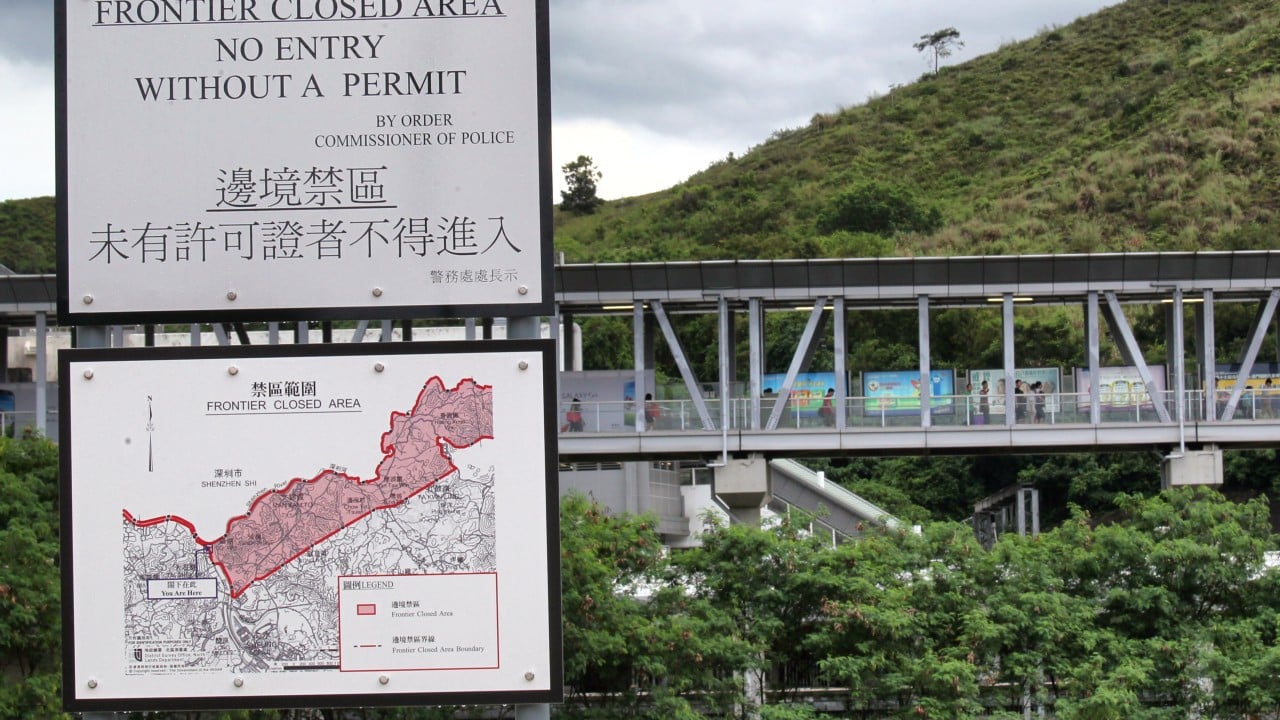
The government’s recent push for "Border Tourism" sounds benign. Who wouldn't want to see the historic piers of Sha Tau Kok or the restricted villages that have been frozen in time since the 1950s? But the proposal includes opening up the "Frontier Closed Area," a buffer zone that has unintentionally served as one of the most successful conservation experiments in Asia. For decades, the barbed wire kept people out, and in that silence, nature took a long, deep breath.
Now, that breath is being shortened.
The plan involves creating "vibrant" recreational zones. In the language of bureaucracy, vibrant usually means paved. It means noise. It means light pollution that masks the stars that birds use for navigation. We are trading a prehistoric migratory corridor for a weekend selfie spot.
The man in the green hat
I met a man named Leung near the San Tin fishponds. He has lived in the New Territories for seventy years. His skin is the color of polished teak, and his hands are mapped with the scars of a lifetime spent working the land. He doesn't use words like "biodiversity" or "ecological integrity." He talks about the water.
"The birds follow the fish," Leung said, pointing toward a pond where the surface was being broken by the occasional silver flash. "The fish follow the water. If you build the towers, you change the shadows. You change the shadows, you change the temperature. The fish leave. Then the birds leave. Then what am I looking at?"
He gestured toward the horizon, where the cranes were already beginning to pivot.
The economic argument for the Northern Metropolis is robust. Hong Kong needs housing. It needs jobs. It needs to shed its image as a city that only looks toward the sea and start looking toward the land. But there is a dangerous fallacy in the idea that we can "mitigate" our way out of destroying a wetland.
The current proposal suggests "constructed wetlands" as a replacement for the natural ones. It is a comforting thought. We imagine we can move nature around like furniture in a living room. We think we can build a better pond than the one that has been there for ten thousand years. We can't. A constructed wetland is to a primary wetland what a zoo is to a jungle. It might look the same in a brochure, but the soul of the place—the complex, invisible web of microbes, insects, and soil chemistry—is gone.
The invisible stakes
Consider the math of a bird's eye.
A migratory bird perceives the world as a series of visual cues. When we build a glass-fronted "Innovation Center" right on the edge of a marsh, we aren't just building an office. We are building a giant, invisible wall. Tens of thousands of birds die every year in Hong Kong from building collisions. They see the reflection of the clouds in the glass and think they are still in the sky.
When we talk about "Border Tourism," we are talking about bringing thousands of people into a space that is defined by its emptiness. We are talking about tour buses idling on narrow roads, the hum of air conditioners, and the inevitable plastic waste that follows human convenience.
The stake isn't just the survival of the Black-faced Spoonbill. The stake is our own capacity to value something that doesn't produce a quarterly dividend. If we can’t protect a world-class Ramsar site—a wetland of international importance—because we want to build a "recreational pier," then we have lost the ability to think in any timescale longer than a political term.
A different kind of bridge
The border between Hong Kong and Shenzhen is more than a line on a map. It is a psychological threshold. For years, the mainland side was the "future"—rising, shining, and relentless. The Hong Kong side was the "past"—sleepy, green, and quiet.
The urge to make the Hong Kong side look like the Shenzhen side is understandable. It feels like progress. But true progress is realizing that the green space is actually the more valuable asset. In a world of rising temperatures and concrete heat islands, a massive wetland is a natural air conditioner. It is a flood defense. It is a carbon sink.
We don't need "Border Tourism" that turns the New Territories into a theme park. We need a model of development that treats the environment as the infrastructure. Imagine a Northern Metropolis where the buildings are set back, where the lighting is dimmed by law, and where the "attraction" isn't a shopping mall, but the staggering, quiet majesty of a hundred thousand birds taking flight at dawn.
That requires restraint. And restraint is the one thing the modern world is terrible at.
We are currently standing at the edge of the mudflats, holding a blueprint in one hand and a shovel in the other. We are looking at the last wild corner of a city that has paved over almost everything else. The birds are watching us. They have traveled across hemispheres to be here, trusting that the mud will still be soft and the water will still be there.
The pile driver across the river stopped for a moment. In the sudden silence, the Spoonbill lifted its head, shook its feathers, and took three long, elegant steps through the silt. It is a fragile thing, this connection to the ancient world. Once it is broken, no amount of "vibrant" planning or "recreational" investment can ever stitch it back together.
The mud doesn't forget. But it also doesn't forgive. If we take away the gas station, the birds won't just find another route. They will simply disappear into the blue, leaving us with nothing but our shiny glass towers and a silence that finally, hauntingly, means nothing at all.


