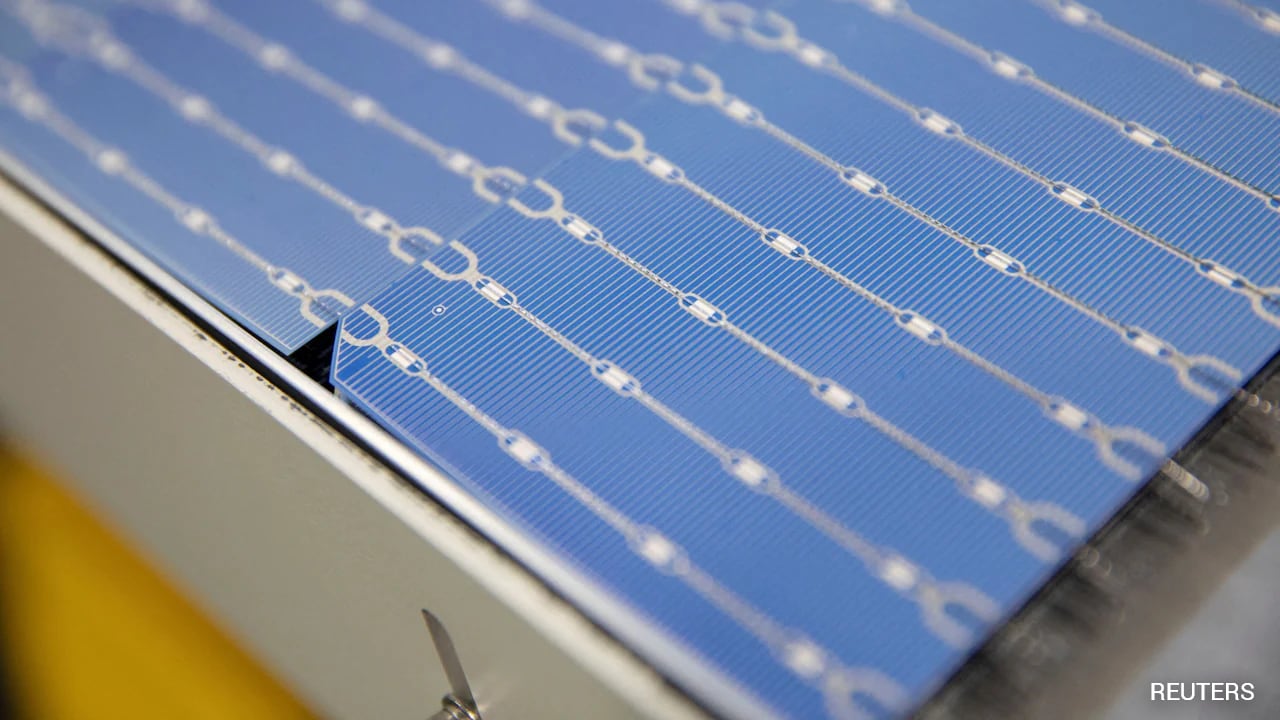
Glass. Sand. Heat.
That is where our modern civilization actually begins. Not in a Silicon Valley incubator, not in a venture capitalist's sleek glass-walled boardroom overlooking San Francisco Bay, but in the blinding, ferocious white-hot fury of a furnace melting quartz down to its atomic bones. Also making waves lately: The Anatomy of Platform Liability: Why Safe Harbour Is Collapsing Under Algorithmic Scale.
Meet Marcus. Marcus is a fictional technician, but his tired eyes belong to a dozen real people standing right now on the concrete floor of a manufacturing plant that smells faintly of ozone and heated metal. Marcus has spent the last decade watching the raw material of the twenty-first century flow past him on conveyor belts. It looks like dirty gray pebbles. Ordinary gravel, to the untrained eye.
Poly-si. Polysilicon. Additional insights regarding the matter are explored by The Next Web.
If you stripped open the smartphone sitting in your pocket right now, peeled back the surgical layers of aluminum and lithium, looked past the camera lenses and the microscopic gold wiring, you would find it. A single, flawless wafer of pure silicon. The brain of the machine. The silent conductor of electricity that decides whether your GPS navigation map updates in time, whether your banking app secures your paycheck, whether an electric vehicle swerves away from a stray deer on a dark highway.
For years, Marcus and the engineers standing beside him knew a quiet, creeping truth. Almost every single piece of that gravelly, raw foundation—the ultra-pure polysilicon that powers the global digital revolution—originated from one dominant geographic source. China.
Supply chains are invisible until they snap.
Most of us float through life assuming that the things we buy appear by some kind of modern magic. A factory somewhere prints a phone; a truck delivers it; we tap our credit cards. We rarely pause to think about the chemical alchemy required to turn ordinary beach sand into a super-refined material so pure that a single speck of dust can ruin an entire batch of microchips.
When one country masters that alchemy to an absolute degree, owning eighty percent or more of the global production capacity, something strange happens to the rest of the world. It stops being commerce. It starts to look a lot like gravity. You do not negotiate with gravity; you simply live under its weight.
Washington decided to change the weather.
The United States government announced a sweeping shift, moving to impose a targeted fifteen percent tariff on imports of polysilicon specifically designed to counteract the overwhelming dominance of China's chip supply chain. On paper, it reads like dry ink on a congressional PDF. A bureaucratic percentage. A trade adjustment.
Consider what happens next on the ground.
Prices shift. Margins tighten. Domestic manufacturers who spent the last decade unable to compete with heavily subsidized foreign yards suddenly look up from their ledger books. They squint into the light. Can we build a furnace here? Can we train our own Marcuses? Can we restart the domestic engine of material science that we let rust away during decades of outsourcing?
The strategy is simple in theory, terrifying in execution. Tariffs are walls. Sometimes walls keep the wind out. Sometimes walls trap you inside with a fire you started yourself.
To understand why this matters, you have to look past the political posturing and stare directly at the physics of manufacturing. You cannot spin up a polysilicon production plant overnight. These facilities require billions of dollars in upfront capital, years of environmental permitting, and a level of chemical precision that leaves zero room for error. If you mess up the chemical vapor deposition process, you do not just get a slightly flawed batch. You get useless slag. Millions of dollars turned into high-tech garbage in a matter of seconds.
So why take the risk?
Because independence has a price tag. For years, the prevailing philosophy of global trade was frictionless efficiency. Buy from whoever makes it cheapest. Let the chips fall where they may, literally. If one nation wants to subsidize the immense electrical power required to refine silicon at scale, let them take the burden.
Then the world experienced severe bottlenecks. Ports choked. Geopolitical tensions tightened like a tourniquet around Taiwan and the South China Sea. Suddenly, cheap no longer meant safe. The realization hit boardrooms and defense departments simultaneously: the country that controls the silicon controls the script of the future. If an adversary can flick a switch and starve your automotive plants, your medical device makers, and your defense contractors of basic microchip materials, you are sovereign only in name.
The fifteen percent tariff is a warning shot. It is an economic fence meant to force domestic and allied supply chains to diversify before it is too late.
Yet, Marcus knows the human cost of that fence.
When tariffs go up, costs ripple outward. The immediate aftermath is rarely a miraculous boom of American factories springing up overnight like wildflowers after spring rain. The immediate aftermath is a bill. Tech companies pay more for raw materials. Automakers adjust their budgets. Consumers absorb the extra friction at the end of the line. It is a painful, awkward transition period where we pay tomorrow's insurance policy with today's hard-earned cash.
History is full of these clumsy pivot points. We traded globalized efficiency for national security resilience, and the friction is going to burn.
The deeper question isn't whether a fifteen percent tariff will magically fix a multi-billion-dollar supply chain imbalance by next Tuesday. It won't. The real question is whether we have the collective patience to endure the awkward, expensive middle chapters of rebuilding an industrial base we abandoned thirty years ago.
We got comfortable. We outsourced our manufacturing muscle, telling ourselves we could live entirely in the cloud, trading in software while other nations handled the messy, hot, dangerous business of melting stone into microchips. We forgot that software needs hardware, and hardware needs raw materials, and raw materials come from the earth, processed by human hands standing in front of roaring furnaces.
Marcus wipes his brow, looking at the gray stones moving down the line. He knows the tariff won't make his job any easier tomorrow. It won't lower his grocery bill, and it won't instantly clear the backlog of high-tech manufacturing equipment waiting for clearance.
Outside the plant gates, the morning light catches the windshields of a thousand cars driving past, every single one of them packed with silicon brains, cruising down highways governed by microprocessors, fueled by a world desperately trying to redraw its own borders before the ink dries permanently.
The furnace keeps burning. The sand keeps melting. And the world holds its breath, waiting to see if we can build a future we actually own.