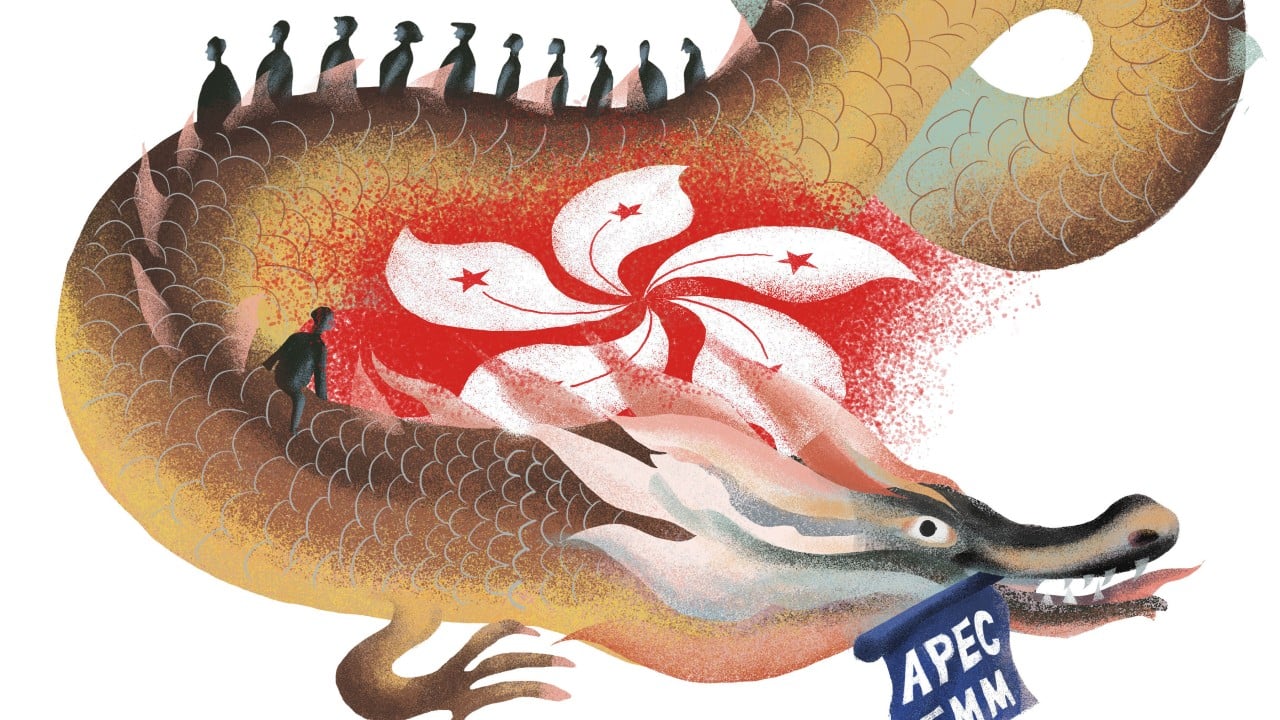
The coffee cups on the tenth floor of the convention center are still half-full. It is late afternoon in a city that rarely sleeps, yet inside this specific room, the air feels suspended. Outside, the harbor traffic moves with quiet efficiency—ferries churning white foam against the concrete piers, cargo cranes lifting steel containers into the humid air. Inside, the noise of the world is muffled by double-paned glass and heavy carpets.
Men and women in dark suits lean over mahogany tables. They shuffle thick dossiers. They whisper translations into silver earpieces. If you found value in this post, you should read: this related article.
To the casual observer passing by on the street below, this is just another diplomatic summit. Another gathering of ministers and technocrats shaking hands for the cameras, signing communiqués that will soon be filed away in digital archives, forgotten by everyone except the researchers who wrote them.
They are wrong. For another look on this story, refer to the recent update from Financial Times.
What happens behind these closed doors dictates the price of a loaf of bread in a village three thousand miles away. It dictates whether a small business in an emerging market can secure a loan or whether a currency will hold its value against the storm.
Consider what brought them here.
On paper, the gathering is about regional economic cooperation. It is about trade corridors, supply chain resilience, and digital currency frameworks. These are dry terms. They smell of printer ink and bureaucratic compromise.
Let us translate.
Imagine a merchant sitting in a cramped storefront in an old quarter. Every morning, she opens her ledger and checks the exchange rate. A fraction of a percent shift in currency value means the difference between restocking her shelves or turning customers away. She has never heard of a ministerial communiqué. She does not know the names of the delegates sitting in the air-conditioned towers across the sea. But their words tonight will alter her tomorrow.
This is the invisible machinery of global finance. It is vast, cold, and immensely powerful. Yet it is driven by human anxieties.
When finance ministers from the Asia-Pacific region converge on a specific financial hub, the choice of venue is never accidental. Geography is a message. Logistics are a language. By convening in a territory where East meets West, where capital flows with frictionless speed across physical borders, the host is making a statement about survival and relevance.
There is a restlessness in the global economy right now. Old alliances are fraying at the edges. New technological divides are opening up faster than regulators can draft rules to govern them. Inflation is a persistent ghost haunting kitchen tables from one coast to another.
In the corridors outside the main plenary hall, an advisor pauses by a window. He loosens his tie. He looks down at the harbor lights blinking through the twilight.
"We are building the plane while flying it," he says quietly, mostly to himself.
That is the unvarnished truth of modern governance. The systems that keep the global financial architecture upright were designed for a different century. They were built for an era of paper ledgers, slow cargo ships, and predictable trade routes. Today, trillions of dollars move in milliseconds through fiber-optic cables resting on the ocean floor.
A single rumor can trigger a run on a bank before the sun sets in the next time zone.
So why this meeting? Why now?
Because the architecture needs shoring up. The hidden agenda, if we can call it that, is reassurance. In times of economic tremor, markets crave predictability. They crave the sight of decision-makers sitting in the same room, looking each other in the eye, agreeing on the boundaries of the playground.
Without those boundaries, chaos wins.
Down in the harbor, a container ship blows its horn. Its deep, resonant blast echoes off the glass skyscrapers, vibrating faintly through the floorboards of the conference room. Inside, the delegates do not look up. They are already moving to the next agenda item, debating the wording of a footnote that will ripple outward, touching millions of lives before the week is out.