Power has a particular scent in Washington. It smells like recycled air, old leather, and the faint, metallic tang of adrenaline that hangs in a Senate hearing room just before a gavel drops.
If you have ever sat in the back row of the Dirksen Senate Office Building, you know the feeling. The seats are hard. The microphones are unforgiving. Every cough echoes like a gunshot, and every pause stretches into an eternity while cameras click with the frantic rhythm of locusts. In that room, words do not merely describe reality; they become weapons, shields, and sometimes, mirrors held up to the very people wielding them. For a deeper dive into this area, we recommend: this related article.
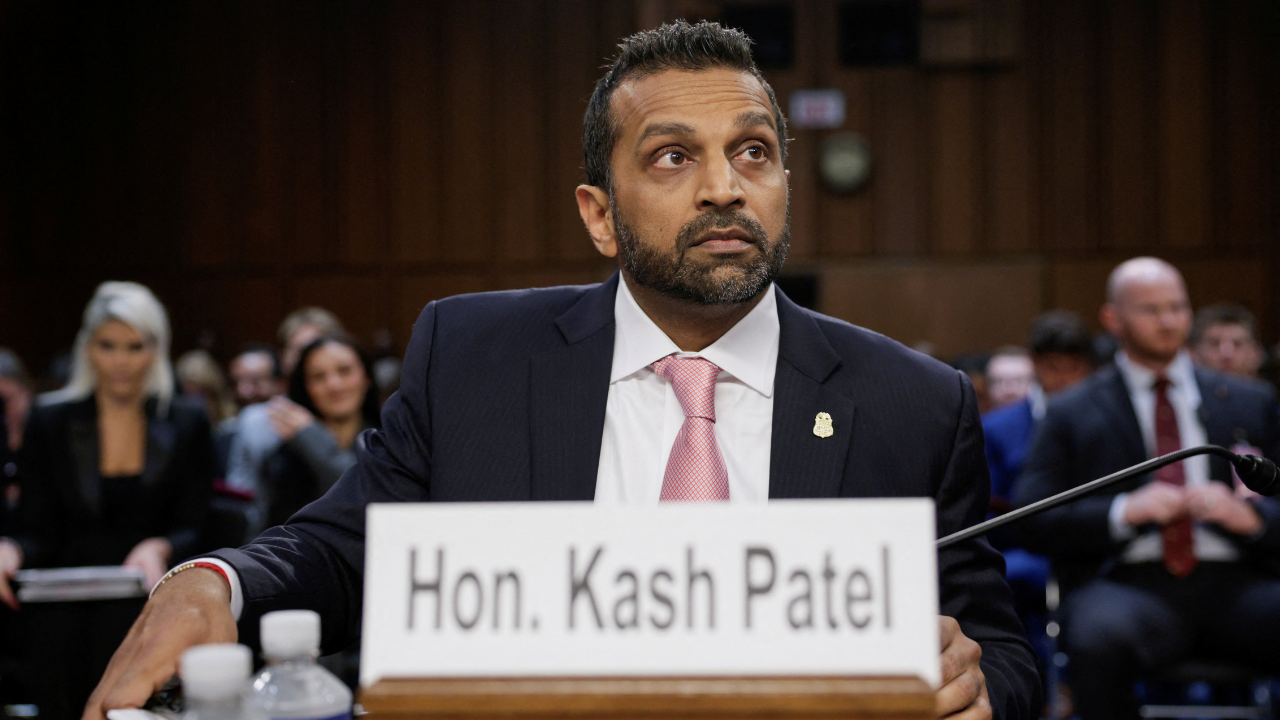
Consider what happened when Democratic senators confronted Kash Patel over FBI hiring standards, background checks, and a pointed, deeply personal question about alcohol use.
"You have been so drunk," the accusation hung in the air, sharp and deliberate. For further background on this development, extensive analysis can also be found at Associated Press.
On the surface, it looked like another round of partisan theater—a familiar collision of ambition, oversight, and political survival. Look closer, however, and you will see something far more consequential. You will see a debate over the invisible architecture that holds our institutions together: the rules that decide who gets handed the keys to the nation's most sensitive secrets, and whether those rules apply equally to the person sitting behind the desk and the applicant waiting in the lobby.
The Invisible Gatekeepers
To understand why a tense exchange over a sobriety test or a past night of heavy drinking matters, you have to step outside the hearing room and into the quiet, fluorescent-lit offices where ordinary Americans apply to serve their country.
Imagine, for a moment, a hypothetical applicant—let us call him Marcus. Marcus is twenty-eight, a former Marine who spent four years analyzing signals intelligence before returning home to earn a degree in cybersecurity. He wants to join the Federal Bureau of Investigation. He is sharp, disciplined, and deeply patriotic.
Before Marcus ever touches a case file, he enters what insiders call the "vetting gauntlet." It is not a quick background check. It is an excavation of his entire adult life.
Investigators interview his college roommates, his former commanding officers, his neighbors, and even the landlord who fixed his sink three apartments ago. They examine his bank statements, his credit score, and his medical history. He sits hooked up to a polygraph machine while an examiner asks him about foreign contacts, drug use, financial debts, and alcohol consumption. If Marcus had a string of wild nights in his early twenties, or an incident where his drinking drew the attention of local police, he has to account for every single detail.
Why? Because in the world of national security, secrets are currency, and vulnerabilities are leverage.
An intelligence agency does not care about puritanical perfection for its own sake. It cares about pressure points. Anyone who has spent time around counterintelligence knows the classic formula used by foreign adversaries to recruit assets, often remembered by the acronym MICE: Money, Ideology, Compromise, and Ego. Compromise—the fear of exposure, blackmail, or embarrassment—is the silent killer of institutional security. When someone has a hidden habit or a reckless streak, an adversary does not need to break into a server to steal state secrets; they just need to wait for a moment of weakness.
When the Rules Meet the Spotlight
This is the exact terrain where the clash between Democratic lawmakers and Kash Patel unfolded.
Patel, nominated to lead the FBI, arrived at his confirmation process carrying a reputation as a fierce loyalist and a sharp critic of the Bureau's existing leadership. To his supporters, he was a necessary disruptor—an outsider willing to shake up an entrenched bureaucracy that had lost the trust of millions of Americans. To his critics, he was a figure whose past statements, political allegiances, and personal conduct demanded the highest possible scrutiny.
During the contentious Senate Judiciary Committee proceedings, Democratic senators pressed Patel on multiple fronts, zeroing in on the intersection between personal fitness and institutional standards. According to reporting on the exchanges, lawmakers challenged Patel over allegations regarding past excessive drinking and questioned him directly on alcohol testing and the strict suitability guidelines enforced across the FBI.
The confrontation was blunt. Senators pointed to the rigorous standards required of rank-and-file FBI special agents and analysts—standards that routinely disqualify applicants for past substance abuse, lack of candor, or questionable judgment—and asked whether the person nominated to run the entire organization would have cleared the very hurdles he would soon oversee.
Patel pushed back firmly against the characterization, rejecting claims that his conduct rendered him unfit and defending his record in government, which included senior roles at the National Security Council and the Department of Defense. His defenders argued that the line of questioning was a partisan smear designed to derail a nominee who threatened the status quo, pointing out that Patel had previously held high-level security clearances without issue.
Yet the tension in that room refused to dissipate. Because beneath the political sparring lay a question that every organization, from a local fire department to the highest levels of federal law enforcement, eventually has to answer: What happens when the standards at the top appear different from the standards at the bottom?
The Psychology of Double Standards
Anyone who has ever worked inside a high-stakes hierarchy knows how quickly morale fractures when rules become selective.
Think about a surgical team in an operating room, or an airline crew running through a pre-flight checklist. The checklist exists because human memory is fallible and ego is dangerous. When a junior pilot is grounded for failing a routine breathalyzer or skipping a safety protocol, the system works—provided the chief pilot is bound by the exact same book. The moment the person in charge is exempted from the rules, the checklist stops being a safeguard and becomes a tool of control.
In federal law enforcement, that dynamic is magnified a thousand times over.
FBI agents carry badges and firearms. They execute search warrants, wiretap phones, and testify in federal courts where a person's liberty hangs in the balance. Every time an agent takes the witness stand, defense attorneys look for any crack in their credibility. If an agent lied on an application, hid an alcohol problem, or cut corners during an investigation, their career is effectively over. The Bureau maintains strict suitability guidelines—covering everything from illegal drug use to alcohol-related incidents and financial irresponsibility—specifically to ensure that its personnel are beyond reproach.
When Democratic senators brought up alcohol testing and hiring rules during Patel's hearing, they were tapping directly into this institutional nerve. Critics argued that lowering or ignoring hiring standards—or allowing political loyalty to outweigh traditional vetting criteria—would hollow out the Bureau's professionalism from the inside out. Reports and commentary surrounding the hearing highlighted concerns from former officials who warned that relaxing background rules or politicizing recruitment could invite corruption and weaken the agency's investigative muscle.
Conversely, supporters of Patel and advocates for reforming the Bureau saw the issue through a completely different lens. From their perspective, the existing vetting and oversight apparatus had become insular and weaponized against conservatives. They contended that rigid bureaucratic gatekeeping often filtered out capable outsiders while protecting an establishment class that rarely faced accountability for its own high-profile missteps. To them, scrutinizing a nominee over past personal anecdotes was a distraction from larger questions about how the FBI handles surveillance, political bias, and accountability.
Both arguments speak to real anxieties. Both reflect a deep, unresolved battle over what kind of institution the FBI should be.
The Weight of the Badge
It is easy, watching clips of Senate hearings on a phone screen, to reduce the entire spectacle to winners and losers. We look for the viral soundbite. We cheer when our preferred side lands a blow and roll our eyes when the other side dodges a question.
I have watched enough of these hearings over the years to recognize the trap. The cameras capture the heat, but they rarely capture the weight.
Consider what it feels like to be an agent sitting in a field office in Omaha, Miami, or Phoenix watching that exchange unfold. You spent months waiting for your background investigation to clear. You disclosed every speeding ticket, every overdue library book, every questionable decision you made at a fraternity party ten years ago. You signed forms acknowledging that a single lapse in judgment—a DUI on a Saturday night, an undisclosed debt, an unapproved contact—could cost you your pension and your reputation.
You accept those constraints not because you are a saint, but because you understand the bargain. The public gives you extraordinary power; in return, you surrender a piece of your privacy and submit to an extraordinary standard of conduct.
Now imagine watching the confirmation process for the person who will sit in the seventh-floor office at the J. Edgar Hoover Building. Whether you believe the accusations leveled by Democratic senators are fair or politically motivated, the mere fact that hiring rules and personal sobriety become central battlegrounds sends a tremor through the ranks.
If the rules are flexible at the top, why are they rigid at the bottom? And if the vetting system itself is viewed as a political weapon rather than an objective filter, how does anyone restore trust in the outcome?
Navigating the Fog of Political Theater
Let us be honest about something that rarely gets said aloud in Washington: confirmation hearings are deeply imperfect instruments for finding the truth.
By the time a nominee sits at that witness table, the positions on both sides are usually hardened in concrete. Senators on the opposition party arrive with opposition research compiled by staffers who have combed through years of interviews, podcasts, financial disclosures, and secondhand accounts. Senators in the president's party arrive with talking points designed to deflect criticism and highlight the nominee's qualifications.
In that environment, nuance is the first casualty.
When a senator says, "You have been so drunk," the phrase is engineered to shock. It strips away context and forces the nominee onto the defensive. When the nominee denies the premise and pivots to their record of public service, the public is left staring at two irreconcilable portraits: one of a reckless partisan unfit for power, and another of a dedicated public servant being smeared by political enemies.
How do you separate genuine institutional risk from partisan noise? You look at the structure, not just the personalities.
History offers a clear warning here. Whenever a government agency—whether in the United States or abroad—begins trading objective professional standards for personal loyalty, the decline is rarely sudden. It happens incrementally. First, an exception is made for a key leader. Then, a background check requirement is waived to speed up the hiring of trusted allies. Soon, experienced investigators who raise concerns about security risks or procedural shortcuts are sidelined as "obstructionists."
Before anyone realizes what has happened, the immune system of the institution is gone.
At the same time, history offers an equally clear warning about what happens when institutions become so rigid and self-protective that they refuse legitimate outside oversight. When agencies treat every critic as an existential threat and hide behind bureaucratic rules to avoid accountability, public trust erodes just as surely. People begin to believe that the rules are not there to protect the nation, but to protect the bureaucracy itself.
The Test Beyond the Hearing Room
That is why the clash over Kash Patel, alcohol testing, and FBI hiring rules lingers long after the gavel falls and the news cycle moves on to the next outrage.
The real test is not what happens under the bright lights of a Senate committee room. Anyone can wear a dark suit, read an opening statement, and parry questions for four hours.
The real test happens six months or two years later, on an ordinary Tuesday afternoon, when nobody is watching. It happens when a background investigator flags a potential security risk in a well-connected applicant's file. It happens when a senior official makes a mistake that would get a junior agent fired. It happens when a whistle-blower walks into an oversight office with uncomfortable facts that threaten the leadership's narrative.
In those quiet moments, there are no television cameras to play to. There is only the rulebook on the desk, the badge in the drawer, and the quiet, relentless question of whether the standard holds when it is hardest to keep.