The air in Colleton County usually tastes of pluff mud and slow-moving water, a thick, humid stillness that feels as though time itself has stalled. For a century, the Murdaugh name was the steady heartbeat of that stillness. To live in the Lowcountry was to understand a simple, unwritten rule: the law was not an abstract concept found in leather-bound books, but a living, breathing thing that resided in the hands of a single family.
Then came the sirens. Then came the blood on the kennel floor.
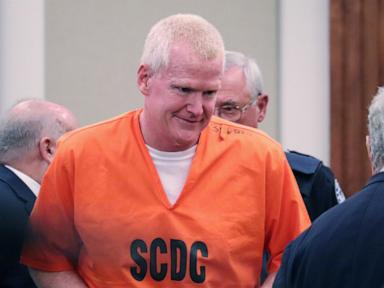
Alex Murdaugh, the scion of a legal monarchy, sat in a courtroom for weeks, his face a map of aging privilege and sudden, sharp desperation. When the jury returned with a guilty verdict for the 2021 murders of his wife, Maggie, and his son, Paul, it felt like the final gavel strike on an era of untouchable Southern gothic power. But in the legal world, a verdict is often just the beginning of a different kind of war.
The South Carolina Supreme Court has now fundamentally altered the trajectory of this American tragedy. By overturning Alex Murdaugh’s murder convictions, the justices haven't declared him innocent. They have, instead, pointed to a ghost that haunted the trial from the start: the shadow of the jury room.
The Clerk and the Whispers
Justice is supposed to be blind, but it is rarely deaf. The reversal hinges on the conduct of Becky Hill, the former Colleton County Clerk of Court. During the trial, Hill was more than a seasonal administrator; she was a fixture of the proceedings, a woman who allegedly whispered into the ears of the people held most sacred in our legal system—the jurors.
Imagine sitting in a box for six weeks, isolated from your family, tasked with deciding if a man executed his own flesh and blood. You are tired. You are overwhelmed by the stench of forensic evidence and the weight of a community's gaze. In that vacuum, a friendly face with an official badge leans in.
The allegations against Hill weren't just about clerical errors. They were about influence. Jurors claimed she told them not to be "fooled" by Murdaugh’s testimony, that she urged them to reach a verdict quickly, and that she seemed more interested in her own burgeoning book deal than the sanctity of the process.
When a court official enters the private sanctum of a jury, the structural integrity of the trial dissolves. The Supreme Court recognized that even the appearance of such a thumb on the scale is enough to tip the entire machine into the dirt. It didn't matter how much blood was on the shirt or how many lies Murdaugh told about the kennel video. If the jury was coached, the trial was a ghost.
A Dynasty Built on Red Clay
To understand why this reversal feels like a physical blow to the region, you have to look at the soil. The Murdaugh family provided the solicitors for the 14th Circuit for three generations. They were the prosecutors. They were the civil litigators. They were the people you went to when you needed a favor, and the people you feared if you crossed them.
Alex was the faltering heir. The cracks in the veneer had been widening for years—opioid addiction, millions of dollars stolen from grieving clients, a fraudulent suicide plot on the side of a road. The murders of Maggie and Paul were the horrific crescendo of a life lived in a house of cards.
When he was convicted, there was a sense of collective catharsis. It was proof that the old ways were dead. The man who owned the county was going to die in a cell.
But the law is a cold mistress. It does not care about catharsis. It cares about the 6th Amendment. It cares about the right to an impartial jury. By vacating the convictions, the South Carolina Supreme Court has reminded us that the process is more important than the person. Even a man accused of the most heinous betrayals imaginable is entitled to a room where the only voices he hears are the evidence and the law.
The Human Cost of a Redo
What does this mean for the people left behind?
Consider the survivors. Not just the extended Murdaugh family, who have been torn apart by these revelations, but the community that thought it had finally turned a page. A retrial means the wounds must be reopened. It means the crime scene photos will be projected onto screens again. It means witnesses will have to find the courage to sit in that chair one more time and recount the night the dogs barked and the shots rang out.
The financial cost is staggering, but the emotional cost is immeasurable. There is a specific kind of exhaustion that comes from a justice system that circles back on itself.
For the prosecution, the challenge is now Herculean. Memories fade. The shock value of the evidence has diminished. The "kennel video"—that haunting piece of digital evidence that placed Alex at the scene minutes before the murders—is no longer a surprise. It is a known quantity.
Murdaugh himself remains behind bars. The web of financial crimes he admitted to has seen to that; he is serving decades for money laundering and breach of trust. He is a ruined man, regardless of the murder charges. Yet, the stigma of the "murderer" label is what he fought most fiercely. In his own testimony, through tears that some called performative and others called paternal, he insisted he would never hurt "Mags" or "Paw-Paw."
The Invisible Stakes
This isn't just a story about a wealthy lawyer and a double homicide. It is a story about the fragility of the American experiment. We rely on the idea that if you are accused of a crime, you will be judged by twelve peers who are insulated from the noise of the world.
If a clerk can influence a jury in the most publicized trial in South Carolina history, what is happening in the quiet, forgotten cases? What happens to the person without a high-priced legal team or a famous last name?
The Supreme Court’s decision is a painful, necessary correction. It is a statement that the government cannot take a man’s life or liberty through a tainted process, no matter how much the public wants a conviction. It is a defense of the boring, bureaucratic rules that prevent us from descending into mob rule.
The Lowcountry is waiting. The marshes are still. The moss hangs from the oaks like gray hair, heavy with the weight of secrets that refuse to stay buried. The gavel will fall again. The stories will be told again. And once more, twelve people will sit in a box, trying to find the truth in a sea of whispers.
Somewhere in a South Carolina prison, Alex Murdaugh is watching the clock. The dynasty is gone, the house at Moselle is sold, and his family is in the ground. All he has left is time, and now, the state has given him a little more of it.
The lights in the courtroom will flicker back to life. The lawyers will straighten their ties. The world will watch. And the ghosts of Maggie and Paul will wait, once again, for a finality that seems to slip further away with every rising tide.