The Moral Outrage Industry Has Another Target
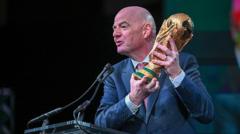
Every mainstream sports columnist loves to pin the tail on Gianni Infantino. Turn on any broadcast or open any legacy newspaper, and you will hear the same exhausted sermon. They call him populist, cozy with autocrats, and too fond of flashing a pristine white smile next to world leaders. The lazy consensus says FIFA under his watch has sold its soul to the highest bidder, turning football into a playground for billionaires and political strongmen.
It is a neat, emotionally satisfying narrative. It also completely misunderstands how global power actually functions.
I have spent two decades watching international sports federations operate behind closed doors, and let me tell you a secret the moralists refuse to acknowledge: sports governance has never been clean. It was built on backroom deals, colonial legacy structures, and selective outrage long before Infantino ever walked into a boardroom. What makes Infantino a lightning rod is not that he invented the political game. It is that he stopped pretending the game didn't exist.
While journalists waste ink pearl-clutching over his diplomatic maneuvers, Infantino has quietly executed the most aggressive, effective democratization of global capital in sports history. Love him or loathe him, he treats FIFA not as a country club for European elites, but as a ruthless commercial empire. And in the modern world, ruthlessly efficient commerce is the only shield against institutional collapse.
The Myth of the Pure Past
Let us dismantle the nostalgia. Critics love to contrast Infantino’s FIFA with the supposed golden age of the twentieth century. They talk about tradition, sporting integrity, and the purity of the game.
This is historical illiteracy.
For decades, international football was a closed cartel run by an entrenched European-South American duopoly. Television rights, sponsorship dollars, and political leverage flowed almost exclusively to UEFA and CONMEBOL. The rest of the planet—Africa, Asia, Oceania, and large parts of the Americas—was treated as a permanent minor-league supplier of raw talent, expected to show up, cheer, and gratefully accept crumbs from the Zurich master table.
When Sepp Blatter ran the show, it was sustained by opaque patronage networks where votes were bought with quiet favors and stadium grants handled like feudal landholdings. It was corrupt, exclusionary, and structurally rigged to keep power centered in a handful of Western capitals.
Infantino did not invent power politics in sports. He flattened them.
By expanding the World Cup to forty-eight teams and dramatically increasing direct financial distributions to smaller member associations, he fundamentally altered the balance of power. European clubs and federations scream bloody murder because they are losing their monopoly on the calendar and the cash. They cloak their panic in moral language about player welfare and sporting heritage, but their real grievance is simple: Infantino dared to redistribute the wealth.
The Realpolitik of Global Diplomacy
Critics lose their minds over Infantino sitting next to Donald Trump, Mohammed bin Salman, or Emmanuel Macron. They act as if sports administrators should be ascetic monks who refuse to engage with governments that fail human rights purity tests.
This is a child's view of geopolitics.
FIFA is an association comprising two hundred and eleven member states. It has more members than the United Nations. It operates across authoritarian regimes, fragile democracies, hyper-capitalist states, and socialist economies. If a sports body decided it would only do business with nations possessing flawless political records, it would have to dissolve by Tuesday afternoon.
Infantino understands a core truth that his detractors refuse to face: engagement beats isolation every single time. When you host global events in regions that traditionalists dismiss as sporting backwaters, you force infrastructural investment, cultural exchange, and international visibility onto places that would otherwise remain sidelined.
Take the expansionist strategy head-on. The multi-billion-dollar Club World Cup, the constant push into new markets, the cozying up to geopolitical power brokers—these are not accidental missteps by an unrefined executive. They are deliberate moves to diversify revenue streams so that FIFA no longer depends on the benevolence of European television networks.
Monopolies hate competition. When FIFA launched its revamped club tournament, UEFA immediately threatened legal action and player strikes. Why? Because FIFA was carving out turf in the exact commercial space Europe previously dominated. The outrage over Infantino’s diplomacy is largely a proxy war over who gets to skim the cream off international football's multi-billion-dollar economic engine.
The Mechanics of Financial Democratization
Let us look at the actual numbers, because reality has a nasty habit of ruining a good moral panic.
Under Infantino, FIFA’s Forward development program has channeled billions of dollars directly into football infrastructure across developing nations. Every single member association now receives millions in operational and capital funding during each four-year cycle.
In the old days, a football federation in the Caribbean or Central Asia had to beg Zurich for scraps to build a single training pitch, often waiting years while political loyalties were weighed. Today, those funds are guaranteed, transparently audited, and deployed at scale.
Imagine a scenario where FIFA kept the old system intact, keeping power centralized in Zurich and London while paying lip service to global unity. European football would remain unimaginably wealthy, while the rest of the world stayed trapped in a loop of dependency. Infantino smashed that model. He took the massive cash geyser generated by the global game and piped it directly to the margins.
Yes, FIFA generates staggering amounts of money. Yes, corporate partnerships with state-backed energy firms and global mega-brands make for uncomfortable optics. But cash is the only weapon that matters when trying to build sustainable sports ecosystems in nations where basic infrastructure is lacking. You cannot build state-of-the-art academies or fund women’s leagues in developing markets with good intentions and press releases. You need hard currency. Infantino secures that currency better than anyone in sports history.
The Downside of Disruption
I am not here to paint Infantino as a saint. Every radical restructuring creates casualties, and this one is no exception.
The most glaring flaw in his administration is fixture congestion. By constantly expanding tournaments, adding new competitions, and squeezing every possible dollar out of the calendar, FIFA is running players into the ground. Elite athletes are treated like industrial assets, forced to play sixty or seventy matches a year without adequate recovery time.
This is a legitimate crisis, and Infantino’s defensive hand-waving about player welfare rings hollow when his administration keeps adding fixtures to the ledger. If players unionize effectively or stage mass boycotts, FIFA will have only itself to blame.
Furthermore, the relentless commercialization risks alienating the grassroots cultural heartbeat of the sport. When ticket prices for major matches soar out of reach for ordinary local fans, football loses its soul a little bit at a time. The game becomes an upscale corporate hospitality event rather than a working-class religion.
Yet notice how the critics frame these issues. They do not attack him primarily for fixture congestion or ticket pricing; they attack him for his style, his PR stunts, his public relations bravado, and his refusal to bow to the traditional European media establishment. They want a polite bureaucrat who knows his place and leaves the real power in the hands of the traditional gatekeepers.
Why the Establishment Hates Him
The root of the hatred directed at Infantino is cultural, not ethical.
For generations, international sports administration was dominated by a specific brand of Old World technocrat. They wore bespoke suits, spoke with polished European accents, conducted business in smoke-filled hotel suites, and treated the rest of the world with polite condescension.
Infantino is loud, energetic, multilingual, media-savvy, and entirely unapologetic about transforming football into a truly globalized commercial enterprise. He acts like a modern tech CEO running a multi-national conglomerate rather than an aristocratic custodian of a historical artifact.
That shift terrifies the traditionalists. It strips away the aristocratic mystique of sports governance and replaces it with pure, unadulterated market dynamics.
When you strip away the hypocrisy, you realize that the people screaming loudest about Infantino are not fighting for the purity of football. They are fighting to keep the checkbook. They want the power, the prestige, and the financial control returned to the traditional power centers of Western Europe.
FIFA under Infantino is loud, messy, relentlessly ambitious, and undeniably successful on its own terms. It has expanded the game's footprint, democratized its capital, and refused to play by the rules of a self-appointed moral elite.
The next time you read a breathless hit piece about his latest diplomatic handshake or commercial expansion, ask yourself who benefits from keeping the old guard in charge. It certainly is not global football.
Stop buying the fairy tale that sports governance used to be clean. It never was. Infantino just plays the game better, faster, and wider than anyone who came before him.