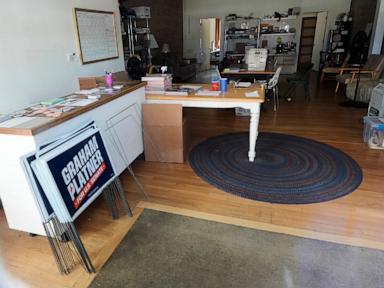
The mud on an oyster farmer’s boots tells a story about survival. It is heavy, cold, and hard to shake off. For months, Graham Platner wore that mud like armor. He was the gruff, deep-voiced combat veteran who promised to break the back of the billionaire class. When he secured over 150,000 votes in June, shattering records for a Maine Democratic primary, it felt less like a standard election victory and more like an eviction notice served to the political establishment.
Then came the reckoning.
It did not arrive because of his controversial past, his old online comments, or the poorly chosen ink on his chest that his opponents spent months weaponizing. It arrived because of a line that cannot be crossed. A detailed, devastating allegation of sexual assault from a former partner broke through the armor. By the time Politico published the account, the momentum evaporated. The progressive coalition that had carried him to a historic 72 percent victory splintered in hours.
Platner withdrew from the race in an 11-minute video recorded from his phone, insisting his departure was an act of political reality rather than an admission of guilt. But the reasons no longer matter to the calendar. Maine law dictates a hard deadline. If a primary winner steps aside, the state party has until July 27 to find a replacement.
Now, the working-class movement that thought it had finally bought a seat at the table is looking at an empty chair.
The Balance of Power in the Balance
To understand why a state committee meeting in Augusta feels like an emergency ward, you have to look at the numbers in Washington. Republicans hold a fragile 53–47 majority in the U.S. Senate. For Democrats, the path back to relevance runs directly through Maine, where Republican Senator Susan Collins has held her seat for nearly thirty years. Collins is a political institution, a survivor of countless shifting tides. Defeating her required something extraordinary.
Platner was extraordinary, right up until he became a liability.
Now, the national party is staring at a clock that ticks louder by the second. The state committee has a choice to make, and they must make it through a process that satisfies an angry, betrayed base while offering a candidate moderate enough to win a general election. The tension is palpable. The backrooms of Washington want control. The volunteers in Washington County want a revolution.
Consider the factions left behind in the wake of the collapse. There are those who believe the progressive movement died with Platner's campaign, and those who believe it simply needs a clean pair of boots.
The Logger and the Legacy
Troy Jackson knows what it means to work a shift that leaves your bones aching. The 58-year-old logger from northern Maine was a vocal Platner ally during the primary, and his political DNA is cut from the same cloth. He stands as the most direct ideological heir to the movement. Backed previously by Bernie Sanders and the Maine Democratic Socialists of America during his own gubernatorial run, Jackson represents the anti-corporate fury that animated Platner’s base.
He did not wait for the dust to settle. Within hours of the withdrawal, Jackson announced his intentions, filing paperwork for an exploratory committee. He speaks the language of Medicare-for-All and union strength, aiming to scoop up the thousands of volunteers left stranded by the scandal. For voters who want to keep the fight focused on the billionaire economy, Jackson is the logical choice.
But logic is a rare commodity in a crisis. The establishment remembers that Jackson finished third in the gubernatorial primary. They worry his progressive edge is too sharp for the independent voters who decide general elections in Maine.
The Institutionalists
On the other side of the fracture line stand figures who represent stability, though stability carries its own baggage.
Shenna Bellows, Maine’s Secretary of State, stepped into the arena on Thursday. She brings a formidable resume: former head of the state’s American Civil Liberties Union and a former state senator. She earned national headlines for her high-profile attempt to remove Donald Trump from the Maine ballot following the Capitol riots. Bellows frames her candidacy around the kitchen-table anxieties of ordinary Mainers trying to save for a future that feels increasingly out of reach.
Yet, history casts a long shadow here. Bellows ran against Susan Collins once before, in 2014. The result was a landslide defeat during a Republican wave year. Party strategists are quietly asking whether a rematch twelve years later yields a different result, or simply confirms an old pattern.
Then there is Nirav Shah. As the former director of Maine’s Center for Disease Control and Prevention, Shah became a comforting, ubiquitous presence in living rooms across the state during the dark days of the pandemic. He represents the ultimate technocratic pivot—calm, data-driven, and removed from the ideological warfare that defined the primary. After losing his own bid for governor earlier this year, Shah announced his candidacy for the Senate seat, claiming his team received hundreds of messages begging him to run. He is calling for a televised debate, wagering that his public communication skills can heal a deeply divided party.
The Fragmented Field
The remaining options reflect a party trying to be everything to everyone in a span of less than three weeks.
State Representative Valli Geiger of Rockland entered the conversation with a complicated narrative. A close ally of Platner, she claimed the former candidate called her personally to offer his blessing, telling her she had been with the movement from the start. Geiger accepted the premise but immediately called for an open, democratic process rather than a coronation. Her path is fraught; she previously defended Platner on social media, stating she would not "throw him under the bus," a stance that may alienate voters horrified by the nature of the allegations.
Further down the line, younger faces are trying to capture the energy of the primary without the taint of its ending. Paige Loud, a social worker who ran a pro-worker, anti-imperialist campaign in the second congressional district, has thrown her hat in the ring. Her supporters are openly pushing for the party to consider a woman to carry the progressive torch. Jordan Wood, a former congressional chief of staff, has also entered the mix, offering a blend of institutional knowledge and outsider appeal.
Conspicuously absent from the viable list is Governor Janet Mills. Though her name naturally surfaces in any statewide conversation, her campaign was suspended before the June primary vote after she fell behind Platner in both internal polling and grassroots fundraising. She remains on the sidelines, a reminder of how thoroughly the insurgent wing had dominated the conversation before the collapse.
The Hard Choice Ahead
The state committee members who will gather to cast their votes face an existential dilemma that cannot be resolved with a compromise memo.
If they pick an institutional favorite like Bellows or Shah, they risk alienating the 150,000 working-class voters who turned out for an oyster farmer because they were tired of professional politicians. If those voters stay home in November, Susan Collins wins by default.
If they pick an insurgent like Jackson or Loud, they must bet that the progressive message can survive the disgrace of the man who popularized it. They must convince a skeptical electorate that the platform was bigger than the candidate.
The state party has until 5 p.m. on July 13 to process Platner's official paperwork, and until July 27 to name the person who will carry their hopes into November. The phones in Augusta are ringing into the midnight hours. The donor class is calculating its risks. The volunteers are staring at their lawn signs, wondering if they should pull them out of the dirt.
In the end, elections are not won on paper, and they are not won by spreadsheets. They are won by the people who believe the person on the ballot actually sees them. Maine Democrats have two weeks to find someone who can look those voters in the eye and make them believe again, while the shadow of what was lost still hangs over the pine trees.


