Silence.
That is the hardest thing to sell to a crowd that bought tickets for a symphony, especially when they drove three hours through an autumn drizzle in a pickup truck with a failing heater just to stand on wet gravel and see the conductor in the flesh.
Consider a hypothetical voter—let’s call him Arthur—standing near the edge of a county fairground outside Des Moines. Arthur is sixty-two, smells faintly of damp wool and diesel, and wears a faded red cap pulled low against the November chill. For nearly a decade, American political theater has conditioned Arthur to expect a very specific physical transaction. You give up your Saturday. You endure the endless security lines, the portable toilets, the numb toes. In exchange, you get the roar of the jet engines overhead, the blast of classic rock shaking your ribcage, and the physical presence of Donald Trump standing behind bulletproof glass, riffing for two hours until your throat is raw from cheering.
Except tonight, the stage is smaller, the crowd is thinner, and the main attraction isn't coming.
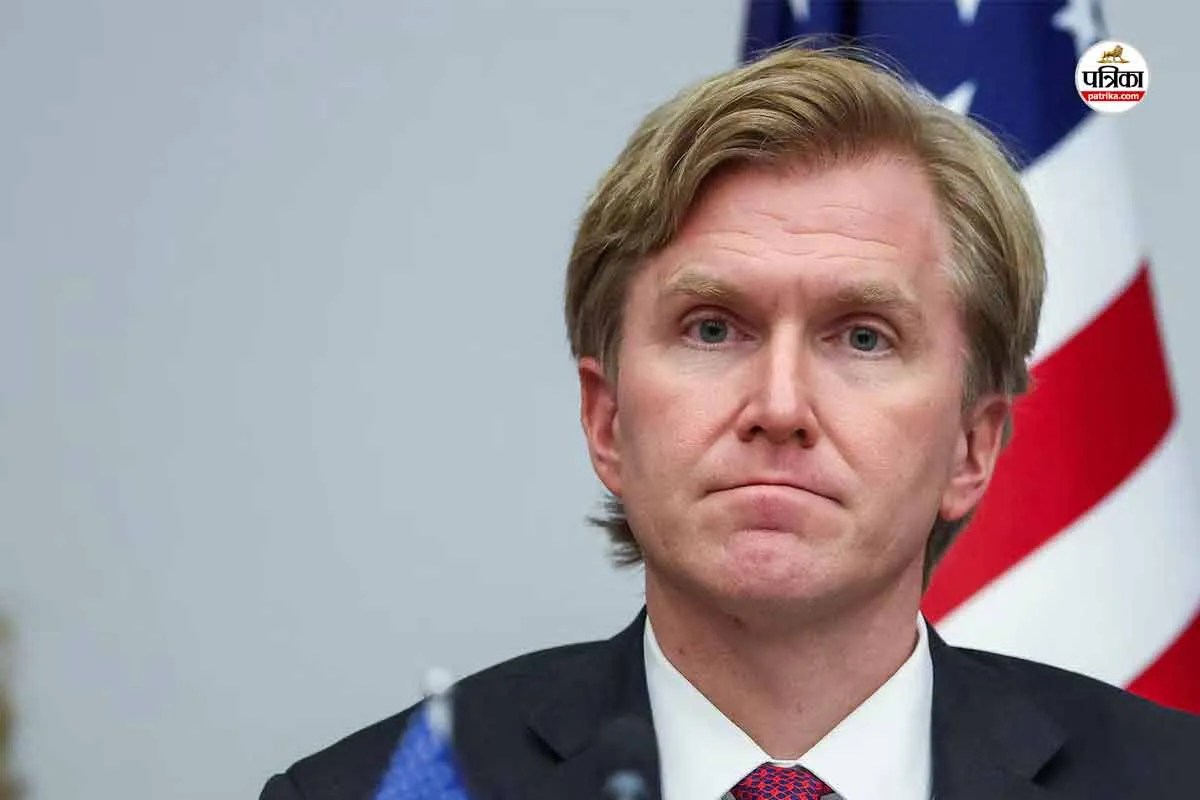
When the news broke that Trump would skip the traditional late-stage rally circuit in places like Iowa and Kansas—opting instead to back Republican midterm candidates through a remote, tele-town-hall phone campaign—the mainstream press treated it like a simple scheduling footnote. A dry logistical pivot. They wrote about travel budgets, strategic triage, and airwaves.
They missed the point entirely. When a movement built entirely on physical spectacle suddenly trades the stadium for the telephone, you aren't looking at a scheduling quirk. You are watching a massive, quiet gamble on the mechanics of modern political loyalty.
The Architecture of the Crowd
To understand why an empty tarmac in Wichita or Cedar Rapids feels so jarring, you have to remember what political rallies used to be before 2015, and what they became afterward.
For decades, midterms were won in the trenches of retail politics. A heavy hitter flew into a regional airport, shook fifty hands at a pancake breakfast, stood on a flatbed trailer next to a nervous congressional candidate, and gave the local evening news thirty seconds of red-meat footage. The rally was a campfire. You needed the heat of the bodies pressed together to convince people that they weren't alone in their frustrations, that their anger had mass and momentum.
I have stood in the press pens of dozens of these events across the Midwest over the last ten years, watching the choreography from ten feet away. The air inside those arenas always felt thick, almost electric, charged with a shared defiance. People didn't come just to hear policy proposals on agricultural tariffs or judicial appointments; they came to witness their own grievance embodied on a stage. The rally was proof of life.
So when the strategist's calculus shifts—when the decision is made to keep the movement's central figure off the tarmac in Kansas and out of the cornfields of Iowa—it creates an immediate, visceral void. You can almost hear the wind whistling through the bleachers.
Why pull back now? Why trade the roar of ten thousand voices for the tinny, compressed audio of a conference call?
The Cold Math of the Airwaves
Politics, stripped of its flags and anthems, is brutal resource allocation. Time is the only currency you cannot print, and attention is the only commodity that depreciates faster than a new car driven off the lot.
In a midterm election, the map is a merciless judge. Every hour a political titan spends flying to Topeka to shore up a seat that is already leaning safely red is an hour stolen from a razor-thin toss-up district in Pennsylvania, Michigan, or Arizona. From a purely mechanical standpoint, pouring physical energy into states like Iowa and Kansas—states that have trended reliably conservative in recent cycles—looks like preaching to a choir that already knows every hymn by heart.
Think of the traditional rally like a massive, roaring bonfire. It throws off tremendous heat and light, visible for miles, thrilling to stand beside. Yet it burns through a mountain of cordwood in a single night, and once the embers cool, the warmth disappears into the dark.
A phone campaign, by contrast, is like central heating piped directly into the floorboards.
It lacks romance. Nobody frames a screenshot of an incoming call from an unknown number and hangs it above their fireplace. Yet the scale is staggering. Through automated dialers and targeted tele-rallies, a single voice sitting in a comfortable chair in Florida can reach tens of thousands of households in Iowa and Kansas simultaneously, bypassing the local media filters entirely.
There are no security bottlenecks to navigate. No protesters sneaking into the upper deck with banners. No three-hour motorcades shutting down interstate highways. Just a ring on a landline in a farmhouse kitchen while the stew simmers on the stove, followed by a familiar, unmistakable cadence asking you to step out on Tuesday and vote for the local candidate on your ballot.
What Happens When the Line Goes Live
Let’s step back into that hypothetical farmhouse kitchen in rural Kansas.
It is 7:15 PM on a Tuesday. The dishes are done. The evening news is muted in the corner. Suddenly, the phone rings. On the screen, a local area code flashes—a subtle psychological nudge designed to make you pick up before the answering machine clicks on.
You lift the receiver. There is a brief, hollow pause, that telltale half-second of dead air that signals a mass bridge connecting thousands of lines at once. Then, a local congressional hopeful introduces the special guest. And suddenly, there he is. Not forty feet away behind a podium, lit by television floodlights, but right there in your ear, sounding strangely intimate, almost like an uncle calling from out of state to check on the harvest.
This is the invisible shift that the pundits miss when they scoff at "phoning it in."
To the political reporter sitting in a newsroom in Washington or New Delhi, skipping a rally looks like weakness, fatigue, or a lack of enthusiasm for the down-ballot candidates. We are trained to measure political strength in crowd sizes—in overhead drone shots of packed stadiums and lines snaking around city blocks. When those images vanish, the narrative instinctively defaults to decline.
Yet for the person holding the phone in that quiet kitchen, the experience is entirely different.
In a stadium, you are one face in a sea of fifteen thousand. On a tele-rally, the illusion of intimacy is absolute. When the voice on the line drops its volume, complains about the state of the economy, jokes about the press, and then pivot-marks directly to the local Republican candidate standing on the ballot in your specific county, it feels personal. It feels like an inside briefing.
The Risk of the Absentee Kingmaker
Still, there is a nagging doubt that even the slickest campaign strategist cannot entirely math away, and it is worth being honest about how fragile this bet really is.
History is littered with political movements that mistook efficiency for passion. You can automate outreach, you can micro-target zip codes, and you can pipe a charismatic voice into every living room from Wichita to Waterloo. What you cannot easily replicate over a fiber-optic cable is the contagious frenzy of a crowd.
Midterm elections have always been plagued by a single, stubborn monster: voter drop-off.
When the top of the ticket isn't on the ballot, millions of voters who happily stand in line during a presidential year suddenly find reasons to stay home. The rain is too hard. The shift at the plant ran late. The local races feel small, bureaucratic, and disconnected from the grand cultural battles that animate them.
The entire point of dragging a massive political figure onto a cold tarmac in Iowa during a midterm year was never really about persuading undecided moderates. Those voters barely exist anymore. The point was to manufacture urgency—to remind the base that the stakes were existential, even when the guy they actually wanted to vote for wasn't listed on the piece of paper inside the booth.
By staying off the ground in Iowa and Kansas, Republicans are testing a dangerous hypothesis: that the brand is now strong enough to sustain itself without the physical presence of its creator. They are betting that a phone call is enough to transfer loyalty from a singular personality to a slate of local politicians who often lack a fraction of his magnetism.
If it works, it rewrites the playbook for modern campaigning, proving that the spectacle was merely scaffolding that can now be taken down while the building stands on its own.
If it fails, those empty fairgrounds will look less like strategic discipline and more like an early warning sign that nobody noticed until the ballots were counted.
The Quiet Test
Back at our imagined fairground in Iowa, the drizzle has turned into a steady, soaking mist. Arthur adjusts his red cap, turns up his collar, and walks back toward his truck. There were no fireworks tonight. No roaring crowd chanting in unison until the bleachers vibrated. Just a brief local speech, a few lukewarm coffees, and a promise that the big voice would be calling everyone's house later in the week.
He climbs into the cab, turns the key, and waits for the old engine to catch and warm the vents. On the dashboard, his phone screen lights up with an incoming call from a local prefix he doesn't quite recognize.
Arthur stares at the glowing glass for a beat, his thumb hovering over the green button, deciding whether to answer.