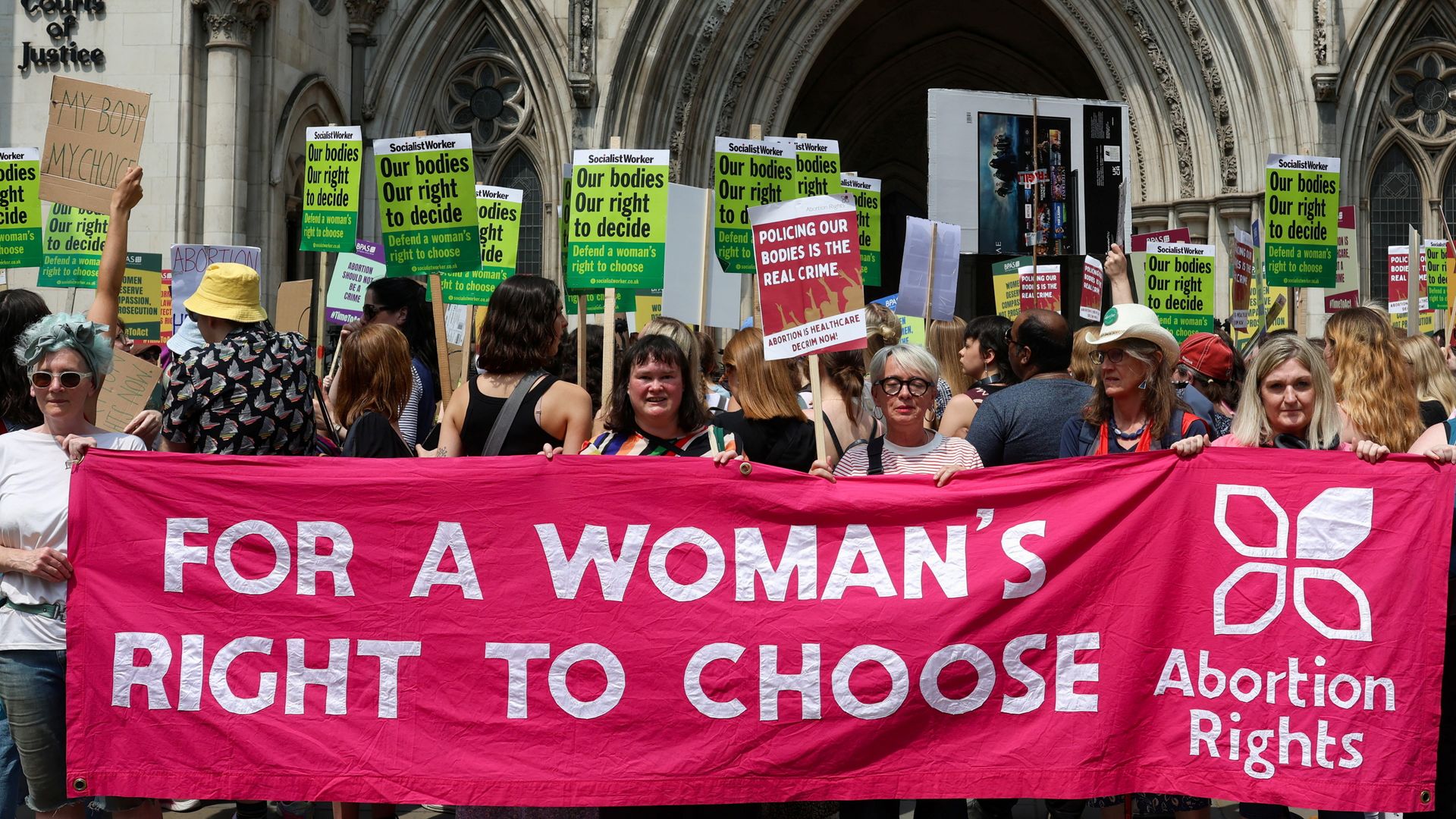
The ink dried on Queen Victoria’s royal assent two months after the first shots were fired at Fort Sumter. In London, horse-drawn omnibuses rattled over cobblestones, cholera still haunted the Thames, and a parliament composed entirely of men—elected by a tiny fraction of propertied men—passed the Offences Against the Person Act 1861.
Buried inside that sprawling Victorian statute were Sections 58 and 59. They made ending a pregnancy a felony punishable by penal servitude for life.
One hundred and sixty-five years later, the ghost of that ink is finally being scrubbed off the criminal records of British women.
Under sweeping legislative reforms introduced by the UK government, women convicted of illegal abortions under that Victorian-era law will receive automatic, statutory pardons. No applications. No begging a tribunal for mercy. No forcing grieving or elderly women to stand before a judge and recount the worst day of their lives just to prove they deserve their dignity back.
Silence. For decades, that was the price of survival.
To understand what an automatic pardon actually means, you have to step out of the sterile language of Westminster white papers and walk into a cold magistrates’ court, or a hospital ward where a woman is bleeding out and terrified that the nurse taking her pulse is also taking notes for the police.
The Architecture of a Victorian Trap
Let us ground this in a hypothetical scenario—a composite built directly from real British prosecutions documented over the past decade.
Call her Clara. Clara is thirty-two, living in a damp two-bedroom flat in the Midlands with two young children and a partner whose temper turns violent whenever money runs short. When a positive pregnancy test appears on the bathroom sink, Clara does not feel joy. She feels the walls closing in. She misses the cut-off for an in-clinic appointment because her shifts at the care home keep changing and she cannot find childcare. Panicked, isolated, and desperate, she orders abortion pills online.
Something goes wrong. The bleeding does not stop.
Clara goes to the hospital because she wants to live for the two children already asleep in her flat. Instead of care, she is met with suspicion. A hospital trust calls the police. Officers seize her phone, comb through her search history, confiscate her laptop, and arrest her while she is still recovering from a miscarriage or a late-term termination. Under Section 58 of the 1861 Act, the state treats a woman who ended her own pregnancy no differently than a violent assailant.
This is not historical fiction. Between 2012 and 2022, police in England and Wales investigated dozens of women suspected of procuring their own abortions. Several were dragged through the criminal justice system. In 2023, Carla Foster—a mother of three—was initially sentenced to twenty-eight months in prison after taking abortion medication past the legal limit during the COVID-19 lockdowns, a sentence later reduced on appeal only after national outrage forced the courts to confront the cruelty of locking up a mother for a healthcare crisis.
Think of the Victorian law like an unexploded landmine left in a public park. Generations walk past it. Parliament passes the Abortion Act 1967, creating a safe, regulated medical pathway under specific conditions, and everyone assumes the park is safe. Yet the 1861 statute was never repealed. It sat right beneath the grass, rusted and lethal, waiting for modern technology—telemedicine, online pharmacies, digital footprints—to step on it.
Why the 1967 Act Never Actually Freed Anyone
Most people in Britain assume abortion was legalized in 1967. That is the polite national myth, and we got it completely backward.
The Abortion Act 1967 did not decriminalize abortion. It merely created a narrow set of medical exemptions to a Victorian crime. To stay outside the reach of the 1861 Act, a woman still needed two doctors to sign off in good faith that continuing the pregnancy posed a greater risk to her physical or mental health than ending it, and the procedure had to take place in an approved setting.
Step outside those rigid guardrails by a single day, or take prescribed pills outside the authorized framework, and the trap snaps shut. You are no longer a patient. You are a felon.
I remember sitting across from a reproductive rights advocate in London a few years ago, watching her hands shake slightly around a paper cup of tea as she described the files crossing her desk. She talked about women who had suffered unexplained stillbirths—grieving mothers whose bodies had betrayed them—having their bedroom drawers searched by detectives looking for blister packs of misoprostol. Imagine burying a child on a Tuesday and defending your innocence to a forensic investigator on a Thursday.
That is what happens when criminal law polices pregnancy. It cannot tell the difference between a tragedy and a crime, so it treats every woman as a suspect until she proves her womb was innocent.
The Invisible Weight of a Criminal Record
A conviction under the Offences Against the Person Act 1861 does not end when a judge bangs a gavel or when a suspended sentence expires. It follows a woman into every room she tries to enter for the rest of her life.
Every background check for a job in nursing, teaching, childcare, or finance flags it. Every visa application asks if she has ever been convicted of a serious offense. Every landlord, every volunteer organization, every quiet moment of shame carries the permanent stamp of the state: criminal.
For older women convicted before 1967—women who turned to back-street practitioners in the 1950s and early 1960s because contraception was scarce and unmarried motherhood meant social ruin—that stain lasted sixty years. Many died with it. Others are now in their eighties and nineties, carrying a secret they never told their grandchildren because the law told them they were monstrous.
The automatic pardon changes the moral arithmetic entirely.
In legal terms, a statutory pardon differs radically from a case-by-case pardon. Historically, clearing a wrongful or outdated conviction required an individual—or their surviving family—to petition the Home Office or the Ministry of Justice, submit legal paperwork, and wait years for bureaucrats to review the file. Almost nobody did it. Why would an eighty-five-year-old woman voluntarily reopen the most traumatic chapter of her youth just to ask permission from the same state that condemned her?
By making the pardons automatic, the British government is acknowledging a hard truth: the error belonged to the law, not to the women.
When Parliament wipes those convictions clean by statute, the burden shifts. The state absorbs the embarrassment. The records are expunged without a single woman having to raise her hand in a crowded room and say, It was me.
What the Reform Actually Does—And Where the Confusion Lies
Whenever abortion law hits the headlines, misinformation floods the zone within minutes. Let us be clear and exact about what is happening here, because precision matters when people’s lives and medical choices are on the line.
First, does an automatic pardon mean all restrictions on abortion in Britain have vanished overnight? No. Britain still maintains a twenty-four-week gestational limit for most terminations, with strict exceptions thereafter only when the pregnant person’s life is at risk, to prevent grave permanent injury, or in cases of severe fetal abnormality.
Second, what happens to women who end a pregnancy outside those clinical frameworks going forward? The legislative push pairing automatic pardons with decriminalization specifically removes women themselves from criminal liability under the 1861 Act. Under this framework, a woman who ends her own pregnancy can no longer be arrested, prosecuted, or imprisoned for it—even if it occurs outside standard clinical protocols. At the same time, the law retains strict criminal penalties for anyone else who forces a woman to end a pregnancy against her will, administers drugs without her consent, or coerces her into a termination.
That distinction is crucial. Decriminalizing the pregnant woman protects victims of domestic abuse; it does not protect abusers. In fact, healthcare workers and police have long warned that criminalizing women made it harder to catch abusive partners, because terrified women stayed away from hospitals and domestic violence shelters out of fear they would be arrested first and helped second.
Still, it would be dishonest to pretend this transition is simple or free of cultural friction.
Britain is not immune to the global tremor around reproductive autonomy. Watching the collapse of federal abortion protections in the United States, and seeing anti-abortion groups begin testing the legal waters outside British clinics, forced Westminster to confront an uncomfortable reality: laws left lying around in dusty statute books eventually get picked up by people eager to use them.
The Anatomy of Relief
Consider what happens next in a hospital emergency room in Manchester, Glasgow, or Birmingham.
A young woman walks through the sliding glass doors, pale, sweating, holding her abdomen. She took pills she bought online because she was too scared to tell her family, or because her partner controlled the bank account, or because she miscalculated her dates by two weeks.
Before this reform, a invisible wall stood between her and the triage nurse. Every question the doctor asked—When was your last period? Did you take anything? Where did you get it?—carried the weight of a police interrogation. Doctors and nurses, bound by confused institutional safeguarding policies, sometimes felt pressured to report patients to law enforcement, shattering the bedrock of medical confidentiality.
Remove the threat of the 1861 Act, and the wall collapses.
The nurse becomes a nurse again. The doctor asks questions solely to save her life and protect her fertility. The woman tells the truth without calculating how many years in prison that truth might cost her.
We rarely see laws save lives in real time because prevented tragedies leave no footprints. You cannot count the women who will survive a medical complication simply because they felt safe enough to dial 999. You cannot measure the quiet exhale of a grandmother sitting in a terraced house in Leeds when she hears on the evening radio that the conviction hanging over her name since 1964 has been erased by an Act of Parliament.
A Reckoning Long Overdue
There is a particular cruelty in judging modern human lives by the moral panic of 1861.
When Parliament passed the Offences Against the Person Act, women could not vote in general elections. Married women had no legal right to own property in their own name; their bodies, their wages, and their children belonged legally to their husbands. Marital rape was not even recognized as a crime in England and Wales until 1991.
Yet for more than a century and a half, Britain kept one piece of that Victorian cage bolted to the floor, polished and functional, ready to lock around the wrists of women in crisis.
It took medical colleges—including the Royal College of Obstetricians and Gynaecologists and the Royal College of Midwives—standing alongside domestic abuse charities and legal scholars to force Westminster to look at what that law was actually doing. It was not stopping abortions. Criminalization never stops abortions; it only stops safe ones, and it punishes the poorest, youngest, and most isolated women when things go wrong.
Now, the ledger is finally being balanced.
Somewhere in Britain tonight, an elderly woman will pull an old cardboard box down from the top shelf of a wardrobe, untie a faded ribbon around a bundle of yellowed court papers from another century’s morality, and drop the whole stack into the kitchen bin.


