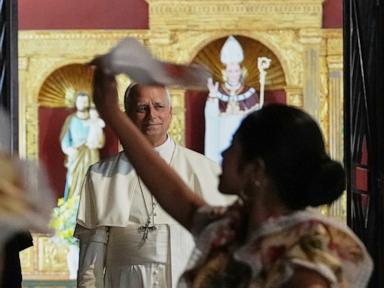
A papal itinerary that bridges the high Andes and the deep Amazon basin during a return to Peru is not a sentimental homecoming; it is a deliberate spatial reallocation of institutional capital. Standard media coverage frames these multi-region crossings through human-interest narratives—focusing on altitude, distance, and emotional reunions with local congregations. That framing misses the structural mechanics driving the Vatican's geographic choices. When the head of the Catholic Church bypasses exclusive concentration in coastal administrative centers like Lima to traverse Peru's vertical and ecological extremes, the trip functions as an operational stress test of ecclesiastical governance, peripheral diplomacy, and demographic retention.
To understand the strategic architecture of a Peruvian cross-country finale, analysts must examine three intersecting systems: the topography of institutional reach, the economics of missionary familiarity, and the competing pressures of resource extraction versus ecological stewardship.
The Spatial Economics of Peripheral Presence
Catholic governance has historically mirrored colonial administrative geography, concentrating episcopal authority, seminary infrastructure, and financial resources in coastal urban hubs. In Peru, this creates a sharp structural asymmetry between the Pacific littoral and the interior. The country divides into three distinct operational zones—the costa (arid coastal plain), the sierra (high Andean cordillera), and the selva (Amazonian rainforest)—each presenting radically different cost functions for institutional maintenance.
Operating an ecclesiastical network across the sierra and selva incurs severe friction costs. Transportation infrastructure in the high Andes relies on single-artery mountain passes vulnerable to landslides and seasonal isolation. In the Amazon basin, parish boundaries often follow riverine networks rather than road grids, turning routine pastoral administration into a multi-day logistical expedition dependent on fluvial fuel supplies and small-craft aviation.
Standard news narratives treat a pope's physical presence in both regions as a symbolic gesture of inclusion. In operational terms, physical presence acts as a high-cost signaling mechanism. Because a pontiff's time is the scarcest resource within the Roman Curia, allocating the final leg of an international journey to low-density, high-friction territories sends an unmistakable directive to local bishops and global Catholic charities: peripheral dioceses are no longer administrative backwaters; they are the primary theater of institutional legitimacy.
This reallocation produces three measurable downstream effects within church administration:
- Capital Redirects: Papal visits trigger immediate infrastructure upgrades—airstrip repairs, road grading, and telecommunications enhancements—that outlast the event itself. Donor agencies within the global Church disproportionately weight regions that have recently hosted a pontiff when approving multi-year development grants.
- Clerical Morale and Retention: Priests and religious orders stationed in isolated Andean prelatures or Amazonian vicariates operate under conditions of chronic underfunding and linguistic fragmentation. A direct papal visit validates their postings, reducing burnout and signaling to younger clergy that peripheral assignments carry institutional prestige rather than career stagnation.
- Liturgical and Linguistic Legitimation: Conducting mass and public audiences in territories dominated by Quechua, Aymara, and Amazonian indigenous communities forces the Vatican's liturgical apparatus to accommodate non-European cultural expressions in real time, establishing precedents that local clergy can cite long after the papal aircraft departs.
The "Trip Home" Dynamic as an Institutional Variable
When a pope crosses Peru under the banner of a "trip home," the personal biography of the pontiff alters the standard diplomatic equation. In typical papal travel, the visitor enters as an external sovereign—a head of state and supreme pastor arriving to inspect, encourage, and depart. Prior missionary or episcopal tenure within the host nation replaces external inspection with insider accountability.
A pontiff who has previously lived and worked among Peruvian dioceses possesses granular institutional memory. This familiarity eliminates the information asymmetry that local hierarchies often exploit during state visits. Normally, national bishops' conferences curate a papal itinerary to showcase thriving parishes, compliant lay movements, and orderly civic cooperation while shielding internal fractures from Roman scrutiny. A pope returning to familiar territory already knows where the administrative bottlenecks sit, which dioceses suffer from clericalism or financial mismanagement, and which grassroots movements have carried the Church through periods of political instability.
The hypothesis that familiarity softens papal critique runs counter to organizational behavior. In practice, deep local knowledge enables surgical intervention. Rather than delivering broad, generic exhortations suitable for any developing nation, a pontiff with direct Peruvian experience can address specific structural vulnerabilities—such as the gulf between urban elite parishes and rural indigenous communities—without needing local translators to decode the political subtext.
This dynamic carries an inherent operational risk. Returning to a home base exposes the papacy to localized factionalism. Every diocese, religious congregation, and political actor in Peru claims a piece of the pontiff's biography. Managing expectations requires strict protocol discipline:
- Preventing Regional Favoritism: If the itinerary favors a former diocese or specific religious province, neighboring jurisdictions perceive a loss of standing. Crossing from the high Andes to the deep Amazon balances the geographic ledger, ensuring neither the mountain provinces nor the jungle vicariates can claim exclusive ownership of the papal legacy.
- Neutralizing Domestic Political Co-optation: Peruvian politics suffers from chronic executive volatility, frequent constitutional crises, and deep polarization between Lima and the provinces. A returning pontiff walks into an environment where both state officials and opposition movements attempt to weaponize papal appearances for domestic legitimacy. Keeping the finale focused on remote flocks rather than extended state ceremonies in the capital minimizes the surface area available for political capture.
Altitude, Basin, and the Competing Pressures of Extraction
Linking the high Andes and the deep Amazon in a single continuous arc highlights a shared economic reality that coastal narratives frequently obscure: both regions function as extractive frontiers. While geographically distinct, the sierra and the selva sit at the center of global supply chains for copper, gold, lithium, timber, and hydrocarbons.
In the Andes, large-scale formal mining operations collide with smallholder agricultural communities over watershed access and glacial runoff. In the Amazon, informal and illegal alluvial gold mining, logging, and monoculture expansion drive deforestation, mercury contamination, and violent territorial encroachment against indigenous nations.
For the Catholic Church in Peru, ecological advocacy is not an abstract theological exercise; it is a frontline survival issue for its core demographic. Unlike urbanized European dioceses where environmentalism often aligns with post-materialist politics, parish priests in the Peruvian interior deal directly with poisoned river systems, displaced congregations, and threats against local environmental defenders.
A papal transit across both zones links these two extractive theaters into a single moral and geopolitical framework. By moving directly from mountain communities dealing with high-altitude mining impacts to rainforest communities confronting illegal gold dredging and deforestation, the itinerary constructs a visual and logistical argument: the Andean watershed and the Amazonian basin are a single hydrological and social system.
Yet this positioning exposes the limits of papal soft power. The Vatican possesses zero direct regulatory authority over multinational mining concessions, state energy policy, or illicit syndicates operating across porous borders with Brazil, Bolivia, and Colombia. When a pope speaks against environmental degradation in the Amazon or resource exploitation in the Andes, the immediate economic friction lands on local bishops and parish priests, who remain behind after international media crews leave.
Those local clergy must navigate a precarious operational reality:
- State Retaliation and Regulatory Pushback: National governments reliant on mining royalties and export revenues frequently view church-backed environmental monitoring as an obstacle to macroeconomic growth.
- Community Division: Rural and indigenous communities are rarely monolithic. While some factions resist extractive projects to protect ancestral lands, others welcome mining jobs and infrastructure payouts, creating sharp internal rifts within the very parishes the pope visits.
- Security Exposure: In regions where illegal gold mining and narcotics trafficking intersect, vocal church opposition to territorial encroachment exposes lay catechists and clergy to direct physical intimidation without state protection.
Demographic Competition in the Peruvian Interior
Beneath the geopolitical and ecological layers lies a stark demographic imperative. Latin America is no longer an uncontested Catholic monopoly, and the fastest erosion of Catholic market share has occurred precisely in the peripheral zones featured on this itinerary.
Over the past four decades, Pentecostal and evangelical movements have expanded rapidly across the Peruvian Andes and Amazon basin. Their growth model succeeds where traditional Catholic structures struggle: decentralized leadership, rapid ordination of local indigenous pastors without requiring years of distant seminary training, high-intensity community mutual aid, and immediate cultural adaptation.
Catholic parishes, bound by canonical requirements for celibate, university-educated priests, often leave rural chapels without weekly sacramental access for months at a time. In an Andean village or an Amazonian river settlement, a Catholic priest may visit twice a year for patronal feasts, while an evangelical pastor lives permanently in the community, speaks the local dialect natively, and runs daily support networks.
A papal crossing through these territories serves as a high-visibility counter-offensive in this religious marketplace. It leverages the one institutional asset that decentralized evangelical networks cannot replicate: global scale and historical continuity. The arrival of the Bishop of Rome in a remote jungle town or high-altitude plaza transforms an isolated congregation into the temporary center of a billion-member global institution.
The limitation of this strategy is temporal decay. A papal visit generates an immediate spike in religious enthusiasm, mass attendance, and media visibility, but it does not solve the structural supply bottleneck of ordained clergy. Unless the visit catalyzes permanent institutional reforms—such as expanding the permanent diaconate, empowering indigenous lay leaders with greater liturgical and administrative authority, or streamlining seminary pipelines for rural candidates—the demographic curve resumes its baseline trajectory within twenty-four months.
Logistical Execution and the Finale Architecture
Placing this cross-country traversal at the finale of a papal journey rather than the opening leg reflects deliberate operational sequencing. Papal trips follow a physiological and political arc. Opening days typically absorb heavy diplomatic protocols, state receptions, and dense urban masses while the pontiff's energy reserves are highest and international press corps deployment is at full capacity.
Relegating the Andean-Amazonian crossing to the final phase serves three tactical functions:
- Narrative Escalation: Ending in the hardest-to-reach regions builds dramatic momentum. Rather than peaking early in the capital and tapering off into routine departures, the itinerary saves its most visually arresting and physically demanding segments for the closing broadcast window, locking global media attention onto peripheral issues right before the return flight to Rome.
- Operational Filtering: By the final leg of an international tour, the traveling press corps and diplomatic entourage thin out due to charter aircraft weight limits at high-altitude airports and short Amazonian runways. This physical constraint naturally strips away bureaucratic bloat, producing leaner, more direct interactions between the pontiff and local populations.
- Thematic Synthesis: A departure ceremony staged from an interior hub or immediately following an Amazonian gathering frames the entire trip not as a diplomatic courtesy call to a sovereign state, but as a missionary expedition to the geographical margins.
Strategic Forecast for Vatican Engagement in the Andean-Amazonian Corridor
The long-term impact of a papal crossing from the Peruvian Andes to the Amazon will not be measured by crowd sizes or editorial sentiment, but by institutional structural shifts over the next three to five years. Observers tracking the Vatican's Latin American strategy should watch three concrete indicators to determine whether this finale produces durable systemic change or fades into ceremonial memory:
- Episcopal Appointments and Vicariate Autonomy: Watch the demographic profile of new bishops and apostolic vicars appointed to Peruvian interior jurisdictions. If Rome accelerates the promotion of native Quechua, Aymara, and Amazonian clergy—and grants apostolic vicariates greater canonical flexibility to train and deploy married permanent deacons—the visit will have succeeded in altering the supply chain of pastoral care. If appointments continue to favor coastal administrators or foreign missionary orders without local succession plans, the structural clerical shortage will persist.
- Ecclesial Pan-Amazonian Coordination: Monitor the operational integration between Peruvian vicariates and broader regional bodies such as the Pan-Amazonian Ecclesial Network (REPAM) and the Ecclesial Conference of the Amazon (CEAMA). A successful papal finale should translate into standardized cross-border legal defense funds, shared satellite communications infrastructure for remote parishes, and unified data collection on environmental human rights abuses across the Andean-Amazonian watershed.
- Resource Allocation within Catholic Development Agencies: Track the capital flows of major Catholic funding arms—including Missio, Adveniat, and Caritas—toward Peru's sierra and selva over the upcoming budget cycles. True strategic prioritization requires shifting grants away from brick-and-mortar church construction in urban centers toward solar-powered fluvial transport, community radio networks, and bilingual technical education in extractive frontier zones.
The decisive play for the Vatican following this Peruvian finale is clear: convert symbolic presence into decentralized governance. A pope can cross the Andes and enter the Amazon for a few days to spotlight the margins, but only by transferring canonical authority, financial capital, and leadership pipelines directly to indigenous and rural communities will the Church secure its institutional foothold in South America's interior for the coming decades.


