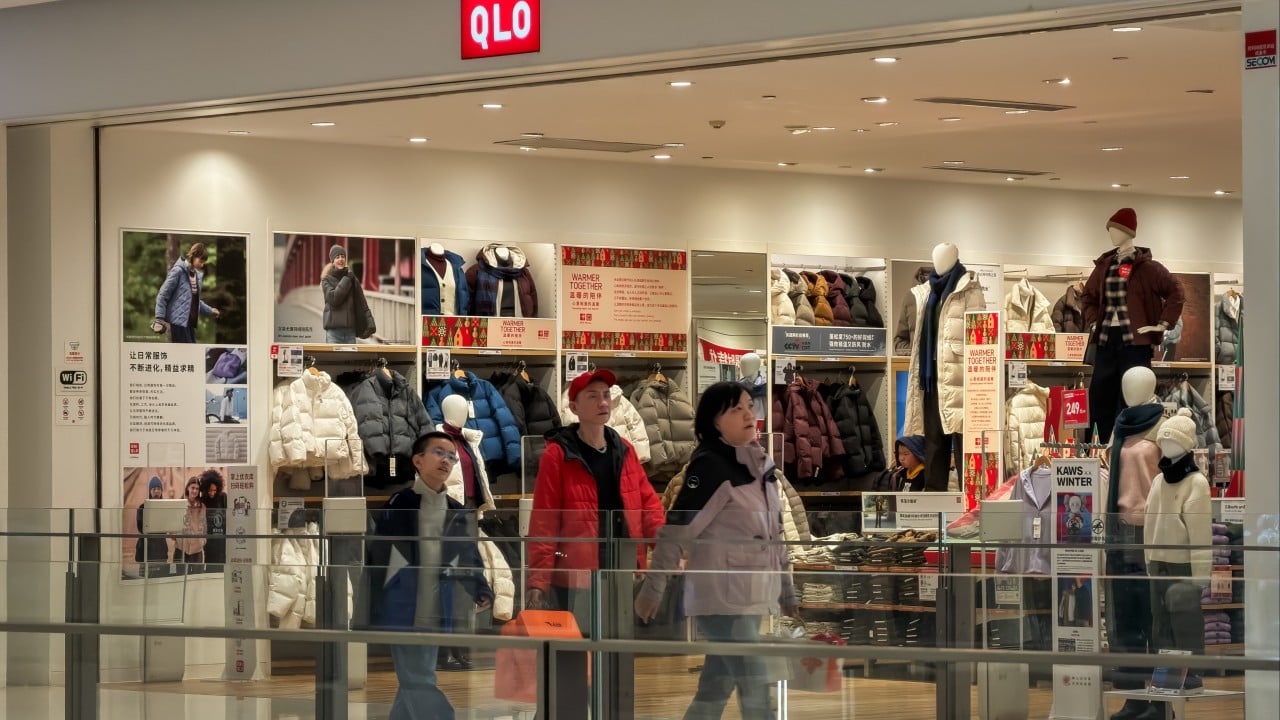
Every lazy retail columnist in the financial press loves a neat narrative. The lazy consensus goes like this: despite icy diplomatic rows between Beijing and Tokyo, retail giant Uniqlo keeps printing cash in mainland China because shoppers simply do not care about politics when they want cheap fleece.
It sounds sophisticated. It makes for great punditry. And it is completely wrong. Meanwhile, you can find other stories here: Inside the Multi-Billion Dollar Deal Binding Hanwha and TOTE to America's Golden Dome.
The commentators pointing at geopolitical friction as the primary variable are looking at the wrong chessboard entirely. They treat state-level posturing as a headwind that companies must courageously swim against, as if consumers are sitting at home weighing regional trade disputes before buying a turtleneck.
That framing fundamentally misunderstands how modern retail operates in Asia. Geopolitics is not a barrier Uniqlo is overcoming; it is an irrelevance that the media uses to mask a much more structural, unromantic reality. To explore the bigger picture, we recommend the excellent report by Bloomberg.
The Myth Of The Flag-Waving Consumer
Let us clear up the definitions. For years, analysts have operated on the assumption that nationalism dictates purchasing behavior in emerging markets. When relations dip between two nations, the narrative predicts consumer boycotts and sliding margins.
I have watched corporate strategy teams panic over diplomatic headlines, spending millions on defensive public relations campaigns that nobody reads. It is a waste of capital born from executive paranoia.
Chinese shoppers are not bypassing domestic labels to make a subtle political statement about Japan. They are buying function, consistency, and price. Uniqlo stripped away logos, trends, and seasonal anxiety decades ago. They sell utility. When an economic slowdown hits a major market, consumers do not stop buying clothes because of a foreign ministry briefing. They stop buying garbage. They look for durability. Uniqlo wins not because it defies diplomatic gravity, but because a gray merino wool sweater performs the same function regardless of who is Prime Minister in Tokyo.
The Real Story Is A Shrinking Footprint
To understand why profits jumped, look past the shiny headline figures and look at the square footage. The lazy consensus ignores the most aggressive operational contraction happening behind the scenes.
Uniqlo is not winning in China right now by blanketing the country with more stores. The brand has quietly closed dozens of underperforming, bloated legacy outlets over a two-year span, shrinking its net mainland footprint while surgically upgrading to massive, high-efficiency flagships.
Imagine a scenario where a retailer stops chasing vanity metrics like sheer store count and instead ruthlessly optimizes inventory turnover per square meter. That is what actually happened. Operating profit surged because management stopped bleeding cash on dead-mall locations in Tier 3 cities and concentrated capital into dense, hyper-efficient urban flagships.
The growth is driven by margin discipline, not diplomatic miracles. Gross profit margins expanded because the company reined in excessive discounting and streamlined its supply chain logistics. When you fix your internal plumbing, profits rise. It has very little to do with whether diplomats are shaking hands or slamming doors.
The Geographic Pivot Everyone Missed
While the financial press obsesses over the Beijing-Tokyo soap opera, Fast Retailing's leadership executed a much quieter, far more seismic shift. For the first time, revenue from European and North American markets has begun eclipsing the Greater China segment's dominance.
The real story isn't that Uniqlo is managing to survive Chinese political friction. The real story is that China is no longer the sole engine of the company's future growth narrative. Tadashi Yanai is steering the ship toward a global model where Greater China is simply one high-performing region among many, rather than the entire foundation of the enterprise.
By framing everything through the lens of China-Japan tensions, analysts miss the broader maturation of a global retail machine that has successfully exported its minimalist playbook to the West.
Stop reading geopolitical drama into quarterly earnings reports. Watch the balance sheet, look at the store closures, and pay attention to where the capital expenditures are actually flowing. The market rewards operational ruthlessness, not diplomatic harmony.