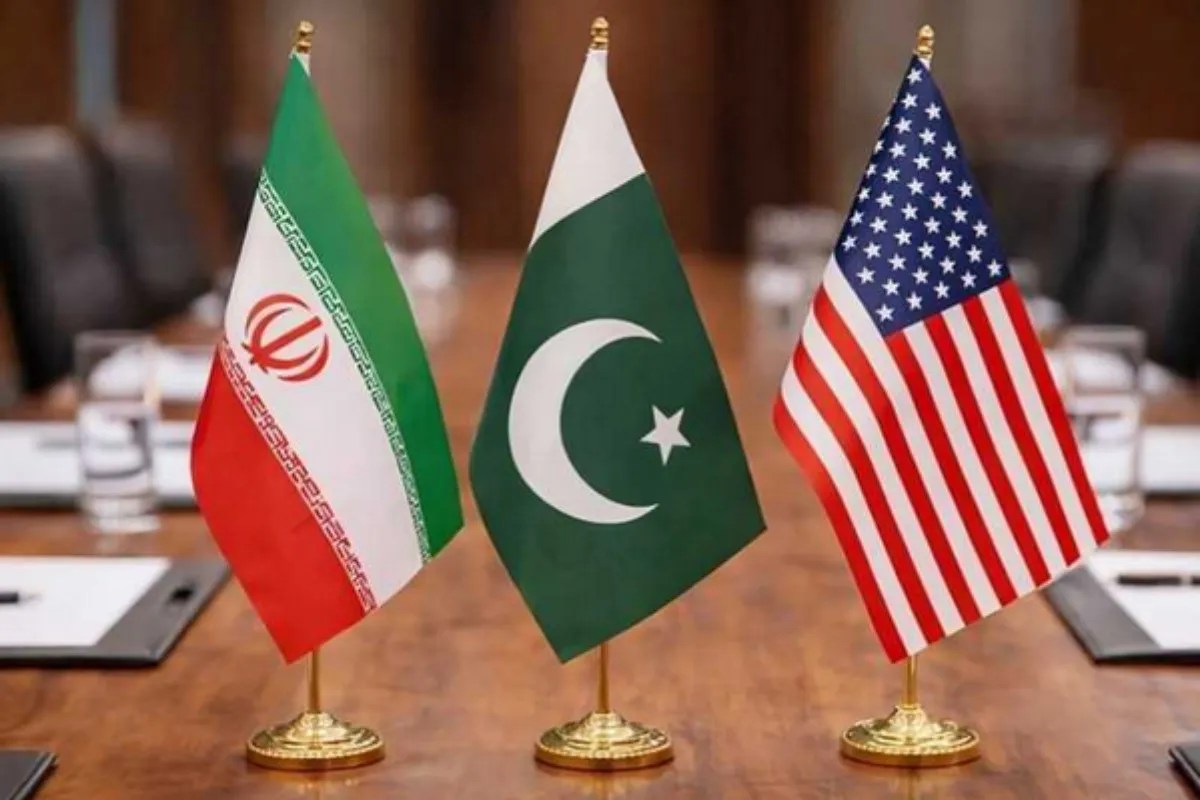
A short-term diplomatic pause between Washington and Tehran operates not as a resolution of conflict, but as a highly calculated liquidity window for global energy markets. When diplomatic channels signal a provisional 60-day truce involving Iranian oil sales and the Strait of Hormuz, market participants frequently misinterpret the event as a de-escalation of regional risk. In reality, these arrangements represent a structured equilibrium where both nations temporarily trade structural leverage for immediate economic and political capital.
Understanding the mechanics of this temporary arrangement requires moving past political rhetoric and examining the precise operational variables that govern Iranian oil transit, sanctions enforcement elasticity, and the maritime security architecture of the Persian Gulf.
The Dual-Leverage Framework of the 60-Day Window
The structural logic of a 60-day truce rests on two interdependent pillars: Iranian export volume elasticity and the operational status of the Strait of Hormuz. Neither element operates in isolation; they form a closed-loop system where changes in enforcement directly alter maritime risk premiums.
+--------------------------------------------------------+
|               Sanctions Enforcement Elasticity          |
|  (US calibrates enforcement levels / waiver oversight) |
+---------------------------+----------------------------+
                            |
                            v
+--------------------------------------------------------+
|               Iranian Export Volume Elasticity         |
|  (Tehran adjusts illicit/gray-market flows to Asia)     |
+---------------------------+----------------------------+
                            |
                            v
+--------------------------------------------------------+
|               Maritime Risk Premium Calibration        |
|  (Insurance underwriting costs in Strait of Hormuz)    |
+--------------------------------------------------------+
1. Sanctions Enforcement Elasticity
A 60-day timeline is too brief for formal legislative shifts or the permanent lifting of US sanctions. Instead, the mechanism relies entirely on administrative enforcement elasticity. The US executive branch possesses the authority to alter the frequency and severity of secondary sanctions enforcement against foreign financial institutions and shipping networks.
During a provisional truce, this manifests as a calculated blind spot. The US Treasury’s Office of Foreign Assets Control (OFAC) temporarily reduces the velocity of its designation lists targeting the "ghost fleet"—the network of aging, foreign-flagged tankers used by Tehran to transport crude. This administrative pause grants maritime insurers, ship-to-ship (STS) transfer hubs, and regional buyers a low-risk window to clear backlogged inventory without immediate fear of asset freezing or exclusion from the dollar-clearing system.
2. The Strait of Hormuz Operational Risk Function
The Strait of Hormuz is the world's most critical oil transit chokepoint, handling roughly one-fifth of global petroleum consumption. Iran’s leverage in negotiation is directly proportional to its ability to disrupt this corridor via asymmetric naval tactics, including the deployment of fast attack craft, sea mines, and unmanned aerial vehicles (UAVs).
In a 60-day truce scenario, Iran trades its disruption capability for revenue generation. The operational cost function for international shipping during this period drops significantly as the Islamic Revolutionary Guard Corps Navy (IRGCN) halts non-consensual vessel boardings and seizures. This reduction in kinetic friction alters market pricing through two specific financial channels:
- War Risk Insurance Premiums: Underwriters calculate hull and machinery war risk premiums based on the moving average of kinetic incidents within the Persian Gulf. A verified 60-day cessation of maritime harassment drops these premiums from peak levels (which can reach up to 1% of the vessel's total value per voyage) back to baseline operational costs.
- Freight Rate Demurrage: Reduced security risks eliminate the need for tankers to form escorted convoys or alter routes, decreasing transit delays and lowering demurrage costs for charterers.
The Microeconomics of the Iranian Oil Conduit
To quantify the impact of a temporary truce, one must analyze the specific logistical and financial channels through which Iranian crude enters the global market, primarily via independent refineries in China (often termed "teapots").
The Discount and Arbitrage Structure
Iranian crude does not trade at benchmark prices like Brent or West Texas Intermediate (WTI). It trades at a structural discount to compensate buyers for the compliance and reputational risks associated with handling sanctioned material. This discount structure governs the economic viability of the entire supply chain during a truce:
- The Sanctions Risk Discount: Historically, Iranian Light crude trades at a discount of $4 to $11 per barrel relative to Brent. This discount covers the cost of obfuscation logistics, including multiple ship-to-ship transfers, re-flagging fees, and the use of shell companies in jurisdictions like Malaysia, the UAE, or Singapore.
- The Truce Arbitrage: When a 60-day truce is signaled, the probability of cargo seizure drops. This alters the risk-reward ratio for independent buyers. The discount narrows slightly as demand increases, allowing Tehran to capture a higher netback price per barrel while simultaneously increasing total export volumes. The financial yield for Iran increases not just from higher volume, but from improved margins per barrel extracted from reduced logistical friction.
Logistics of the Ghost Fleet Acceleration
A 60-day window creates a logistical sprint. Because the duration is explicitly capped, Iranian oil marketing entities must maximize throughput before the enforcement window closes. This acceleration alters standard maritime behavior:
- AIS Spoofing De-escalation: Tankers utilizing Automatic Identification System (AIS) manipulation—commonly referred to as "dark voyages"—often resume broadcasting valid telemetry during a truce when operating outside Iranian territorial waters. This reduces the risk of collisions in congested straits and speeds up port turnaround times.
- Storage Liquidation: Iran maintains significant volumes of crude in floating storage onboard VLCCs (Very Large Crude Carriers) anchored off its coast and in commercial storage tanks in northeast Asia. A truce allows for the rapid liquidation of this pre-positioned inventory, meaning market supply can spike faster than actual domestic production lines can ramp up.
Strategic Limitations and Systemic Vulnerabilities
The fundamental flaw in evaluating a 60-day truce as a permanent market stabilizer lies in its temporal boundaries. The brief duration introduces severe structural limitations that prevent the arrangement from transitioning into a durable economic equilibrium.
The Investment Horizon Bottleneck
No major national oil company or global integrated major can alter capital expenditure (CapEx) strategies based on a two-month window. Upstream oil production requires multi-year investments to reverse natural field decline, repair infrastructure, and drill new production wells. Iran’s domestic energy sector requires an estimated $100 billion in foreign direct investment to restore its historical production capacity of 4 million barrels per day. A 60-day administrative pause offers zero incentive for institutional capital deployment; it serves exclusively as an optimization tool for existing, depreciating assets.
The Buyer's Compliance Asymmetry
Large-scale, compliant refiners in Europe, Japan, and South Korea operate under strict long-term supply contracts and rigid legal compliance frameworks. They cannot reconfigure their supply chains or alter their refinery distillation setups to process Iranian crude based on a 60-day policy fluctuation. The legal costs of unwinding a contract if sanctions snap back on day 61 far outweigh the short-term margin gains. Consequently, the upside of any temporary truce is entirely captured by unregulated or semi-regulated entities that already operate outside the Western financial system.
The Geopolitical Payoff Matrix
The execution of a short-term truce reflects a highly synchronized game-theoretic payoff matrix for both leadership structures.
| Actor | Tactical Action | Primary Strategic Objective | Risk Factor |
|---|---|---|---|
| United States | Calibrated non-enforcement of energy sanctions; monitoring of maritime corridors. | Domestic fuel price stabilization; suppression of headline inflation; temporary reduction in regional military deployment costs. | Moral hazard of providing capital to an adversary; domestic political criticism of perceived weakness. |
| Iran | Restraint of IRGCN maritime interdictions; rapid liquidation of floating crude inventory. | Immediate hard-currency accumulation; relief of domestic fiscal deficits; preservation of critical proxy networks. | Rapid depletion of stored inventory without long-term market access guarantees; potential domestic backlash if sanctions snap back. |
Operational Directives for Market Participants
Navigating the volatility of a 60-day US-Iran maritime truce requires executing specific asset and risk reallocations rather than relying on broad macroeconomic assumptions.
1. Re-index Freight and Demurrage Contracts
Do not lock in long-term freight rates based on the temporary deflation of war risk premiums. Charterers operating in the Persian Gulf must structure contracts with floating clause mechanisms that automatically adjust for insurance premium spikes on day 61. Ensure all charterparty agreements contain explicit "Sanctions Snapback" clauses that define liability for cargo in transit if the administrative enforcement window closes while a vessel is on the high seas.
2. Disaggregate Real Production from Floating Storage Liquidation
When analyzing global supply data during the truce window, separate physical wellhead production increases from floating storage drawdown. A sudden influx of Iranian barrels in weeks three through six indicates inventory clearing, not a sustainable increase in capacity. Model global supply balances on the assumption that this volume will abruptly exit the market at the end of the 60-day cycle, creating a sharp backwardation effect in nearby futures contracts.
3. Hedging the Margin Compression
Independent refiners and regional distributors should utilize the temporary narrowing of the Iranian crude discount to lock in crack spreads. The artificial inflation of Iranian netback prices during the truce will reverse immediately upon any breakdown in diplomatic communication. Refiners must hedge their inventory risk by shorting regional product margins toward the final third of the 60-day window, anticipating a return to high-friction, high-discount logistical operations.