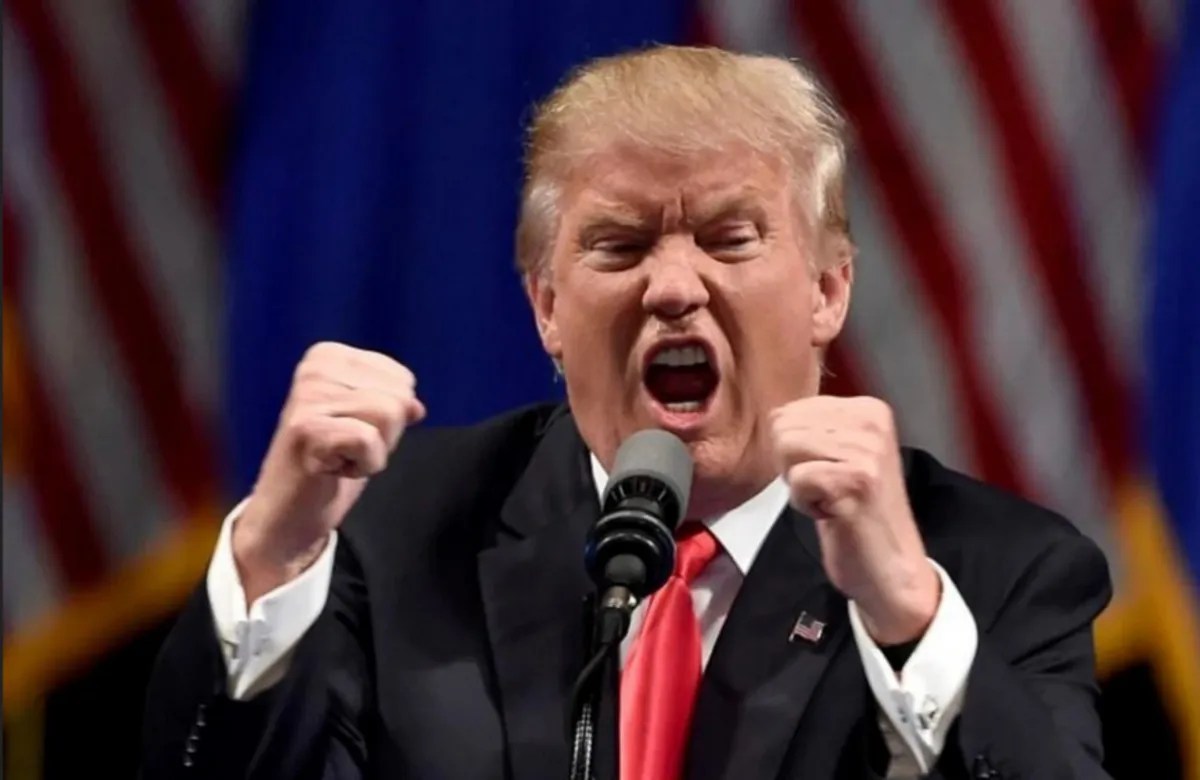
The Theater of Perpetual Escalation
Mainstream news outlets love a predictable script. Every time a American leader steps up to a microphone and promises "heavy prices" for attacks on U.S. troops, headlines immediately trumpet the imminent threat of global war. The reaction is completely scripted. Pundits analyze the posture, media houses run sirens across screens, and commentators debate whether regional escalation is hours away.
They are reacting to political theater while missing the strategic balance entirely. You might also find this similar coverage interesting: The Chokepoint at the Edge of the World.
The consensus view treats public threats against Tehran as a prelude to kinetic confrontation. It frames foreign policy as a high-stakes standoff where one bold statement could trigger a domino effect across the Middle East. That entire premise is flawed. Public threat rhetoric from Washington is rarely a signal of impending war. It is a calculated mechanism designed for domestic political consumption and strategic risk management.
When you strip away the sensationalism, the real story is not about military escalation. It is about how political leaders use performative strength to mask systemic strategic limitations. As discussed in recent coverage by BBC News, the effects are worth noting.
Deconstructing the Rhetoric of Retaliation
Foreign policy coverage operates on a major misconception: the belief that explicit public warnings deter asymmetric warfare.
Decades of regional conflict prove the exact opposite. Asymmetric proxy networks do not operate on the logic of open state-on-state warfare. They thrive in the grey zone—the space precisely below the threshold that triggers a full-scale direct response. When a political figure threatens total retaliation for any harm brought upon personnel, they set an operational trap for themselves.
The Credibility Trap
Here is the exact mechanism that mainstream analysts consistently ignore:
- The Unrealistic Threshold: By promising massive retaliation for minor or proxy-driven skirmishes, a government creates an all-or-nothing ultimatum.
- The Adversary's Counter Strategy: Adversaries test these bounds using decentralized networks, allowing them plausible deniability while probing defensive boundaries.
- The Necessary Retreat: Because a total military escalation carries unbearable economic and geopolitical costs, the actual response is almost always dialed down to proportional strikes or economic sanctions.
- The Loss of Deterrence: The gap between the hyper-aggressive threat and the calibrated reality degrades long-term credibility far more than remaining quiet would have.
I have watched policy teams and defense analysts spin these public statements into groundbreaking foreign policy shifts for years. The reality is far less exciting. Washington relies on rhetoric precisely when it wants to avoid actual, messy military commitments.
What the Mainstream Media Misses About Regional Dynamics
| Conventional Narrative | The Geopolitical Reality |
|---|---|
| Public threats signal impending military campaigns. | Public threats serve as political cover to avoid direct kinetic conflict. |
| Deterrence is maintained through loud, aggressive public warnings. | Effective deterrence relies on quiet, precise, and predictable operational boundaries. |
| Regional conflicts are driven by direct state-on-state rivalries. | Modern conflict is defined by grey-zone proxy warfare designed to bypass traditional deterrence. |
The traditional foreign policy apparatus assumes that adversaries view public speeches as binding strategic doctrines. In truth, intelligence agencies in Tehran, Moscow, and Beijing do not base their threat assessments on broadcast rallies or social media posts. They look at troop movements, logistics pipelines, ammunition stockpiles, and carrier strike group deployments.
When the military logistics do not match the political noise, the noise is dismissed for what it is: domestic signaling.
The Real Cost of Grey-Zone Operations
If open war is not the target, what is actually happening?
The real war is economic, technological, and low-intensity friction. While public attention focuses on explosive headlines and angry speeches, the structural leverage changes elsewhere.
1. Cyber Security and Infrastructure Probing
Modern conflict rarely starts with a missile launch. It starts with a compromised command network or a vulnerable power grid. State-backed cyber operations run continuously, completely indifferent to political speeches.
2. Maritime Trade Bottlenecks
Controlling or disrupting critical shipping lanes imposes massive friction on global supply chains. A single low-cost drone strike near a major strait forces commercial shipping lines to re-route, spiking insurance rates and driving global inflation. This inflicts real economic damage without ever crossing the threshold of conventional war.
3. Financial Isolation Tactics
Sanctions are often presented as a bloodless alternative to military force. In practice, long-term economic isolation creates black markets, strengthens alternative trade alliances, and accelerates the movement away from dollar-denominated trade among sovereign nations.
Focusing on verbal threats misses these underlying battles completely. While commentators argue over dynamic speeches, the structural architecture of global trade and security continues to shift underneath them.
Dismantling the "People Also Ask" Assumptions
Does tough public rhetoric prevent attack on military personnel?
No. Historically, explicit public red lines often invite adversaries to test those limits through proxy forces. When an adversary knows that a direct response carries massive geopolitical costs for the origin state, they use decentralized tactics to strike while maintaining just enough distance to prevent open war.
Is full-scale conflict inevitable when tensions spike?
Direct war between major regional powers remains improbable due to the catastrophic cost-benefit ratio. Direct confrontation destroys infrastructure, destabilizes global energy markets, and risks uncontrollable escalation. Both sides understand this reality, which is why conflict remains confined to grey-zone operations, cyber warfare, and regional proxies.
Why do political leaders rely so heavily on public warnings?
Because political leaders speak primarily to two audiences: domestic voters and political opponents. A strong, uncompromising stance projects decisive leadership at home, even if it adds zero tactical value to the commanders on the ground.
Strategic Realism Over Political Spectacle
Stop treating every political speech like a military order.
The media thrives on conflict, panic, and hyperbole. It translates complex, multidimensional foreign policy into simple storylines of good versus bad, strength versus weakness. But if you want to understand where global security is actually heading, you have to ignore the soundbites.
Look at the supply chains. Track defense procurement budgets. Watch cyber defense posture and maritime route security.
The noise is just political cover. The real shifts happen silently, long before anyone steps up to a podium.