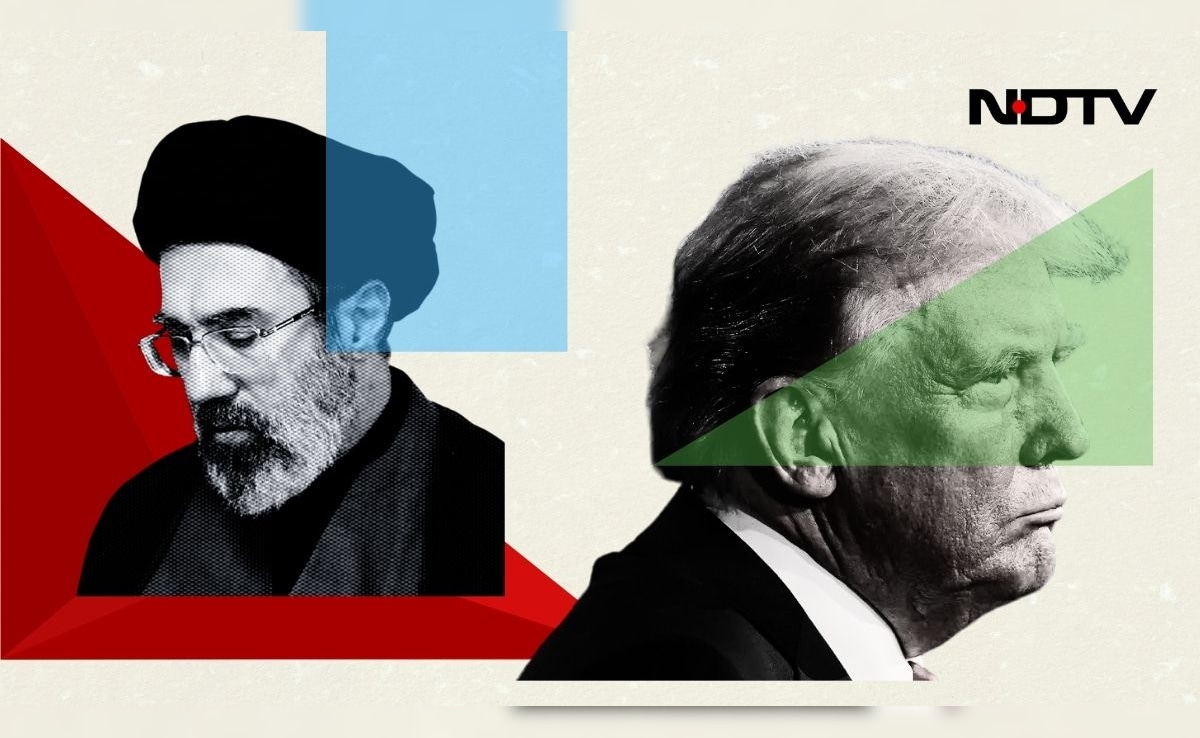
The standard geopolitical analyst loves a good "reality check." They treat April 1st as a convenient hook to lament the state of US-Iran relations, wagging a finger at the "senseless" escalation and calling for a return to the "rational" diplomacy of 2015. They want you to believe we are one misunderstood signal away from a regional inferno, or conversely, one brave summit away from a grand bargain.
They are wrong.
The tension between Washington and Tehran isn't a misunderstanding. It isn't a relic of the 1979 hostage crisis that everyone just needs to "get over." It is a highly functional, mutually beneficial ecosystem of managed hostility. If you’re waiting for the "prank" to end so the "real work" can begin, you’ve missed the fact that the theater is the work.
The real reality check isn't that the world is dangerous; it’s that the danger is the most stable asset in the global portfolio.
The Myth of the Rational Pivot
The "lazy consensus" argues that the US is desperate to pivot to Asia and that Iran is desperate for sanctions relief. Logically, this should lead to a quiet Middle East. But logic is a poor tool for analyzing power preservation.
For the US security apparatus, Iran is the "Goldilocks" antagonist. It is strong enough to justify a massive military footprint and billions in arms sales to the Gulf, but too weak to actually win a conventional war. If Iran suddenly became a peaceful, liberal democracy tomorrow, the US defense industry would face a catastrophic revenue vacuum. The "Iranian threat" is a multi-billion dollar line item that no one in the Beltway actually wants to erase.
For the Iranian regime, the "Great Satan" is the only thing keeping the domestic lid on. When the Rial craters and the youth take to the streets, the specter of American imperialism is the only glue holding the clerical establishment together. They don't want the sanctions to vanish; they want the sanctions to be just painful enough to blame for their own economic incompetence, but not so heavy that the IRGC can’t run its black-market monopolies.
The Sanctions Paradox
We are told sanctions are a tool to change behavior. I’ve watched this play out for two decades, and the data tells a different story: Sanctions are a tool to cement the power of the most radical elements within the target country.
When you cut a nation off from the global financial system, you don't empower the "moderate" businessman who wants to trade with London or New York. You kill him. You empower the smuggler, the general with the keys to the port, and the shadowy bonyads that operate outside the law. In Iran, the "Maximum Pressure" campaign was a gift to the hardliners. It wiped out the middle class—the only group capable of internal reform—and left the population entirely dependent on the state for survival.
If the goal was to stabilize the region, the strategy was a failure. If the goal was to ensure the Iranian government remained a centralized, hostile entity that justifies a massive US naval presence in the Persian Gulf, it was a masterstroke.
The Nuclear Program is a Hedge Not a Weapon
The obsession with "Breakout Time" is a red herring. Every analyst with a spreadsheet will tell you how many weeks Iran needs to enrich enough uranium for a bomb. They treat it like a countdown to Doomsday.
Here is the truth: A nuclear weapon is a liability for Tehran. The moment they test a device, they lose their leverage. The threat of a program is infinitely more valuable than a finished bomb. The threat brings the world to the table. The threat creates a diplomatic revolving door.
Once you have the bomb, you're just North Korea—a pariah with no cards left to play but the "end of the world" card, which you can only play once. Iran’s leadership isn't suicidal. They are cynical. They want the capacity, not the catastrophe. They are playing a game of "Permanent Threshold," where they stay exactly five minutes away from a weapon forever. This forces the West to keep paying "attention rent."
The Proxy Delusion
We hear constantly about Iran’s "malign influence" through proxies like Hezbollah, the Houthis, and various militias in Iraq. The standard take is that Iran "controls" these groups like a puppeteer.
This is a fundamental misunderstanding of decentralized warfare. These groups aren't mindless drones; they are local actors with their own agendas who happen to find Iranian patronage convenient.
When the US "demands" that Tehran rein in the Houthis, they are asking for something Tehran couldn't do even if it wanted to. But Tehran will never admit that. They love the perception of omnipotence. It’s better to be feared as a mastermind than dismissed as a desperate financier of regional chaos. The US, in turn, loves to blame Tehran for every IED and rocket because it simplifies a messy, multi-polar reality into a digestible "Axis of Evil" narrative.
The Energy Lie
The most significant misconception is that the US-Iran conflict is still about oil. That’s 20th-century thinking.
The US is now a net exporter of energy. We don't need the Strait of Hormuz for our own survival anymore. We need the instability of the Strait to control the energy costs of our competitors—primarily China and Europe.
If the Persian Gulf were a zone of perfect peace and free trade, China’s energy costs would plummet, and their manufacturing dominance would accelerate. By maintaining a state of "controlled friction" in the Middle East, the US keeps a hand on the throat of the global energy supply. It’s a protection racket disguised as "ensuring the freedom of navigation."
Why "Diplomacy" is a Dirty Word
When people call for "more diplomacy," they usually mean more talking. But in this theater, talking is just another form of tactical delay.
True diplomacy requires a change in the underlying incentives. Right now, both sides are heavily incentivized to stay in the ring.
- The US gets to maintain a hegemony-by-proxy.
- Iran gets to maintain a domestic-siege mentality.
- Israel gets to maintain its status as the indispensable regional security partner.
- The Gulf States get to maintain their military spending spree.
Who loses? The people of Iran, the taxpayers of the US, and anyone actually interested in a peaceful 21st century.
The Unconventional Reality
If you want to actually "fix" the US-Iran relationship, you don't do it with a treaty that can be torn up by the next administration. You do it with aggressive, uncontrolled capitalism.
The greatest threat to the IRGC isn't an F-35; it's an iPhone 16 and a high-speed internet connection that isn't filtered. The greatest threat to the hardliners isn't a carrier strike group; it's a generation of Iranians who are more interested in crypto-arbitrage and global tech startups than in revolutionary martyrdom.
Instead of sanctions that target "dual-use" technology, the West should be flooding Iran with it. Every sanction we impose is a wall the regime uses to keep its people in. Every bit of trade we allow is a crack in that wall. But we won't do that, because a "Westernized" Iran would be a regional superpower that doesn't need US "protection" or "oversight."
Stop Asking the Wrong Questions
People ask: "Will there be war?"
The answer is: There already is. It’s a low-intensity, high-profit war that has been running for 45 years.
People ask: "Can the JCPOA be saved?"
The answer is: Who cares? The deal was a 20th-century solution to a 21st-century problem of identity and influence.
The "reality check" isn't that we are on the brink of disaster. The reality check is that the "disaster" is the plan. We are living in a carefully calibrated equilibrium of animosity. The rhetoric about April Fools' and "searching for truth" is just part of the script.
Stop looking for the prank. Start looking at the ledger.
The conflict isn't failing. It is performing exactly as intended for the people at the top of the food chain in both Washington and Tehran. The only "fools" are those who believe the players actually want the game to end.
Buy the volatility. Ignore the speeches.
Your Next Step
If you want to understand how this "managed friction" impacts your portfolio or your worldview, you need to stop reading the State Department briefings and start looking at the insurance premiums for tankers in the Gulf. Follow the money, not the martyrs.
Would you like me to break down the specific financial beneficiaries of the current sanctions regime?
<mic_drop>