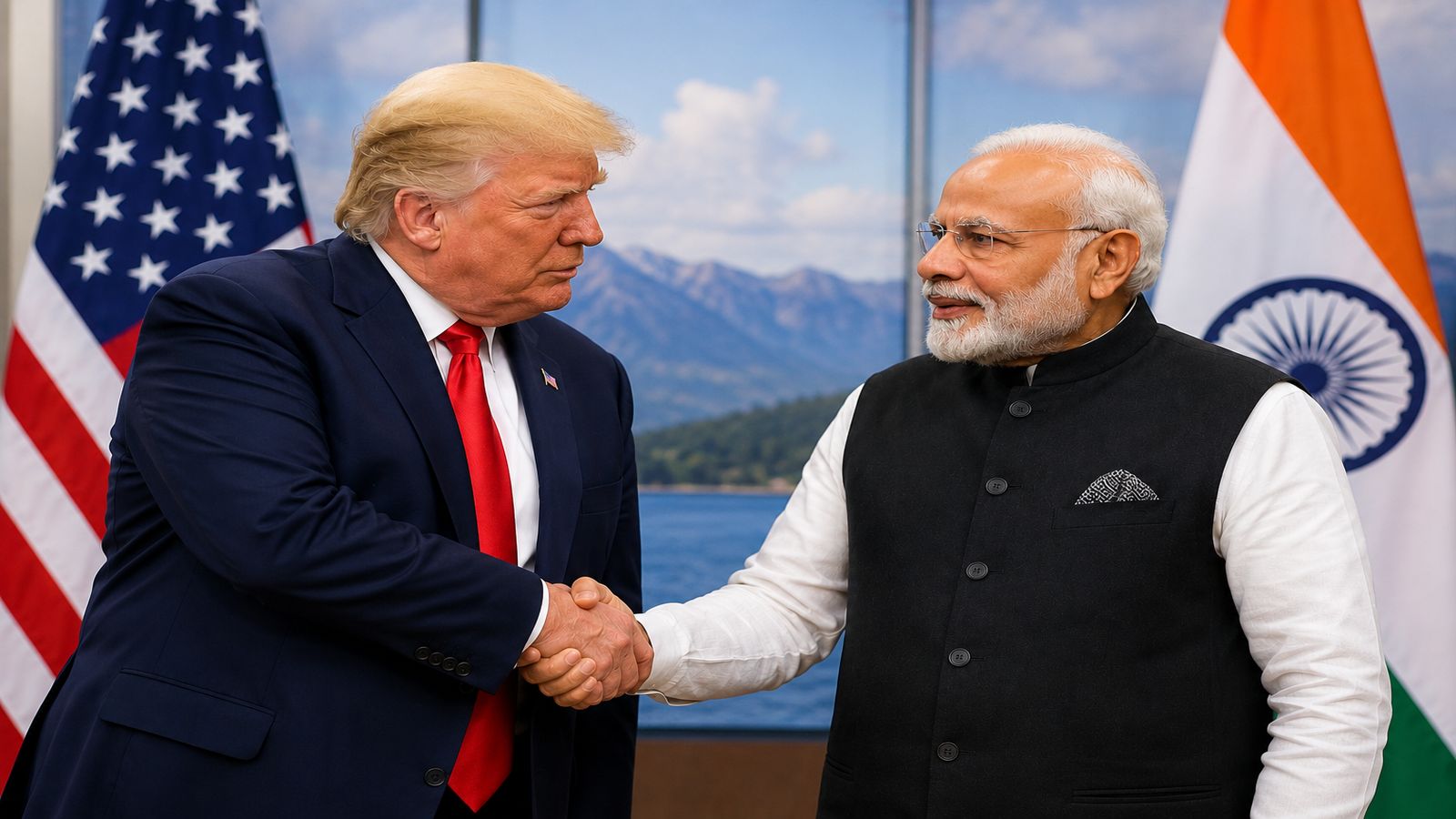
Mainstream media outlets love a high-stakes narrative. They track flight paths, obsess over handshake durations, and frame every meeting between world leaders as a tectonic shift in global alignment. The latest breathless reporting suggests that a face-to-face meeting between US President Donald Trump and Indian Prime Minister Narendra Modi is a critical, fragile pivot point following regional frictions with Pakistan.
This analysis is fundamentally flawed. It misreads how modern bilateral strategy actually works. For a different perspective, consider: this related article.
The lazy consensus treats leader-level summits as the engine of international relations. It assumes that personal chemistry or a well-timed bilateral chat can rewrite deep-seated security architectures or erase systemic economic frictions.
It does not. The upcoming photo-op is not a breakthrough. It is a theatrical performance designed for domestic consumption in both Washington and New Delhi. While commentators dissect the body language, the real machinery of the state operates on an entirely different, highly transactional wavelength. Related coverage regarding this has been published by The Washington Post.
The Myth of the Great Man Breakthrough
Foreign policy analysts frequently fall into the trap of the "Great Man" theory of history. They imply that if two powerful personalities sit in a room, they can bypass the grinding bureaucracy of their respective defense and trade ministries.
I have spent years watching institutional machinery swallow political rhetoric for breakfast. Here is the reality: leaders sign agreements that have been meticulously negotiated, word by word, by mid-level bureaucrats months in advance. A meeting does not create a policy; it merely glazes a pre-baked cake.
The narrative surrounding Washington, New Delhi, and Islamabad assumes a delicate balancing act that Trump must perform. The press asks: How will the US balance its relationship with India while managing Pakistan? This question rests on an outdated Cold War premise. The United States does not view South Asia through a singular, interconnected lens anymore. The bureaucracy decoupled the India and Pakistan portfolios years ago.
Washington views India as a critical structural counterweight to China in the Indo-Pacific. Conversely, it views Pakistan through a highly narrow, transactional counter-terrorism and regional stability lens. The idea that a single meeting between Trump and Modi will recalibrate this balance or serve as a "mediation" session ignores the institutional inertia of the Pentagon and the State Department.
The Friction the Pundits Soft-Pedal
While talking heads obsess over symbolic solidarity against regional adversaries, they completely ignore the structural economic friction that actually defines the US-India relationship.
Trump’s political brand is built on aggressive protectionism and a vocal disdain for trade deficits. India is historically one of the most protectionist major economies in the world, utilizing high tariffs and stringent data localization laws to protect domestic industries.
Let us look at the hard numbers that the mainstream press glosses over. The US trade deficit with India has hovered around tens of billions of dollars annually for years. The Trump administration previously stripped India of its preferential trade status under the Generalized System of Preferences (GSP) program. A handshake in a hallway does not erase the fundamental math of Harley-Davidson tariffs, agricultural import restrictions, or intellectual property disputes.
If you want to know where a relationship stands, look at the trade balance and treaty commitments, not the press releases. India is not a formal treaty ally of the United States, and it never will be. New Delhi guards its "strategic autonomy" fiercely. It will continue to buy Russian military hardware, import Iranian oil when it suits its energy security, and chart a course independent of Washington’s global mandates. The consensus view that India is ready to slot neatly into a Western-led alliance structure is a fantasy.
Dismantling the Popular Narratives
Let us dismantle the standard questions filling the opinion pages right now.
Does a US-India summit signal a permanent shift away from Pakistan?
No. The United States maintains functional channels with Islamabad because it has to. Logistics, geography, and nuclear realities dictate that Washington cannot simply walk away from Pakistan, regardless of how warm the optics look in New Delhi. The relationship with India exists on a completely separate track focused on maritime security in the Indian Ocean and technological decoupling from Beijing.
Will personal chemistry between the leaders resolve trade disputes?
Absolutely not. We saw this playbook during the previous terms. Massive rallies and public displays of camaraderie yielded almost zero progress on major trade packages. Bureaucrats on both sides remained dug into their positions on medical devices, dairy access, and digital trade. Personal rapport is a tool for domestic public relations, not a mechanism for rewriting tariff schedules.
The Real Drivers: Tech and Defense Hardware
If the political theater does not matter, what does? The real relationship is driven by two unsexy, highly technical domains: defense interoperability and critical technology transfers.
While the media covers the political speeches, defense officials are quietly working on foundational agreements. The real progress happens through frameworks like the Initiative on Critical and Emerging Technology (iCET). These agreements govern the co-production of jet engines, semiconductor supply chains, and defense innovation ecosystems.
This is a highly transactional arrangement. India needs American technology to modernize its military and counter external pressures; the US needs India to scale its manufacturing alternatives and maintain a presence in the region.
The downside of this contrarian, transactional reality is clear: it lacks stability. Because the relationship is not anchored in shared institutional values or formal treaty obligations, it is highly vulnerable to political shifts. If a trade dispute escalates, or if India’s domestic policies clash with Washington’s stated values, the relationship stalls. It is a marriage of convenience, not a partnership of shared destiny.
Stop reading the tea leaves of diplomatic communiqués. Stop believing that a scheduled meeting between Trump and Modi will fundamentally alter the geopolitics of South Asia. The bureaucracy has already written the script, the corporate defense contractors have already cleared the budgets, and the structural economic frictions remain entirely unchanged. The summit is not the news; it is the distraction. Watch the supply chains, watch the hardware transfers, and ignore the stage management.


