The Mechanics of Friction in Asymmetric Alliances
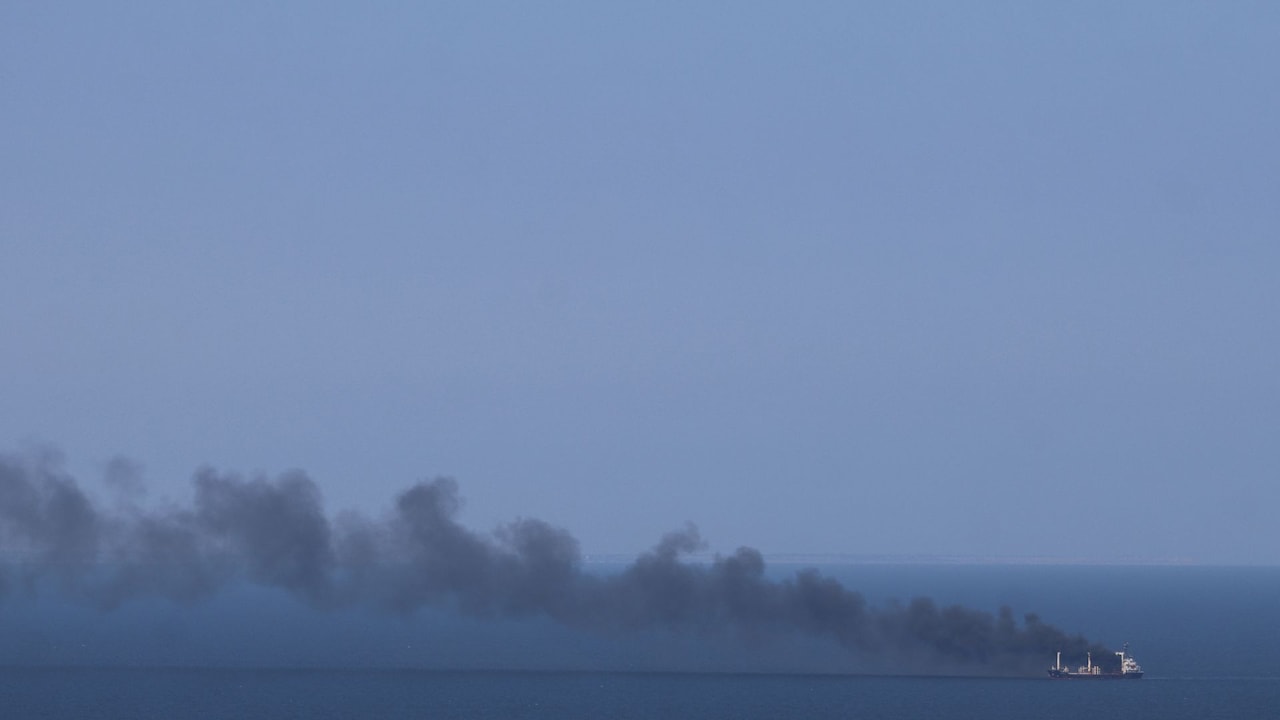
When Russian cruise missiles struck the merchant vessel MV Golden Leo off Odesa in July 2026, killing four Indian seafarers and wounding another, the resulting diplomatic friction exposed a fundamental calculus in modern statecraft: the cost function of maintaining strategic neutrality under asymmetric risk.
Kremlin spokesman Dmitry Peskov confirmed that Russia remains in diplomatic communication with New Delhi while explicitly maintaining that strikes against maritime assets linked to Ukrainian supply lines will continue unabated. This dynamic illustrates a structural conflict between two competing national imperatives: Moscow’s military objective to enforce a maritime blockade in the Black Sea and New Delhi’s imperative to protect its global human capital footprint.
[Black Sea Blockade Policy] ---> Interdiction of Maritime Logistics
                                            |
                                            v
[Global Labor Supply]       ---> Collateral Cost to Indian Seafarers
                                            |
                                            v
[Strategic Autonomy Model]  ---> Strained Bilateral Diplomatic Frameworks
To evaluate the trajectory of Russo-Indian relations following this escalation, we must categorize the issue into three structural pillars: operational maritime friction, diplomatic risk hedging, and human capital exposure.
Pillar I: The Maritime Interdiction Function
The strike on the MV Golden Leo illustrates the operational reality of commercial shipping inside contested maritime corridors. Russia’s military strategy relies on the systematic degradation of Ukrainian port infrastructure and logistics. From a targeting standpoint, Moscow operates under a policy where any vessel navigating toward or departing from Ukrainian ports is categorized as a potential logistics vector for military hardware.
This doctrine creates a structural conflict with international commercial shipping networks. The core mechanisms driving this risk profile include:
- Flag-State vs. Crew-Origin Asymmetry: The MV Golden Leo sailed under the flag of Guinea-Bissau, operated under Turkish ownership, and carried a multinational crew primarily composed of Indian and Syrian nationals. Flag-state protections provide minimal operational defense when targeting algorithms and missile strikes prioritize geographical location and cargo route over sovereign ownership.
- Target Classification Heuristics: Russia’s defense stance assumes dual-use utility for all grain, container, and bulk cargo movements out of Odesa. Consequently, kinetic strikes are deployed without granular verification of crew nationality.
- The Black Sea Escalation Loop: As Ukraine deploys targeted strikes against Russian shadow fleet operations and oil logistics in regions like Novorossiysk, Russia responds by tightening its kinetic interdiction radius around Ukrainian ports, directly increasing the hazard probability for commercial crews.
Pillar II: The Human Capital Arbitrage Problem
India supplies over 320,000 active seafarers to the global merchant fleet, representing a significant proportion of global maritime labor. This global deployment creates systemic exposure to foreign kinetic operations.
When third-party commercial operators navigate high-risk corridors like the Black Sea or the Red Sea, they rely on labor from developing markets to maintain margin efficiency. India's Ministry of External Affairs (MEA) faces an operational bottleneck: it cannot preemptively restrict maritime labor movement without damaging India's position as a primary supplier of maritime labor, yet it cannot absorb civilian casualties without diplomatic retaliation.
High Risk Logistics Zone ---> High-Margin Route for Shipowners
                                      |
                                      v
                        Reliance on Global Crew Talent
                                      |
                                      v
                        Kinetic Incident / Death
                                      |
                                      v
                        State Diplomatic Friction (MEA Demarche)
The summons issued to Russia’s chargé d’affaires in New Delhi represents a formal diplomatic demarche designed to set a boundary on acceptable collateral costs. However, because India's strategic defense posture remains tied to Russian equipment, spare parts, and discounted energy flows, New Delhi's formal statements consistently use language targeting "commercial shipping safety" rather than issuing direct strategic ultimatums.
Pillar III: The Limits of Strategic Autonomy
The Kremlin's explicit statement—affirming ongoing diplomatic contact with India while asserting that military strikes on logistics targets will persist—exposes the boundaries of New Delhi's "Strategic Autonomy" framework.
India's strategy relies on balancing relations between Western alliances and the Moscow-Beijing axis to maximize national economic flexibility. However, kinetic operations create friction points where strategic neutrality becomes difficult to maintain.
| Parameter | Russia's Operational Goal | India's Strategic Imperative |
|---|---|---|
| Primary Directive | Deny maritime trade and military supply to Ukraine. | Protect civilian nationals and maintain global trade access. |
| Tolerance for Risk | High; accepts diplomatic strain to maintain maritime blockade. | Low; casualties generate domestic political pressure. |
| Diplomatic Lever | Energy exports, defense technology supply, multipolar alignment. | Large maritime labor force, major buyer of crude oil, regional balance. |
| Policy Constraint | Cannot exempt specific commercial vessels in contested zones. | Cannot break ties with Moscow without destabilizing defense assets. |
The tension between these competing imperatives reveals a key systemic reality: economic alignment cannot insulate an partner state from the operational collateral damage of modern total war.
Strategic Play: The Operational Blueprint for Risk Management
To mitigate similar foreign policy friction points, diplomatic and maritime strategy must shift from reactive diplomatic protest to structured operational risk management.
- Enforce Mandatory High-Risk Zone Registrations: The Indian Ministry of Ports, Shipping and Waterways must establish a real-time tracking interface linking seafarer exit clearances directly to IMO vessel tracking data. Crew members boarding vessels bound for designated Black Sea or Red Sea war risk zones must trigger mandatory insurance escrows funded by the chartering entities.
- Establish Flag-State Risk Surcharges: India should leverage its labor market position to impose diplomatic surcharges on non-signatory flag-of-convenience vessels (e.g., Guinea-Bissau, Panama, Liberia) operating in combat zones. Shipowners utilizing Indian labor in high-risk zones must prove active de-confliction registration with both regional combatant parties prior to entering the corridor.
- Formalize Maritime Humanitarian Corridors: New Delhi must utilize its seat in major regional forums to mandate neutral crew extraction protocols. If a major power insists on maintaining a kinetic blockade, diplomatic concessions must mandate safe-transit corridors specifically verified for civilian crew evacuation prior to weapon engagement.
If New Delhi fails to monetize its human capital leverage into operational safety guarantees, it will continue to absorb non-combatant casualties as an unpriced externality of third-party conflicts.