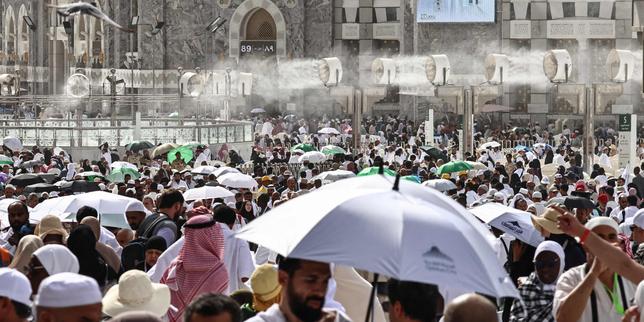
The annual convergence of 1.5 million pilgrims in Mecca represents one of the most complex recurring logistical operations in the global transport and hospitality sectors. Beneath the spiritual significance lies a highly sophisticated framework of state capacity, economic strain, and regional diplomacy. Saudi Arabia’s management of the Hajj functions simultaneously as a massive exercise in infrastructure stress-testing and a primary instrument of soft power projection. When these operations occur alongside sensitive regional peace negotiations, the pilgrimage transforms from a domestic administrative challenge into a critical node of geopolitical leverage.
The Tri-Partite Logistics Framework of Large-Scale Mass Gatherings
Managing a sudden influx of 1.5 million people into a hyper-localized geographic area requires an operational structure built on three interdependent vectors: transport capacity, public health containment, and crowd-flow dynamics. Failure in any single vector causes immediate cascading failures across the entire system. Recently making waves lately: The US Iran Deal Theater and Why Both Parties Want You Distracted.
                  +-----------------------------------+
                  |      Hajj Operational Matrix      |
                  +-----------------------------------+
                                    |
         +--------------------------+--------------------------+
         |                          |                          |
         v                          v                          v
+------------------+       +------------------+       +------------------+
| Transport Vector |       |   Health Vector  |       | Crowd-Flow Vector|
|  - Peak Load     |       |  - Syndromic     |       |  - Spatial       |
|  - Intermodal    |       |    Surveillance  |       |    Throughput    |
|  - Bottlenecks   |       |  - Quarantines   |       |  - Micro-Surges  |
+------------------+       +------------------+       +------------------+
1. Transport Throughput and Peak Load Bottlenecks
The arrival phase creates an acute supply-demand asymmetry in aviation and municipal transit networks. King Abdulaziz International Airport in Jeddah and Prince Mohammad bin Abdulaziz International Airport in Medina must pivot to specialized terminal configurations to process thousands of arrivals per hour.
The primary operational constraint is not the aggregate volume, but the temporal compression. The transit system must move these populations between specialized geographic zones—Mecca, Mina, Muzdalifah, and Mount Arafat—within strict, non-negotiable religious windows. This requires an intermodal transport strategy relying heavily on the Al Mashaaer Al Mugaddassah Metro line, supplemented by thousands of high-capacity buses operating in dedicated corridors. The core challenge is the mitigation of the "last-mile bottleneck," where mass transit discharges passengers into pedestrian zones, requiring precise synchronization to prevent overcrowding at entry portals. More insights into this topic are explored by The New York Times.
2. Epidemiological Containment and Syndromic Surveillance
Injecting 1.5 million individuals from over one hundred countries into a high-density environment creates an optimal vector for infectious disease transmission. The Saudi Ministry of Health operates a specialized biosecurity framework that begins before arrival via mandatory international vaccination protocols (meningococcal meningitis, yellow fever, and polio, depending on the country of origin).
Within the holy sites, real-time syndromic surveillance systems monitor health facilities for spikes in respiratory illnesses or gastrointestinal infections. The logistical challenge here is dual-fold: providing immediate clinical isolation capabilities without disrupting the broader flow of pilgrims, and managing heat-related illness risks, which scale exponentially when high wet-bulb temperatures intersect with dense outdoor crowds.
3. Crowd-Flow Dynamics and Spatial Friction
The mechanics of crowd safety during the Hajj rely on fluid dynamics principles applied to human movement. High-density crowds (exceeding 4 to 5 persons per square meter) behave less like collections of individuals and more like fluid masses subject to shockwaves.
The structural response involves strict scheduling systems, where national delegations are assigned specific, staggered time slots for completing rituals like the stoning of the pillars (Jamarat). This scheduling acts as a mechanical valve, controlling the density of the flow. Infrastructure design—such as the multi-level Jamarat Bridge—utilizes unidirectional pathways to eliminate counter-flows, which are the primary statistical cause of crowd crushes.
The Economic Cost Function of Holy Site Optimization
The expansion of Saudi Arabia's non-oil economy under current strategic initiatives relies heavily on the monetization and expansion of religious tourism. The Hajj, alongside the year-round Umrah pilgrimage, represents a massive capital expenditure program designed to yield long-term service-sector returns.
The economic model operates on a classic capacity utilization curve. For most of the year, the massive infrastructure investments in transport, hospitality, and sanitation operate below peak capacity. During the Hajj week, the system runs at absolute maximum capacity, testing the elasticity of municipal services.
Capital allocation is directed toward permanent infrastructure that can mitigate these seasonal shocks. The ongoing expansion projects in the Grand Mosque area focus on increasing the spatial throughput of the Tawaf (circumambulation) area. The financial return on these multi-billion-dollar investments is realized through increased accommodation capacity, expanded retail ecosystems within the holy precincts, and the growth of the national aviation sector.
However, this economic model faces a hard ceiling: the physical limits of the sacred geography itself. Because rituals must occur within precise boundaries defined by religious texts, the state cannot simply build more holy sites; it can only increase the density and efficiency of the existing footprint.
Religious Diplomacy as a Geopolitical Lever
The administration of the Hajj grants Riyadh a unique form of sovereign leverage that functions as a structural component of Middle Eastern geopolitics. By controlling access to the holiest sites in Islam, the Saudi state possesses a potent mechanism for reward and sanction, disguised as administrative oversight.
The Quota System and Sovereign Patronage
Under the formula established by the Organisation of Islamic Cooperation (OIC), Hajj quotas are generally allocated on a ratio of one pilgrim per one thousand Muslim citizens per country. However, the precise distribution and adjustment of these quotas remain at the discretion of the host nation.
               +----------------------------------------+
               |  Saudi Ministry of Hajj & Umrah        |
               +----------------------------------------+
                                   |
         +-------------------------+-------------------------+
         |                                                   |
         v                                                   v
+----------------------------------+       +----------------------------------+
|      Standard OIC Formula        |       |      Discretionary Margins       |
|  - 1:1,000 Muslim citizens ratio |       |  - Quota expansions (Reward)     |
|  - Baseline national allocations |       |  - Administrative delays (Sanc.) |
+----------------------------------+       +----------------------------------+
Adjusting these quotas allows Riyadh to exercise diplomatic leverage along two distinct paths:
- The Reward Mechanism: Increasing a nation's quota allows a foreign government to satisfy domestic religious demand, boosting the ruling regime's internal legitimacy. This acts as a tangible reward for diplomatic alignment with Saudi foreign policy objectives.
- The Friction Mechanism: Conversely, reducing quotas or introducing administrative delays in visa processing serves as a low-intensity diplomatic sanction. This applies domestic political pressure to foreign governments without triggering formal diplomatic ruptures.
Soft Power Projection Amid Regional Peace Negotiations
When the pilgrimage coincides with delicate regional peace negotiations—such as talks involving Yemen, Syria, or broader regional normalization efforts—the Hajj serves as an optimal neutral backdrop for parallel diplomacy. The state can signal shifts in its geopolitical posture through the public reception of specific foreign delegations or high-profile political figures participating in the pilgrimage.
By ensuring the seamless execution of the Hajj for citizens of nations with which it is currently experiencing diplomatic friction, Saudi Arabia reinforces its self-constructed identity as an impartial custodian of the holy places. This institutional credibility is critical; it shields the state from accusations of politicizing religion while simultaneously building the diplomatic capital required to act as a regional mediator in ongoing conflicts.
Systemic Risks and Operational Limitations
Despite sophisticated planning, the Hajj infrastructure operates under several structural vulnerabilities that cannot be entirely engineered away.
First, the system is highly sensitive to geopolitical external shocks. Regional instability, sabotage, or cyber-attacks targeting the transit or visa networks can cause immediate operational paralysis. The centralized nature of the Hajj entry systems means that a breach in the digital infrastructure could halt pilgrim processing globally.
Second, the reliance on automated crowd monitoring and predictive AI models assumes rational crowd behavior. In moments of panic or sudden weather anomalies, human behavioral models deviate from predicted paths, rendering automated mitigation protocols less effective.
Finally, the long-term threat of climate change presents an existential challenge to the current Hajj model. As summer temperatures in the Hejaz region regularly exceed critical thresholds, the physiological strain on pilgrims increases linearly. The state faces an escalating financial burden to provide continuous outdoor cooling infrastructure, shaded pathways, and emergency medical response teams capable of handling tens of thousands of heat-stress cases simultaneously.
Strategic Operational Outlook
To sustain the projected growth of religious tourism while maintaining systemic stability, the operational framework must transition from reactive crowd management to predictive spatial orchestration. The state's immediate tactical play involves the deployment of localized digital twin modeling—real-time simulation of the entire holy site infrastructure fed by live IoT and camera data.
This allows operators to predict crowd density spikes fifteen minutes before they manifest physically, enabling proactive rerouting via digital signage and automated physical barriers. Countries navigating diplomatic engagements with Riyadh must recognize that access to this highly optimized logistical network will remain bound to geopolitical alignment, making the Hajj an enduring pillar of Saudi Arabia's long-term statecraft.