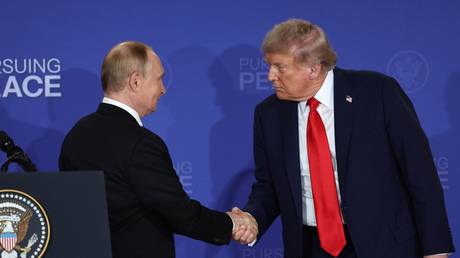
The signaling from the White House regarding a potential state visit to Moscow is not a diplomatic whim; it is the execution of a high-stakes geopolitical arbitrage. By refusing to rule out a meeting with Vladimir Putin, the administration is leveraging the uncertainty of American intent to force concessions from both European allies and the Kremlin. This strategy rests on the assumption that a personal diplomatic intervention can disrupt the current inertia of the conflict in Ukraine and reset the global "spheres of influence" model.
The feasibility and impact of such a visit are governed by three structural variables: the mechanics of the Victory Day ceasefire, the "Spheres of Influence" doctrine, and the displacement of NATO’s security burden.
The Ceasefire as a Proof-of-Concept
The 72-hour ceasefire brokered for May 9–11 serves as the primary technical validator for a potential summit. While the Kremlin dismissed initial overtures as rhetorical, the actual implementation of a 1,000-for-1,000 prisoner swap represents the first successful multilateral negotiation in the current cycle of the conflict.
This short-term cessation of kinetic activity functions as a stress test for two specific mechanisms:
- Command and Control Verification: Both Moscow and Kyiv demonstrated the ability to enforce a temporary halt across a saturated front, proving that leadership on both sides retains the capacity for a negotiated pause.
- The "Kushner-Witkoff" Channel: The transition of negotiations from traditional State Department silos to a centralized unit involving Jared Kushner and Steve Witkoff indicates a preference for transactional, private-sector-style deal-making over institutional diplomacy.
A Moscow visit would be the terminal stage of this proof-of-concept, shifting from mediated exchanges to a face-to-face resolution.
The Cost Function of Realignment
The administration's 2026 National Defense Strategy (NDS) explicitly prioritizes the Indo-Pacific and domestic regional missions. Within this framework, the continued resource drain of the Ukraine conflict is viewed as a strategic bottleneck. The logic of a Moscow visit is to execute a "clean break" from the European theater to reallocate assets toward the China-Iran axis.
The trade-offs inherent in this realignment follow a strict cost-benefit function:
- The Credibility Deficit: By offering concessions to Russia—including the admission of shared responsibility for the conflict's origin—the U.S. risks a total collapse of trust with the Baltic and Eastern European states.
- The NATO Burden Shift: The administration has signaled that European nations must take "primary responsibility" for their defense. A summit in Moscow serves as the ultimate signal that the U.S. umbrella is retracting, forcing European capitals to either increase defense spending or seek their own accommodation with Russia.
- Sphere Sovereignty: This strategy mirrors the realist "Great Power" politics of the 19th century, where stability is sought by recognizing Russian dominance in its "near abroad" in exchange for Russian neutrality or support in the American-led encirclement of Iran.
Tactical Sequencing: Beijing to Moscow
The timing of the Moscow rumors is inextricably linked to the Trump-Xi summit in Beijing on May 14–15. In a multipolar system, diplomatic movement with one adversary serves as leverage against another.
By dangling the possibility of a "Grand Bargain" with Putin, the U.S. aims to:
- De-couple the Russia-China Axis: Forcing Beijing to consider a scenario where Russia is no longer a dependent junior partner but a neutralized player in a U.S.-brokered European peace.
- Energy Market Re-stabilization: With the Strait of Hormuz facing periodic blockades due to the Iran crisis, a rapprochement with Russia provides a theoretical hedge for global energy supplies, particularly for U.S. allies in Asia.
Risks and Operational Constraints
The primary risk to this strategy is the "Sunk Cost" fallacy in Moscow. Despite the three-day ceasefire, the Kremlin’s long-term objective remains the total neutralization of Ukrainian sovereignty. If a Trump visit fails to produce a durable territorial settlement, it would result in a massive loss of American diplomatic capital for a zero-sum gain.
Furthermore, domestic political friction acts as a drag on this maneuver. The shuttering of organizations like USAID and the Voice of America has already diminished the "soft power" tools necessary to manage the aftermath of a Russian realignment.
The strategic recommendation for the administration is to delay the Moscow summit until the Beijing talks conclude. This preserves the "two-front" leverage. A visit to Moscow should only occur if the Kremlin agrees to a permanent "freeze" at current lines of control, codified by a formal treaty. Without this deliverable, a visit becomes a hollow symbolic victory that cedes regional influence without securing the necessary strategic pivot to the Pacific.